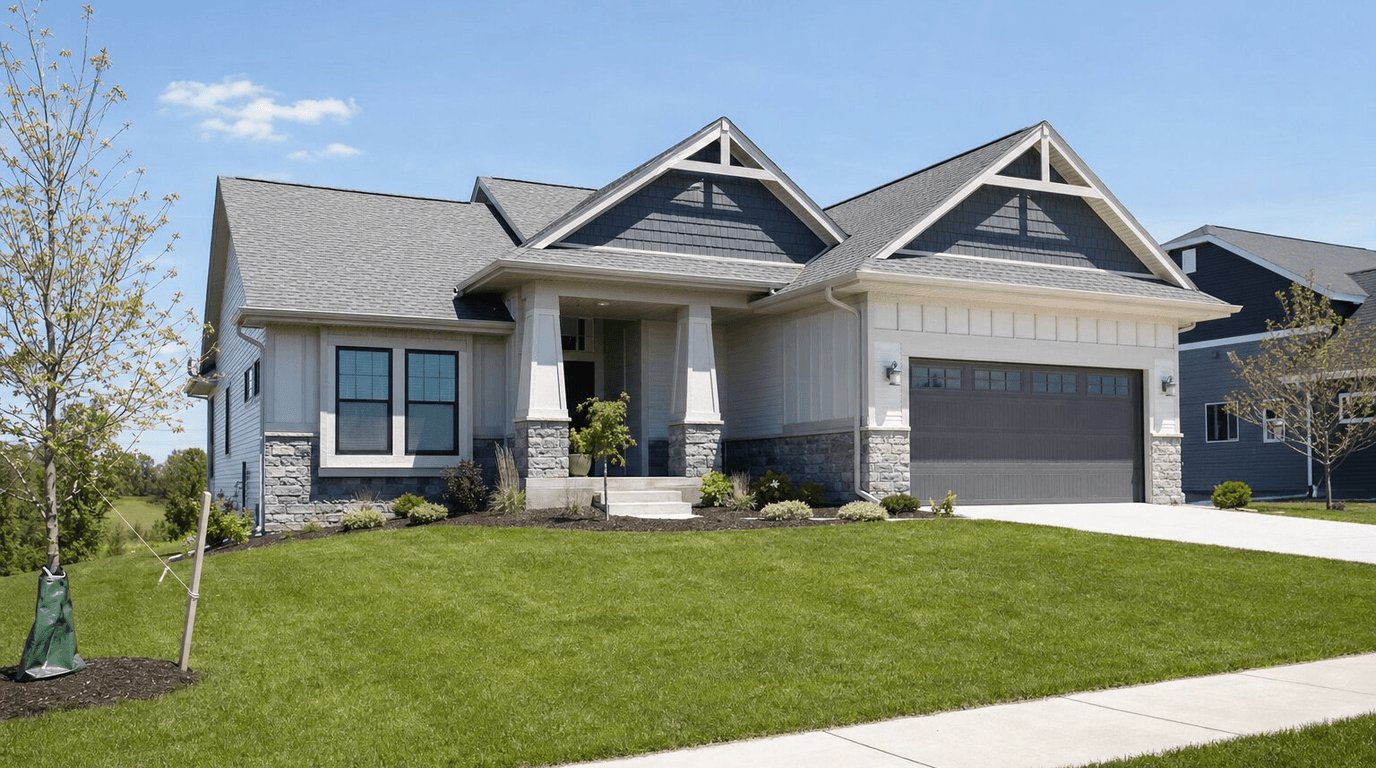
Your Roof Is Doing More to Your Energy Bills Than You Think
Most Wisconsin homeowners focus on windows and insulation when they want to cut heating costs. Understandable. But the roof is the single largest surface area on your home, and it's the first thing the sun hits in summer and the first barrier against heat loss in winter. Choosing an energy-efficient roofing system — not just swapping shingles but thinking about the whole assembly — can meaningfully cut your utility bills in both directions.
The challenge in Wisconsin is that our climate doesn't fit neatly into the "cool roof" framework designed for Sun Belt states. We need a roof that handles -20°F January nights and 90°F July afternoons, often with ice, heavy snow, and spring storms in between. That changes which energy-efficient options actually make sense here.
This post walks through the real options available to homeowners in the Green Bay area and Northeast Wisconsin, what the tradeoffs are, and how to think about the decision.
What Makes a Roof "Energy Efficient" in the First Place?
There are two separate properties worth understanding:
Solar reflectance is how much sunlight a roof bounces back rather than absorbing. A roof with high reflectance stays cooler in summer, which means less heat conducts into your attic and living space. This is the core idea behind "cool roofs" — a concept that works well in Phoenix and Atlanta but needs more nuance in Wisconsin.
Thermal emittance is how quickly a roof releases heat it does absorb. High emittance means the surface cools down fast after sunset. Low emittance means it holds heat longer.
Both metrics matter in warmer climates. In Wisconsin, the calculation gets more complicated because winter performance runs in the opposite direction. A roof that reflects solar gain in July is also reflecting solar gain in February, when passive solar heat from the sun is actually helping you. Too much reflectance in a cold climate can push your heating load up enough to cancel out summer savings.
This is why blanket advice from national sources doesn't always translate. What works in Georgia doesn't automatically work in Brown County.
The Best Energy-Efficient Roofing Options for Wisconsin
Architectural Asphalt Shingles with Cool Roof Ratings
For most homeowners in Northeast Wisconsin, energy-efficient asphalt shingles are the most practical starting point. Modern architectural shingles — particularly 3D or laminated styles — offer significantly better thermal performance than the three-tab shingles they replaced a generation ago.
The key feature to look for is ENERGY STAR certification and a high solar reflectance index (SRI) rating. Atlas, one of our primary shingle manufacturers, produces lines with granule coatings that reflect more infrared radiation without making the shingle look noticeably lighter in color. You can still get a classic weathered wood or charcoal look and still get meaningful reflectance improvement over standard shingles.
For a Wisconsin home, a mid-range reflectance shingle is usually the smart call. Maximum-reflectance "cool roof" shingles designed for hot climates may actually increase heating costs in a place that sees six months of winter. The sweet spot is a shingle engineered for mixed climates, and those exist. Ask specifically about it.
Where energy-efficient asphalt shingles shine for Wisconsin homeowners:
- They work within a normal replacement budget
- They come in colors and profiles that suit existing homes
- Installation is the same as standard asphalt, so contractor availability isn't an issue
- The performance improvement is real, if modest compared to more premium options
Metal Roofing
If you're serious about energy efficiency, metal roofing is worth a hard look. It outperforms asphalt on almost every energy-related metric, and its advantages compound over time in a way asphalt's don't.
Metal has naturally high emittance, meaning it releases absorbed heat quickly. In summer, this translates to a cooler attic. But the bigger story for Wisconsin is what metal does in winter. Unlike asphalt shingles, metal doesn't hold moisture, doesn't lose performance as it ages, and — critically — sheds snow far more efficiently. A standing seam or ribbed metal roof releases accumulated snow loads faster and more completely than asphalt, which reduces both the risk of structural overloading and the ice dam formation that happens when snow melt refreezes at the eave.
Metal roofs also last 40 to 70 years, depending on the gauge and coating. When you're doing the energy math over time, that longevity matters. You're not replacing a metal roof every 20 years and paying a new installation cost each time.
The upfront cost is higher than asphalt — typically 2 to 3 times more per square foot installed. For some homeowners, the long-term savings and the elimination of future replacement costs make that math work. For others, especially those who don't plan to stay in the home 15+ years, it's harder to justify on economics alone. But if staying power and performance are priorities, metal is the best energy-efficient option available in this climate.
Standing seam profiles in lighter colors (light gray, tan, or muted green) achieve the best solar reflectance. Dark-colored metal will still outperform dark asphalt on emittance, but lighter metal significantly reduces summer cooling loads.
Proper Attic Ventilation and Insulation (Not a Roofing Material, But More Important Than Either)
Here's the thing most roofing articles skip, and it's the most impactful part of the equation: the roofing material is only one layer of the system. The attic space below it matters more for energy performance than almost any shingle choice you make.
In Wisconsin, inadequate attic insulation and poor ventilation are the two leading causes of both high energy bills and ice dam formation. They're related problems. When warm air from your living space rises into the attic because insulation is thin or has gaps, it heats the roof deck. Snow melts unevenly. Water runs to the cold eaves, refreezes, and creates the ice dams that back water under your shingles and into your home.
The fix isn't a fancier shingle. It's air sealing the attic floor, upgrading insulation to current code (R-49 to R-60 in Wisconsin climate zones), and ensuring proper balanced ventilation — intake at the soffits, exhaust at the ridge — so the attic stays close to outdoor temperature in winter.
When Pierce Roofing replaces a roof, we check the attic before we start. If ventilation is undersized or insulation is clearly inadequate, we flag it. Putting a high-performance shingle on a poorly ventilated attic is like putting new tires on a car with alignment problems. You're solving the wrong thing.
Cool Roof Coatings for Low-Slope and Flat Roofs
For flat or low-slope sections — additions, garages, sunrooms, or full flat roof systems — white reflective coatings and TPO membranes are genuinely excellent energy-efficiency choices in Wisconsin, with fewer of the winter-penalty concerns that apply to steep-slope reflective shingles.
Flat roofs don't accumulate snow the same way (the geometry doesn't allow it), so the "less solar gain in February" downside is less of a factor. A white TPO membrane on a flat addition can meaningfully cut cooling loads for the space below in summer without a significant winter heating penalty.
If you have any flat roof sections on your home, this is one area where the full "cool roof" concept applies well even in a Northern climate.
What About Solar Roofing?
Solar panels and solar shingles are worth mentioning, though they're a separate conversation from energy-efficient roofing materials.
Adding solar panels to a new roof is usually better than retrofitting onto an old one, so if you're replacing your roof and considering solar in the next few years, coordinating both projects makes sense. Make sure the roofing contractor and solar installer are talking to each other about penetrations, underlayment requirements, and warranty implications.
Solar shingles (like Tesla Solar Roof) are still expensive, slow to install, and limited in contractor availability in Northeast Wisconsin. For most homeowners here, traditional panels on a metal or architectural shingle roof is the more practical path.
How Much Can You Actually Save?
Honest answer: it depends on your current situation more than your new shingle choice.
A home with a 30-year-old roof, thin attic insulation, and no ridge vent can see dramatic improvements from a full replacement that includes ventilation and insulation upgrades — sometimes $300 to $500 per year in combined heating and cooling savings, depending on home size and utility rates.
A home with adequate insulation and ventilation that's simply upgrading from standard to energy-efficient shingles will see more modest savings — maybe $50 to $150 annually from the shingle choice alone. That's real, but it's not the headline number. The bigger wins come from the system, not just the material.
For homeowners replacing their roof anyway, the upgrade cost from standard to energy-efficient asphalt shingles is often $500 to $1,500 on a typical house — a gap that pays back in three to ten years. On a metal roof, the math is longer but the durability picture changes the calculation entirely.
Choosing a Contractor Who Understands the Whole System
The most important factor in getting an energy-efficient roof that actually performs is working with a contractor who thinks about the system as a whole, not just the material going on top.
Michael Pierce has spent over 30 years roofing homes across Brown, Kewaunee, Oconto, Outagamie, Winnebago, and Manitowoc counties. He's seen what Wisconsin weather does to roofs that weren't installed correctly, and he's seen homeowners pay twice because the ventilation was wrong the first time. Pierce Roofing is Atlas PRO+ Platinum certified and carries $2 million in liability coverage, with a 10-year workmanship warranty on every job.
When you're evaluating roofing types and materials, get specific answers about how each choice performs in a Wisconsin climate specifically, not just how it performs in general. Ask about attic ventilation requirements. Ask whether the underlayment is appropriate for ice dam country. Ask what the estimated lifespan looks like given local freeze-thaw cycles.
Good contractors welcome those questions. Ones who can't answer them aren't the right fit for a Wisconsin home.
The Takeaway for Northeast Wisconsin Homeowners
Energy-efficient roofing is a real opportunity — especially when you're already replacing a worn-out roof and can make smarter choices at the same time. But the payoff depends on choosing materials matched to this climate, pairing them with proper attic ventilation and insulation, and working with someone who knows the difference between what works in Sunbelt brochures and what actually performs in a Green Bay winter.
If you're thinking about roof replacement and want to understand your energy-efficient options, we're happy to walk through it with you. No sales pressure, just a straight conversation about what your home needs.
Call Michael Pierce at (920) 609-8304 or request a free estimate online. We serve homeowners across Northeast Wisconsin and will give you an honest read on what your current roof is doing — and what a better one could do for your home and your utility bills.