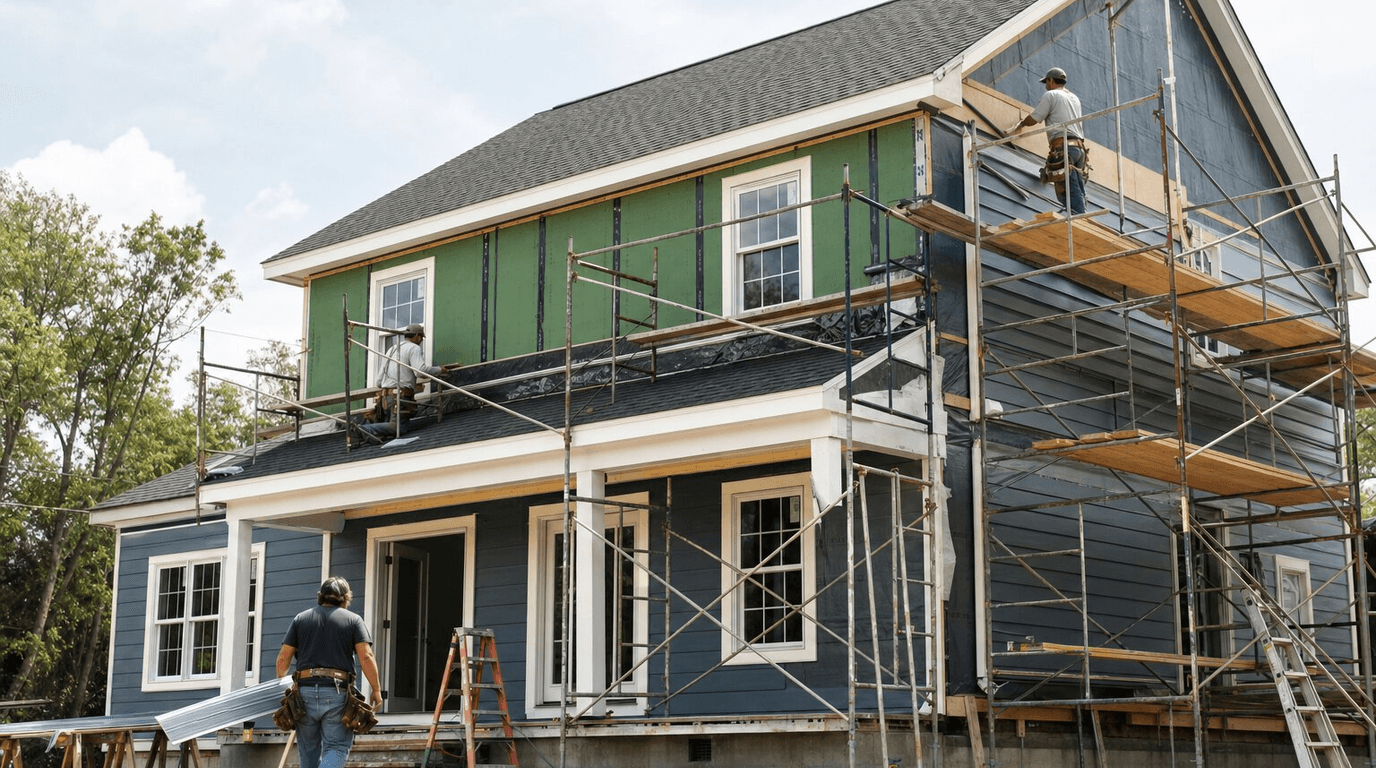
The Question Most Homeowners Ask Too Late
You called about a roof replacement. The contractor shows up, does their inspection, and then mentions the siding is looking rough too. Maybe you already knew that. Maybe it caught you off guard. Either way, you're suddenly wondering whether to bundle the projects or handle them one at a time.
It's a fair question, and the answer isn't the same for everyone. But for a lot of Northeast Wisconsin homeowners, replacing your roof and siding at the same time makes more financial sense than spreading the work across two separate seasons.
Here's an honest look at why, and when it actually makes sense to do it.
The Real Reason to Bundle: What You Save Goes Beyond the Quote
The obvious assumption is that you bundle two big projects to get a better deal. That's part of it. But the savings people overlook are the ones that don't show up on any invoice.
When you hire a contractor twice, you pay twice for mobilization. That means two rounds of crew scheduling, two equipment setups, two rounds of material delivery, and two separate waste haul-offs. Those costs are built into every job whether they're itemized or not. Combine the projects and you pay them once.
There's also the scaffold question. On some homes, certain sections of siding can't be properly removed or installed until the roof work is done, because how the roofline terminates into the siding matters. Running the jobs back-to-back or simultaneously means the crew can sequence the work correctly instead of working around what the previous crew left behind.
And then there's the labor efficiency piece. A roofing crew that's already on your property and knows your home's layout can often complete siding prep work faster than a fresh crew showing up cold. That translates to fewer hours billed.
One more thing most homeowners never consider: if your roof replacement disturbs old caulking or trim at the roofline, and your siding is coming up next year anyway, you'll likely have to repair or redo some of that trim work a second time. Doing it once eliminates the rework.
When It Makes the Most Sense to Replace Both at Once
Not every situation calls for a combined project. Here's where bundling genuinely pays off.
Your roof and siding are the same age. This is the most common scenario. Homes built or last renovated in the same era often have a roof and siding that hit the end of their useful life at roughly the same time. If both are 20-plus years old, you're likely looking at replacement on both within a few years regardless. Doing them together removes the guesswork.
You're selling in the next two to five years. Curb appeal matters in real estate, and a new roof without updated siding (or vice versa) can look mismatched. Buyers notice when one element of the exterior is clearly new and the rest isn't. A refreshed exterior top to bottom can make a real difference in first impressions and appraisal value. Our post on how a new roof affects home resale value in Wisconsin gets into the specifics.
You've had persistent moisture issues. In Wisconsin, ice dams, wind-driven rain, and freeze-thaw cycling work on both the roof and the siding simultaneously. If you've had water intrusion that affected your attic and your walls, replacing one without the other leaves part of the system vulnerable.
You want to recolor or restyle your exterior. If you're updating your home's look, coordinating the roof color and siding material from the start gives you better design control than trying to match materials across separate projects.
When It Might Not Make Sense
Bundling has real advantages, but it's not universally the right move.
If your siding was replaced five years ago and is in solid shape, there's no reason to pull it off just because your roof needs work. Good siding has years of life left. Same goes in reverse: a four-year-old roof paired with badly deteriorating siding doesn't need a full roof replacement to justify the siding project.
Cash flow is another honest consideration. Two major exterior projects in one summer is a significant outlay. If the siding can realistically last two more years without creating new damage, spreading the projects out might be the right financial call for your household — even if it costs slightly more in total. Financing options can also change that math depending on rates and your situation.
The key is getting an honest assessment of where both systems actually stand, not just a sales pitch for more work.
What the Scope of a Combined Project Looks Like
For homeowners who haven't done either project before, it helps to understand what's actually involved when you bundle roof replacement and siding installation into a single project.
On the roof side: old shingles come off, the deck gets inspected and any damaged sections are replaced, new underlayment goes down (in Wisconsin, ice-and-water shield at the eaves is non-negotiable), and new shingles are installed with proper flashing at all penetrations and transitions.
On the siding side: existing siding is removed, the sheathing is inspected for moisture damage or rot, a housewrap moisture barrier is installed, and then the new siding goes on. The sequencing matters — the roofline termination detail, where the roof drip edge meets the top course of siding, needs to be done correctly or you'll have water infiltration at that joint.
When a single crew manages both scopes, or when a general contractor coordinates two trades closely, those transition details get handled once and done right. When two different contractors work independently, that roofline-to-siding joint sometimes falls into a gap between "my scope" and "their scope."
Material Choices to Think About Before You Commit
A combined project is also an opportunity to make coordinated material decisions you'd struggle to make separately.
Roof color affects how siding colors read against the exterior. Shingle profiles and texture can either complement or clash with siding choices. If you're selecting both at the same time with samples in hand, you'll get a result that looks intentional. If you pick one today and the other in 18 months, you're hoping for the best.
For Wisconsin homes, material performance in our climate matters as much as aesthetics. James Hardie fiber cement siding, for example, handles freeze-thaw cycling significantly better than vinyl in extreme cold. Atlas shingles with the StormMaster line are rated for high-wind performance, which matters in Northeast Wisconsin where spring and fall storms can be brutal.
If you're unsure what combination makes sense for your home's style, budget, and exposure, that's exactly the kind of conversation worth having during an inspection before you commit to anything.
The Green Bay Factor: Our Climate Punishes Deferred Maintenance
This part is specific to Northeast Wisconsin, and it's worth saying plainly.
Our climate is hard on exterior building systems. We get freeze-thaw cycles that expand water in every seam and joint. We get ice dams that push water under shingles and behind siding. We get heavy spring rain after a winter where both the roof and siding have been under stress for months.
A home in the Green Bay area with failing siding and a deteriorating roof isn't just an aesthetic issue. It's a structure that's actively taking on moisture at multiple points. The longer that goes on, the more likely you are to find damaged sheathing, rotted framing, or mold when things finally get opened up.
That damage adds to the cost of any eventual repair. It doesn't wait politely while you decide when to schedule the work.
So when both systems are aging and showing wear, bundling isn't just a financial decision. For many Wisconsin homeowners, it's the right call for the long-term health of the structure.
What a Realistic Budget Looks Like
Cost is going to vary significantly based on your home's size, the materials you choose, and what's found once the old systems come off. That said, having a ballpark matters for planning.
A mid-range roof replacement on a typical Wisconsin home runs anywhere from $8,000 to $18,000 depending on size, pitch, and shingle grade. Siding on the same home might run $12,000 to $25,000 depending on material and scope. Those aren't small numbers individually.
When both are done together, the savings on mobilization, waste removal, and labor coordination typically run in the range of 8 to 15 percent compared to independent projects. On a combined $25,000 to $35,000 exterior project, that's real money.
For a more detailed look at what Wisconsin homeowners typically spend on the roofing side, our post on budget roof replacement costs in Wisconsin breaks it down by material type and scope.
If you're trying to figure out where the siding end of your budget might land, our siding services page covers the materials we work with and helps set realistic expectations before you ever talk to a salesperson.
Start With an Honest Inspection
The right way to approach a combined project is to start with a clear-eyed look at what both systems actually need, not what someone is trying to sell you.
At Pierce Roofing, we offer free roof inspections for Green Bay area homeowners across all six counties we serve. Michael Pierce has been doing this work for over 30 years. He's not going to tell you that you need a new roof if you don't, and he's not going to push a combined project if the siding is fine.
If both systems are due, we'll give you an honest assessment of what that scope involves, what it will cost, and what the sequencing looks like. No pressure, no manufactured urgency.
Call us at (920) 609-8304 or schedule your free roof inspection online to get a straight answer about where your home's exterior actually stands.