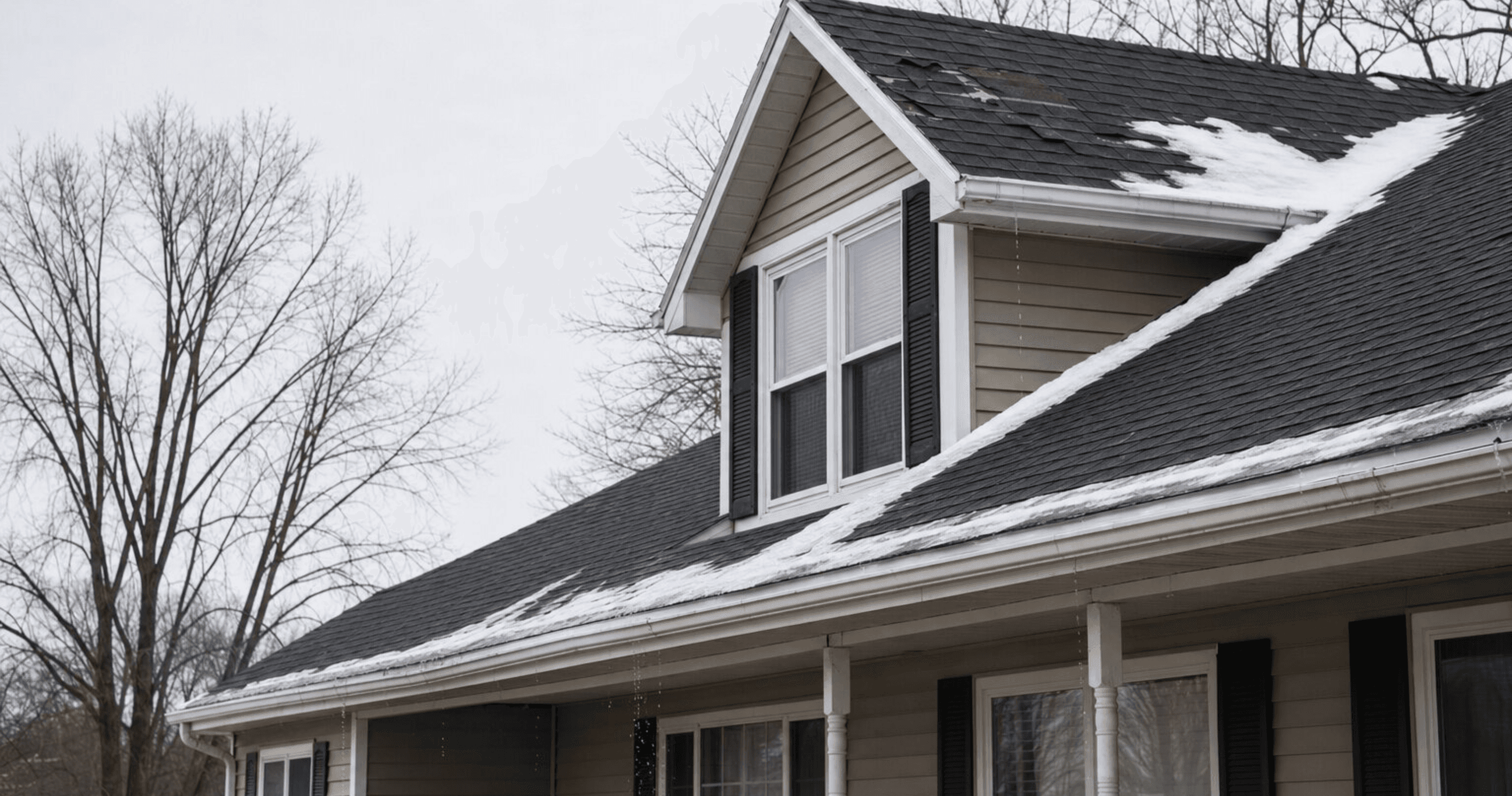
Wisconsin's Spring Thaw Is Harder on Your Roof Than You Think
For Green Bay homeowners, spring is a welcome sight after months of below-freezing temperatures, heavy snowfall, and relentless ice. But as temperatures swing back and forth between freezing and thawing — sometimes in the same week — your roof takes the brunt of that transition.
The freeze-thaw cycle is one of the most damaging forces a Wisconsin roof faces all year. Water expands when it freezes, forcing its way into every small crack, gap, or compromised shingle on your roof. By the time the last snow melts in late March or April, damage that was invisible in December may now be a serious problem. If you haven't had a spring roof inspection in Green Bay, this is the time of year you need one.
What the Freeze-Thaw Cycle Does to Your Roof
Throughout a Northeast Wisconsin winter, your roof endures repeated freeze-thaw cycles. Daytime temperatures climb above freezing and melt snow and ice on the surface. At night, temperatures drop and that meltwater refreezes — often in places it was never supposed to be.
Over a full winter, this cycle can happen dozens of times. Each one puts stress on shingles, flashing, and the underlying roof deck. Small cracks widen. Flashing separates. The wood decking absorbs moisture and begins to warp or rot — all before you notice a single drip inside your home. Roof damage after a Wisconsin winter is often hidden until you know what to look for.
1. Ice Dam Damage Along the Eaves
Ice dams are one of the most destructive and common winter roof problems in Green Bay. They form when heat escapes from your living space into the attic, warming the roof deck and melting snow near the ridge. That meltwater runs down toward the eaves, where it refreezes and builds up a dam of ice that blocks proper drainage.
As water backs up behind the ice dam, it forces its way under shingles and into the roof system. By spring, the ice dam is gone — but the damage remains. After the thaw, look for water stains on ceilings or walls near exterior walls, damaged or lifted shingles along the lower edge of the roof, and rust stains or separation around your gutters and fascia. Ice dam roof damage in Wisconsin is one of the leading causes of interior water damage, and it's almost always worse than it looks from the ground.
2. Cracked Shingles and Granule Loss
Asphalt shingles become brittle in cold weather, and repeated freezing makes them prone to cracking. After a long Green Bay winter, it's common to find shingles with hairline fractures or cracked edges that weren't there in the fall.
At the same time, the constant thermal expansion and contraction of shingles over winter accelerates granule loss. Those granules — the coarse, sand-like coating on the surface of asphalt shingles — are your roof's primary defense against UV rays and water. When they wear away, the asphalt underneath is exposed and the shingle deteriorates quickly. After the snow melts, check your gutters for a buildup of dark granules. A small amount is normal wear. Heavy buildup is a sign your roof may be approaching the end of its lifespan and that a roof replacement in Green Bay may be on the horizon.
3. Lifted or Separated Flashing
Flashing is the metal material that seals the joints where your roof meets vertical surfaces — chimneys, skylights, vent pipes, and walls. It's one of the most vulnerable parts of your roof during a Wisconsin winter.
As temperatures drop, metal flashing contracts. As they rise, it expands. Over an entire winter, this repeated movement loosens sealant, creating gaps where water can enter. This is especially common around chimney bases and roof-to-wall transitions. From the ground, look for flashing that appears lifted, buckled, or separated. If you can safely access your attic, look for daylight coming in around penetrations or water staining on the decking nearby. Flashing failure is one of the most common causes of a roof leak after winter in Wisconsin.
4. Soft Spots and Sagging in the Roof Deck
If your roof deck — the plywood or OSB panels underneath your shingles — has absorbed significant moisture over the winter, it may show signs of damage as it dries out in spring. Warping, soft spots, or visible sagging between rafters are all signs of a compromised deck.
This is more serious than surface shingle damage. A soft or rotted roof deck cannot properly anchor shingles, and it creates a direct pathway for water to reach your attic insulation and framing. From the outside, look for any sections of the roof that appear to dip or sag. Inside your attic, press on the decking in discolored areas — it should feel firm and solid. Any sponginess is a red flag that needs immediate attention from a qualified Green Bay roofer.
5. Gutter and Fascia Damage
The weight of ice and snow is brutal on gutters. Ice dams frequently pull gutters away from the fascia board or bend them out of shape. Damaged gutters can't direct water away from your foundation and siding, which creates a whole new set of problems.
After the spring thaw, walk around your home and check whether gutters are still properly attached and sloped toward the downspouts. Look for sections that are sagging, pulling away from the roofline, or visibly bent. Also inspect the fascia boards behind the gutters for rot or water damage — a sign that water has been backing up under the roof edge all winter.
6. Attic Moisture and Condensation
Not all winter roof damage shows up on the outside. During cold months, warm humid air from your living space can migrate into a poorly ventilated attic and condense on cold wood surfaces. Over a full Wisconsin winter, this causes significant moisture damage to rafters, sheathing, and insulation — and it often goes unnoticed until spring.
Take a look in your attic with a flashlight once the weather warms. Signs of a problem include frost or moisture staining on the underside of the roof deck, mold or mildew on rafters or joists, wet or compressed insulation, and a persistent musty smell. Proper attic ventilation is one of the most effective and overlooked ways to extend roof life in Northeast Wisconsin.
When to Schedule a Spring Roof Inspection in Green Bay
The best time for a post-winter roof inspection is late March through early May — after the last significant snowfall but before the peak spring rain season. That timing gives you a window to identify and repair damage before it turns into an active leak.
Even if your roof looks fine from the ground, freeze-thaw damage is often not visible without a closer look. Many homeowners don't discover winter roof damage until it's raining inside their house. A professional inspection by an experienced Green Bay roofer is the best way to catch problems early, when repairs are still affordable.
Pierce Roofing Has Seen Every Type of Wisconsin Winter Damage
At Pierce Roofing, we've been inspecting and repairing roofs in Green Bay and Northeast Wisconsin for over 29 years. We know exactly what a Wisconsin winter does to a rooftop, and we know how to find damage before it becomes a major repair bill.
If your roof made it through another tough winter, let us take a look. Our free inspections are honest, no-pressure, and designed to give you a clear picture of where things stand.
Call us at (920) 609-8304 or request a free estimate online.