What You're Actually Buying When You Choose Asphalt Shingles
Asphalt shingles are by far the most common roofing material in Northeast Wisconsin, and for good reason. They're cost-effective, they come in a wide range of styles and colors, and when installed correctly with quality materials, they hold up well against everything Wisconsin throws at them — heavy snow loads, ice dams, hailstorms, and the kind of freeze-thaw cycles that eat through inferior products in a few winters.
But "asphalt shingles" covers a wide range. A $60-per-square builder-grade three-tab and a $150-per-square premium architectural laminate are both technically asphalt shingles. They perform very differently. Choosing the right one for your home means understanding what you're actually comparing — and what the Wisconsin climate asks of any roofing material you put up there.
This post breaks down the main types of asphalt shingles, realistic lifespan expectations for our area, and what to look for (and watch out for) when you're getting estimates. If you're already at the decision stage, our asphalt shingle roofing page covers how we approach installation and what makes the difference at each stage.
The Three Main Types of Asphalt Shingles
Three-Tab Shingles
For most of the 20th century, three-tab shingles were the standard. They're flat, uniform-looking shingles with cutouts (tabs) that create the appearance of three separate pieces even though each shingle is a single strip.
They're cheaper. That's the main draw. And they still appear in roofing quotes, especially from contractors trying to hit a low number. But honestly, three-tab shingles have been largely replaced by architectural shingles for a reason: they're thinner, they weigh less (which sounds fine until you realize weight contributes to wind resistance), and they carry shorter warranties — usually 25 years, though a realistic lifespan in Wisconsin is closer to 15 to 20 years.
If someone quotes you a three-tab shingle in 2026, it's worth asking why. There are situations where it makes sense. But on a full roof replacement, most homeowners are better served by spending a bit more on an architectural.
Architectural (Laminate) Shingles
Architectural shingles — also called dimensional or laminate shingles — are the current industry standard for good reason. They're made by bonding two or more layers of shingle material together, which gives them a thicker, textured appearance that mimics the look of wood shake or slate. More importantly, that extra thickness translates into real performance improvements.
Compared to three-tab shingles, architecturals are heavier, more impact-resistant, and significantly better at withstanding wind uplift. Most carry a 30-year warranty, and quality products from manufacturers like Atlas carry lifetime coverage on the shingles themselves. Realistic lifespan in Wisconsin, with proper installation and adequate attic ventilation, tends to land between 25 and 35 years.
This is the category where most Pierce Roofing installations fall. For the overwhelming majority of Green Bay area homeowners, an architectural shingle in the mid-to-upper performance tier is the right call. You get meaningful longevity without getting into the territory of specialty roofing materials.
If you want to compare asphalt against metal, flat, or other options, our roofing types overview lays out the trade-offs by material.
Premium and Designer Shingles
Above architectural shingles, there's a premium tier — sometimes called designer shingles or luxury shingles. These are heavier-weight, often impact-rated products that more closely replicate the look of natural slate or cedar shake. Some carry Class 4 impact ratings, which can be relevant for insurance discounts depending on your carrier.
The Atlas StormMaster Slate and similar products fall into this category. They're significantly more expensive than standard architecturals — you're typically looking at 30 to 60 percent more per square — but they carry stronger wind ratings, better impact resistance, and in some cases, lifetime warranties with transferability.
For homes where aesthetics matter, for clients who plan to stay long-term, or in situations where impact-rated products generate meaningful insurance savings, premium shingles are worth the conversation. As an Atlas Platinum PRO+ certified contractor, Pierce Roofing has access to the full Atlas product line and can walk you through what makes sense for your specific home and budget.
Asphalt Shingle Lifespan in Wisconsin: What's Realistic
Manufacturer warranties are marketing documents as much as performance guarantees. A "30-year shingle" in a warm southern climate and a "30-year shingle" in Green Bay, Wisconsin are going to age at different rates — because our climate is harder on roofing systems than most.
Here's what actually affects lifespan in our area:
Attic ventilation. This is the biggest one that doesn't get talked about enough. Inadequate ventilation traps heat in summer, which bakes shingles from the underside. In winter, it creates warm attic air that causes uneven snowmelt and ice dam formation — ice dams that then work water back under the shingles, lifting and damaging them season after season. A well-ventilated attic can easily add five to ten years to a shingle's service life.
Ice and water shield coverage. Wisconsin code requires ice and water shield at the eaves, but quality installations extend it further — up the valleys, around penetrations, anywhere water could back up and find a path through. A shingle installed over an inadequate moisture barrier doesn't just fail there; water infiltration often damages the deck underneath, adding replacement costs.
Shingle quality within the category. Not all 30-year architectural shingles are equal. A mid-grade architectural from a top manufacturer will typically outperform a discount-brand product with the same label, simply because the fiberglass mat, asphalt saturation level, and granule embedment are higher quality.
Roof pitch. Steeper roofs shed water faster and accumulate less standing moisture and debris. Low-slope roofs (under 4:12 pitch) see more standing water and accelerate shingle aging.
With all of that factored in, here are realistic lifespan ranges for Northeast Wisconsin:
- Three-tab shingles: 15 to 20 years
- Architectural shingles (standard): 22 to 30 years
- Architectural shingles (premium tier): 28 to 40 years
- Impact-rated designer shingles: 35+ years with proper maintenance
Those aren't guaranteed numbers. They're reasonable expectations based on what we see in the field after 30+ years of roofing in Brown, Kewaunee, Oconto, Outagamie, Winnebago, and Manitowoc counties.
What to Look for on a Shingle (and What Tells You It's Failing)
Most homeowners only look at their roof when something goes wrong. But knowing what healthy shingles look like — and what early warning signs look like — is worth understanding before you get to the emergency stage.
Signs of a Healthy, Mid-Life Shingle
Granules intact and evenly distributed. Flat, consistent profile with no curling at edges or corners. No visible cracking in the asphalt body. Consistent color without dark patches or widespread algae streaking (some algae staining is cosmetic, but widespread growth can indicate moisture issues).
Warning Signs Worth Having Inspected
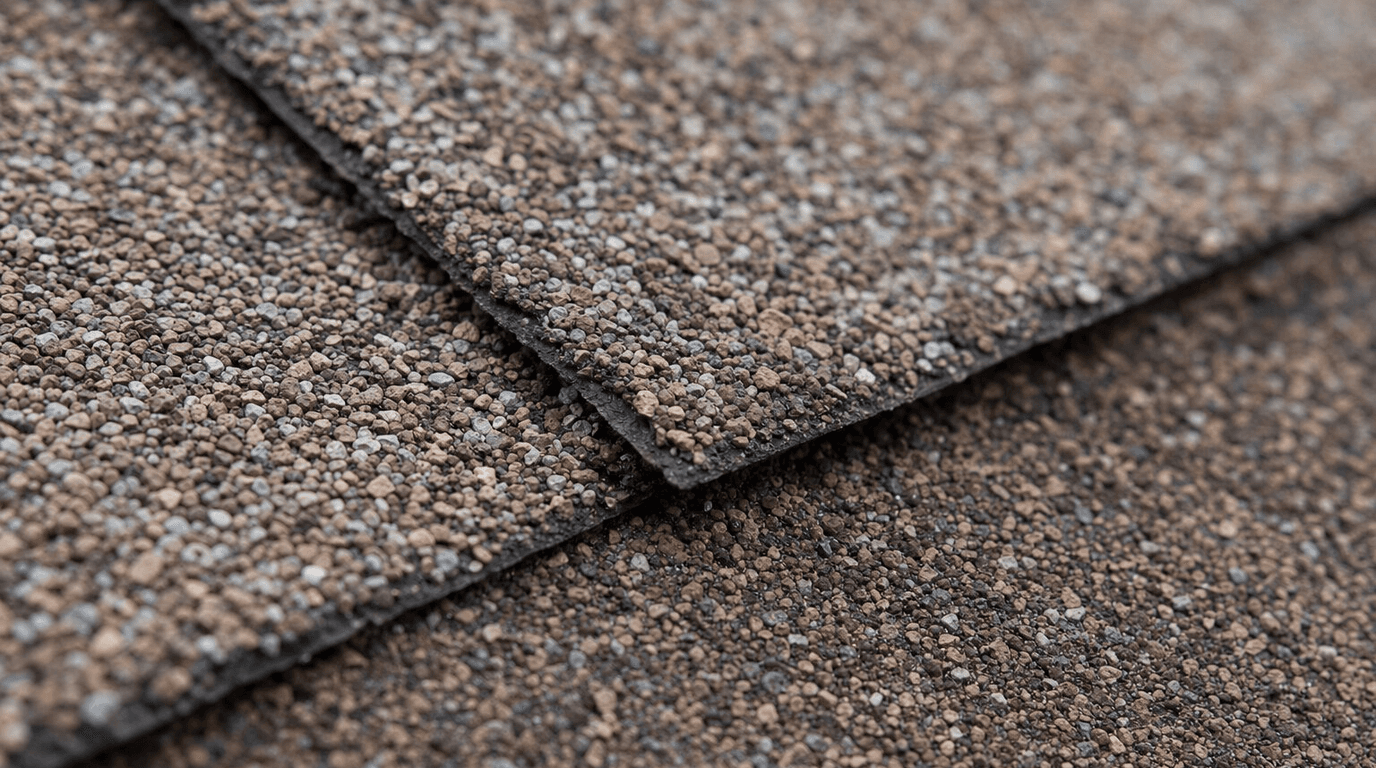
Granule loss. The mineral granules on the surface of asphalt shingles protect the asphalt layer from UV exposure. As shingles age, granules loosen and wash into gutters. Finding large amounts of grit in your gutters or at the base of downspouts is a signal that your shingles are moving through their service life. Not necessarily an emergency — but worth tracking.
Curling or cupping. Shingles that curl upward at the edges (cupping) or curl away from the roof surface at the center (clawing) are deteriorating. Both conditions happen as the shingle layers dry out and shrink at different rates. Curled shingles are vulnerable to wind uplift and water infiltration.
Cracking. Surface cracks appear as shingles age and lose flexibility. In Wisconsin winters, those cracks can expand and contract through freeze-thaw cycles, getting worse with each season.
Missing shingles. Obvious when you see it, but the damage underneath can spread faster than expected. A missing shingle in October means exposed deck and underlayment going into Wisconsin winter. That's not a wait-until-spring situation.
Daylight in the attic. If you can see light coming through the roof deck from inside your attic, there are gaps somewhere in the system. Usually a more advanced problem.
If any of these look familiar, a professional inspection is the first step. We offer free inspections across our six-county service area — no obligation, just a straight assessment of what's going on.
How Shingle Choice Fits Into the Larger Roofing System
This is the part that often gets missed in a shingle-focused conversation: the shingle itself is only one component of a system. A premium architectural shingle installed over a rotted deck, inadequate underlayment, and missing drip edge will fail faster than a standard architectural installed correctly over a solid system.
When you're comparing quotes, shingle brand and grade are worth asking about. But they're not the only thing that matters. Ask what underlayment is going down. Ask how far ice and water shield extends. Ask whether the deck gets inspected and replaced where necessary. Ask about starter strip, drip edge, and ventilation.
Contractors who answer those questions clearly and put the specifics in writing know what a roofing system is. That's a meaningful filter when you're deciding who to trust with your home.
Michael Pierce has been doing this for over 30 years in Northeast Wisconsin. Pierce Roofing is Atlas Platinum PRO+ certified, carries $2 million in liability coverage, and backs every installation with a 10-year workmanship warranty — on top of whatever manufacturer warranty comes with the shingles themselves.
If your roof is giving you signs that it's time to look at options, or if you just want to know where things stand before another Wisconsin winter, we're happy to come out and take a look.
Call (920) 609-8304 to reach us directly, or request a free estimate online. We'll give you a clear picture of your roof's condition and walk you through your options — no pressure, no sales pitch.