The Moment Water Comes In, the Clock Starts
An active roof leak is one of those situations where doing nothing — even for a few hours — costs you more money. Water doesn't trickle in politely. It finds insulation, soaks into drywall, follows joists, and pools in places you won't see for weeks. By the time you notice mold or a stained ceiling, the real damage happened days ago.
If you're a Green Bay homeowner dealing with an active leak right now, here's what to do. In order. Without wasting time.
Step 1: Protect the Inside of Your Home First
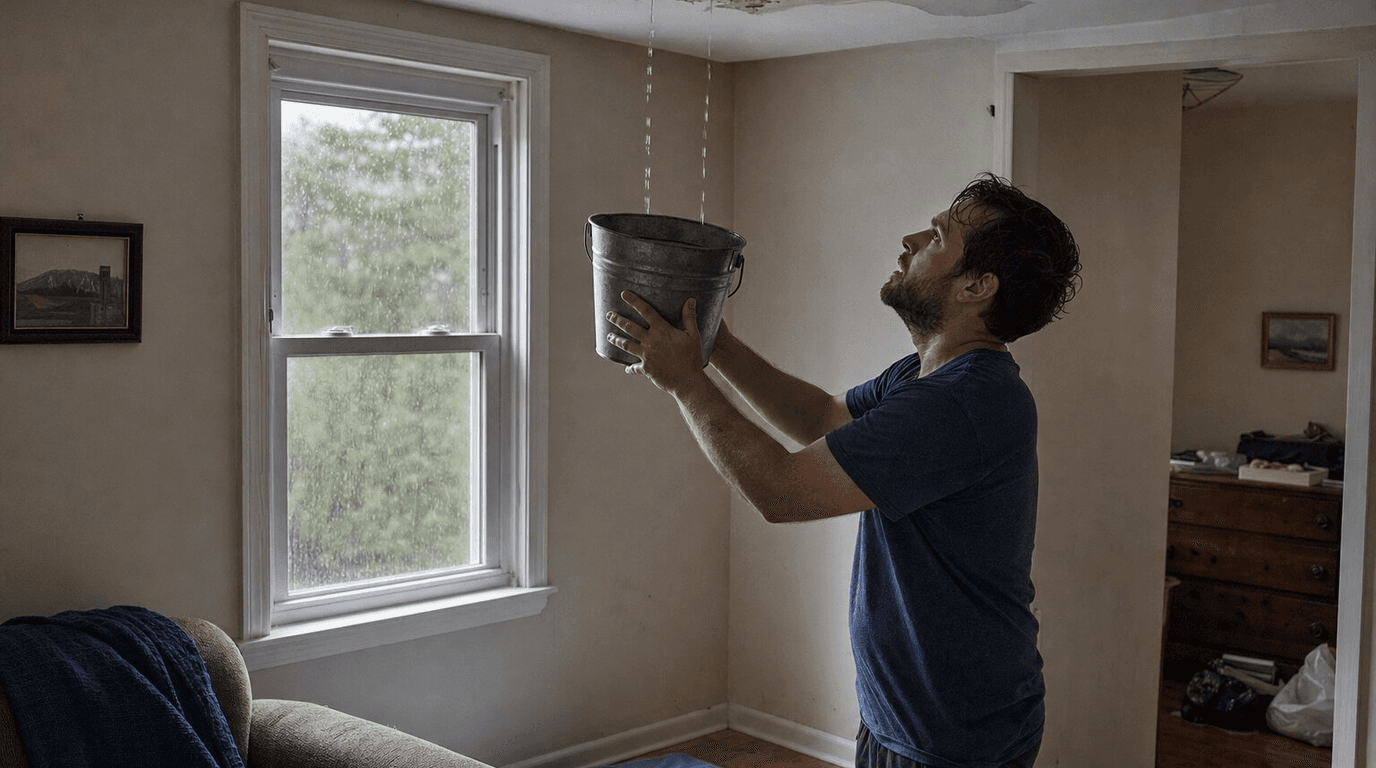
Before you do anything else, address what's happening inside. That means getting buckets, towels, and trash cans under any active drip. If water has pooled on the ceiling and the drywall is visibly bulging, carefully poke a small hole in the lowest point of the bulge to release it in a controlled stream — a ceiling that collapses on its own is far messier and more expensive to repair.
Pull furniture, electronics, and anything irreplaceable out of the affected area. Move rugs. If water is near any electrical outlets, panel boxes, or lighting fixtures, turn off power to that circuit at your breaker immediately and keep the area clear until a professional has assessed it. Water and electricity are not a situation to improvise around.
This step feels obvious. But in the panic of a leak, people often run straight to the attic or the roof without protecting the living space first. Get the inside under control, then move on.
Step 2: Find the Attic Entry Point (Safely)
With the interior stabilized, head to your attic — if you can access it safely. Bring a flashlight. You're not looking for the source on the roof yet; you're looking for where water is actively entering the attic space.
Water is deceptive. It rarely drips straight down from where it enters. It follows the slope of the roof deck, runs along rafters, and may travel six feet or more before dripping onto the ceiling below. Look for wet insulation, dark staining on the underside of the decking, or any active dripping. If you can locate where water is pooling in the attic, you can sometimes place a bucket there to reduce further damage to the ceiling below.
If water is visibly streaming in or the attic feels structurally unsafe, do not push your luck. Stay out and call a professional. No possession inside your home is worth a fall through a compromised ceiling.
Step 3: Apply a Temporary Interior Patch if You Can Reach It
For minor active leaks where the entry point is accessible, a temporary patch can slow water intrusion until a roofer arrives. Roofing tar or a piece of plywood pressed against the underside of the roof deck can buy you time. This is not a repair — it's damage control. But in a Wisconsin rainstorm at 10 PM, damage control is exactly what you need.
If you can safely access the exterior of the roof and the pitch is not steep, a heavy-duty plastic tarp weighted or secured at the ridge and extending past the eave can reduce water intrusion significantly. Use bricks, sandbags, or capped 2x4s along the edges — never nails or screws directly into a wet roof you haven't assessed yet. And if there's any doubt about your footing or the structural integrity of the roof surface, stay off it.
The goal here is to reduce ongoing damage, not to fix anything. Leave the actual repair to the professionals.
Step 4: Document Everything Before You Clean Up
This step is one most homeowners skip — and they regret it the moment they file an insurance claim. Before you mop, dry, or throw anything away, photograph and video the damage. Every water stain. Every saturated section of insulation. Every buckled piece of drywall. Every item that got wet.
Date-stamp your photos. If your insurance company later questions whether the damage was pre-existing or caused by a sudden event, your documentation is what proves your case. A little time with your phone camera now saves a significant headache later.
Also write down when you first noticed the leak, what the weather was doing at the time, and any recent events that might have caused it — a storm the night before, tree branches rubbing on the roof, unusual sounds. All of it becomes relevant during a claim.
Step 5: Call an Emergency Roofer in Green Bay
Once the immediate damage is contained and documented, you need a professional on site. Not next week. Not when the rain stops. Now.
Not every roofing contractor offers true emergency roof leak repair — the kind where someone actually shows up and addresses the problem while it's still actively happening, not just schedules you for a future appointment. Ask directly when you call: "Can someone come out today?" If the answer is no, call the next contractor on your list.
At Pierce Roofing, we've been doing emergency roof repair in Green Bay and Northeast Wisconsin for over 30 years. Michael Pierce and his crew understand that a leaking roof is not a "we'll get to it" situation. It's urgent. We treat it that way.
What an Emergency Roofer Will Do When They Arrive
A qualified emergency roofer isn't just going to slap a tarp on your roof and leave. Here's what a proper response looks like:
First, they'll do a visual assessment of the exterior — looking for the most obvious potential entry points. Missing or lifted shingles, damaged flashing around chimneys or pipe boots, failed sealant, open seams. They'll also assess whether the roof is safe to work on, particularly if there's still active rain or ice.
From there, they'll apply a temporary repair substantial enough to stop active water intrusion. That might be roofing cement and a patch, a properly secured tarp, or in some cases, direct shingle repair on the spot if the damage is localized. They'll give you an honest assessment of what caused the leak and what a permanent fix looks like.
Then comes the written scope of repair — what needs to be done, why, and what it costs. A trustworthy contractor gives you that clearly, without pressure. If anything feels vague or rushed, ask questions.
Common Causes of Sudden Roof Leaks in Wisconsin
If you're wondering how this happened seemingly out of nowhere, you're not alone. Most sudden roof leaks in Green Bay aren't actually sudden — they're the result of damage that built up over time and finally crossed a threshold. A few of the most common culprits:
Storm damage. High winds lift shingles, break flashing seals, and drive debris across roof surfaces. A storm that didn't seem that severe can still cause real damage, especially on a roof that was already worn. If you had a significant storm pass through recently, that's almost certainly where to start looking.
Ice dam aftermath. This is a big one in Wisconsin. Ice dams that form along your eaves during winter can force water up under shingles and into the roof system. You may not see any leaking during the winter — the ice itself is blocking the path. But once it melts in spring, suddenly there's an open channel straight to your interior. Read more about this in our post on common causes of roof leaks in Wisconsin.
Failed flashing. The metal flashing around your chimney, skylights, and vent pipes is the most vulnerable part of your roof. It expands and contracts with temperature, and the sealant holding it in place has a finite lifespan. When it fails, water finds a clear path inside.
Pipe boot failure. The rubber boot seals around plumbing vent pipes degrade over time — especially under Wisconsin's UV exposure and temperature swings. When they crack, they let water in with every rain. This is a small, inexpensive fix when caught early. Ignored, it can ruin a roof deck.
After the Emergency: Don't Skip the Full Inspection
Once the immediate leak is addressed, a temporary patch is not the end of the story. It's the beginning. Emergency repairs are designed to stop the bleeding — they're not comprehensive solutions.
Schedule a free roof inspection as soon as possible after an active leak. A thorough inspection will identify whether additional damage exists that wasn't visible during the emergency response, assess the overall condition of your roof system, and give you a clear picture of what repairs or replacement you're actually facing.
Skipping this step is one of the most common — and costly — mistakes homeowners make after a leak. The temporary fix holds, they assume the problem is solved, and three months later they're dealing with mold in their walls or a rotted roof deck that turned a $400 repair into a $12,000 replacement.
Don't let that be your story. A small investment of time now protects a much larger investment in your home. If you're not sure what to expect, our guide on how to find a roof leak step by step walks through what a professional inspection looks for.
Does Homeowners Insurance Cover Emergency Roof Repairs?
In many cases, yes — but the details matter. Most standard homeowners insurance policies in Wisconsin cover sudden and accidental damage from storms, falling trees, and similar events. What they typically don't cover is damage from neglect or normal wear and tear.
This is why documentation (Step 4 above) matters so much. The clearer you can show that damage resulted from a specific event rather than years of deferred maintenance, the stronger your claim. Your roofer can also provide a written assessment that supports your claim with technical detail.
Call your insurance company to open a claim as soon as the immediate emergency is handled. Ask specifically whether an adjuster will come out before permanent repairs begin — in most cases, they want to see the damage before it's fixed.
Pierce Roofing Responds to Roof Emergencies in Green Bay and Surrounding Counties
A leaking roof at the wrong time is stressful. We get it. But you don't have to figure out the next steps alone.
Pierce Roofing has served Green Bay and Northeast Wisconsin for over 30 years. We're Atlas PRO+ Platinum certified, carry $2 million in liability coverage, and back every repair with a 10-year workmanship warranty. When we fix it, it stays fixed.
If you have an active leak or storm damage that needs immediate attention, contact us or call us directly at (920) 609-8304. We'll get someone out to assess the situation and give you straight answers about what needs to happen next.