Is Metal Roofing Worth It in Wisconsin? The Honest Answer
Metal roofing is having a moment. Walk through any Green Bay neighborhood and you'll spot more standing seam and metal shingle roofs than you would have ten years ago. Some of that is genuine performance — metal genuinely does hold up in Wisconsin's winters better than most people expect. But some of it is marketing, and it's worth separating the two before you spend $15,000 to $30,000 on a new roof.
This post covers everything you need to know about metal roofing for Northeast Wisconsin homes: the real advantages, the legitimate drawbacks, what it costs, and how to decide whether it makes sense for your specific situation.
What Makes Metal Roofing Different from Asphalt
Before getting into pros and cons, it helps to understand what you're actually buying. Metal roofing for residential homes comes in a few main forms:
- Standing seam panels — long vertical panels that interlock at raised seams, with no exposed fasteners. The premium option.
- Metal shingles — pressed steel or aluminum panels designed to look like traditional shingles or shakes. Lower profile than standing seam.
- Steel vs. aluminum — steel is more durable and dent-resistant; aluminum is lighter and naturally corrosion-resistant. Both perform well in Wisconsin.
- Stone-coated steel — a hybrid that looks like asphalt but performs like metal. Popular with homeowners who want the durability without the industrial aesthetic.
The material you choose affects cost, appearance, noise, and how it holds up over time. It's not a single category — it's a spectrum.
The Genuine Advantages of Metal Roofing in Wisconsin
Let's start with what metal roofing actually does well, because there's real substance here.
It Handles Wisconsin Winters Better Than Almost Anything Else
This is the big one. Metal roofing has a genuinely significant advantage in cold climates, and it shows up in a few different ways.
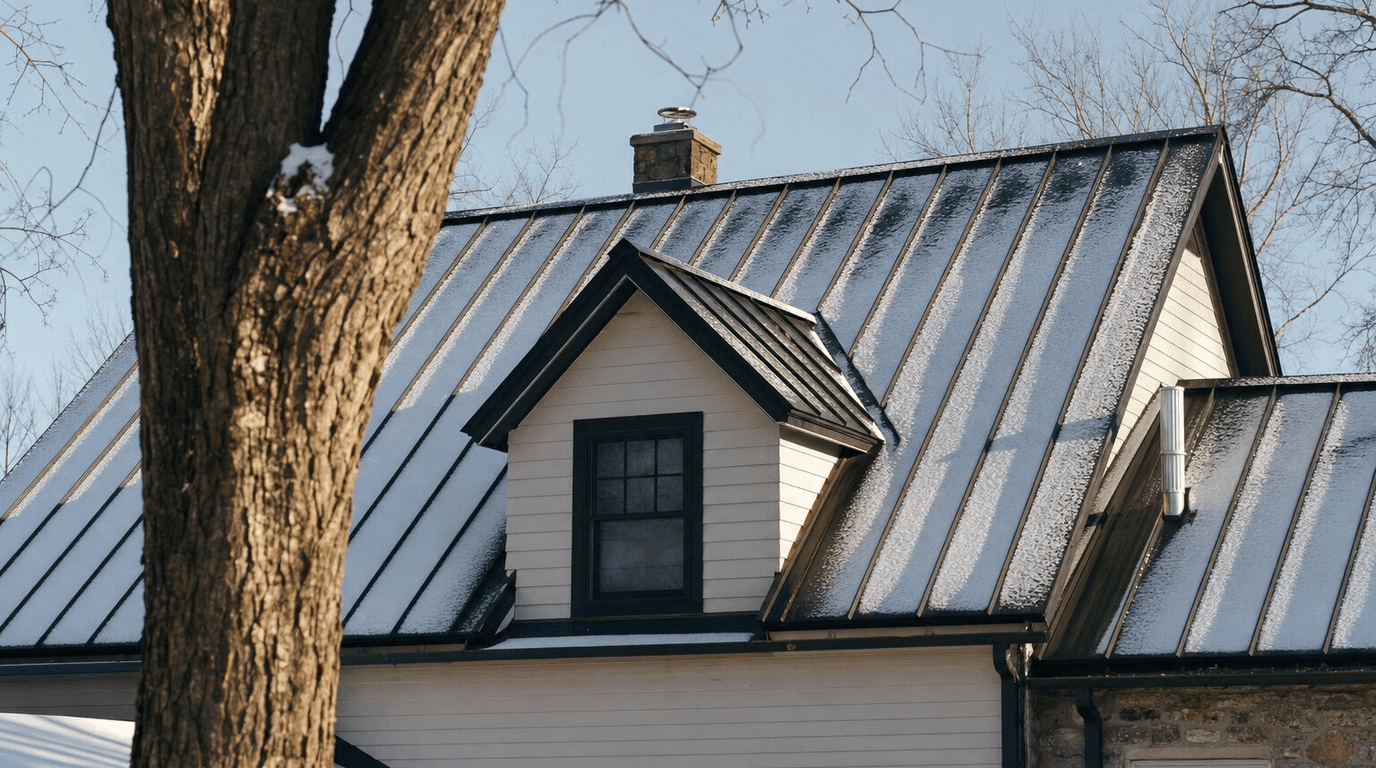
Snow sheds off a metal roof more readily than off asphalt shingles. The smooth surface doesn't hold snow the way textured shingles do, which reduces snow load on the structure and decreases the chance of ice dams forming. Not eliminates — if your attic insulation and ventilation are poor, you can still get ice dams on a metal roof. But the physics work in your favor more than they do with asphalt.
Metal also handles the freeze-thaw cycle that Northeast Wisconsin runs through every winter without degrading the way asphalt does. Asphalt shingles expand and contract with temperature swings, which gradually breaks down the material. Metal expands and contracts too, but it's engineered to do it through floating fastener systems and panel design. A properly installed metal roof doesn't granulate, crack, or curl from thermal cycling the way shingles can.
Longevity That Actually Justifies the Price
A quality asphalt shingle roof in Wisconsin typically lasts 20 to 30 years if it's installed correctly and the home has adequate ventilation. Metal roofing, by contrast, carries manufacturer warranties of 40 to 50 years, and in practice, metal roofs often outlast those warranties significantly.
If you plan to stay in your home for 30 or more years, you're likely replacing an asphalt roof at least once in that span. With metal, you probably aren't. That changes the math in ways that the upfront sticker price doesn't immediately show.
Wind Performance
Steady, moderate winds aren't the concern — it's severe storm events where the difference becomes clear. Standing seam metal roofing, in particular, performs extremely well in high winds. The interlocking panel design and concealed fasteners mean there are far fewer points of failure compared to individual shingles that rely on nails and sealant strips.
For homes in exposed locations — on a hill, near open farm country, or anywhere that catches the sustained winds off Lake Michigan — this advantage is worth taking seriously.
Energy Efficiency
Metal roofs reflect solar radiation rather than absorbing it, which can meaningfully reduce summer cooling costs. In Wisconsin, where heating costs dominate and air conditioning runs for a shorter season, this benefit is less dramatic than it would be in Phoenix, but it's still real. If you pair a metal roof with proper attic insulation and ventilation — which you should regardless of roofing material — you'll see improvement in year-round energy performance. For more on how your roof and energy costs connect, see our overview of energy-efficient roofing options.
The Legitimate Drawbacks You Should Know About
No roofing material is perfect, and metal has real downsides worth understanding before you commit.
The Cost Is Significant
There's no way around it: metal roofing costs substantially more upfront than asphalt shingles. On a typical Green Bay area home, you're looking at a meaningful gap — and that's a real obstacle for many homeowners, especially those not planning to stay in the home long-term.
Metal roof cost in Green Bay varies depending on the material chosen, roof complexity, and current steel pricing, but rough ranges look something like this:
- Metal shingles or stone-coated steel: roughly $9 to $14 per square foot installed
- Standing seam steel: roughly $13 to $20 per square foot installed
- Aluminum standing seam: on the higher end, given material cost
For a 2,000 square foot home with a moderately complex roof, you might be looking at $18,000 to $30,000 for a quality standing seam installation. A comparable asphalt shingle replacement might run $8,000 to $13,000. That's a real gap, and it doesn't close unless you're staying in the home long enough for the longevity advantage to pay out.
When thinking through this decision alongside your full roofing budget, it helps to read through our roof replacement guide to understand all the cost factors at play.
Denting Is a Real Concern
Hail is common in Wisconsin during summer storm season, and hail can dent metal roofing — especially aluminum panels or thinner-gauge steel. Visible denting doesn't necessarily compromise the roof's function, but it can affect appearance and may raise questions at insurance claim time.
The solution is to choose heavier gauge steel (26-gauge or thicker) and look for products with strong hail impact ratings. But this is worth factoring into your material choice, not discovering after installation.
Noise
Rain on a metal roof is noticeably louder than rain on asphalt, and that's a genuine consideration if noise sensitivity matters to you. With proper underlayment and attic insulation, the difference is reduced significantly. Some homeowners actually prefer the sound. Others find it annoying. Worth thinking about honestly.
Installation Requires Specialized Expertise
Metal roofing — especially standing seam — isn't something every roofing crew can install correctly. Improper installation causes more problems with metal than with most other materials, because the expansion and contraction characteristics require specific techniques that not every contractor knows. A poorly installed metal roof can develop fastener issues, seam failures, and corrosion points that defeat the entire purpose of choosing the material in the first place.
This matters a lot when you're vetting contractors. Ask specifically about their metal roofing experience, how many metal projects they've completed, and whether they have manufacturer training or certification for the specific product they're installing. See our full guide on roofing types and systems to understand the full range of options and what proper installation looks like across materials.
Who Metal Roofing Makes the Most Sense For
Based on the above, metal roofing is likely a strong fit if:
- You plan to stay in the home for 20 or more years
- Your home is in an exposed location with significant wind exposure
- You've had recurring ice dam problems and want a surface that sheds snow more readily
- You want the lowest possible maintenance burden over time
- You're doing a full roof replacement and can work the higher cost into the project
Metal roofing is probably not the right call if:
- You're planning to sell in the next five to ten years and won't recoup the premium
- The home's architectural style conflicts with the look of available metal options
- Budget is constrained and the premium means cutting corners elsewhere
That last point is worth sitting with. A mid-grade asphalt shingle roof installed correctly and with proper underlayment will serve you better than a premium metal roof installed by someone who cuts corners on technique. Material choice matters less than installation quality. Always.
What to Ask a Contractor Before Committing
If you're seriously considering metal roofing in Northeast Wisconsin, these are the questions that actually matter:
- What gauge steel are you recommending, and why?
- What's the panel profile, and does it have an ASTM impact rating for hail?
- How do you handle the expansion gap at the ridge and eaves?
- Do you use a manufacturer-approved underlayment beneath the panels?
- What does the workmanship warranty cover, specifically?
- How many metal roofs have you installed in the last three years?
A contractor who can answer all of these without hesitation is a contractor worth talking to further.
Metal Roofing in Green Bay: What the Local Climate Means for Your Decision
Northeast Wisconsin's climate sits in USDA Hardiness Zone 5 and ASHRAE Climate Zone 6. Translation: hard winters, significant freeze-thaw cycling, lake-effect snow influence east of Green Bay, and summer storms that can bring large hail. It's a genuinely demanding environment for any roofing material.
Metal's advantages map well onto these conditions. The snow-shedding, the freeze-thaw durability, the wind resistance — these aren't theoretical benefits in the abstract. They show up as fewer repair calls, fewer ice dam emergencies, and a longer service life. That's why metal has been gaining ground in Brown, Outagamie, Winnebago, Manitowoc, Oconto, and Kewaunee counties over the past decade. It's a real fit for the regional climate.
But the installation quality caveat is especially important here. A metal roof installed without attention to Wisconsin's thermal demands — proper expansion allowances, correct underlayment, adequate soffit-to-ridge ventilation maintained beneath the panels — can develop problems that a cheaper asphalt job wouldn't have caused. The material's margin for error is narrower, which is why contractor selection matters so much.
Michael Pierce has been roofing in Northeast Wisconsin for over 30 years, holds Atlas PRO+ Platinum certification, carries $2M in liability insurance, and backs every project with a 10-year workmanship warranty. We've worked with metal roofing systems across all six counties we serve and know what the local climate demands from both materials and installation.
Ready to Talk Through Whether Metal Is Right for Your Home?
Metal roofing is a serious investment, and it deserves a serious conversation rather than a sales pitch. The right answer depends on your home, your plans, your budget, and what you're actually trying to solve.
If you want a straight opinion from a contractor who's seen what works and what doesn't across thirty years of Wisconsin winters, give us a call at (920) 609-8304 or request a free estimate. We'll take a look at your current roof, walk through the options that actually make sense for your situation, and give you numbers you can plan around. No pressure, no upsell — just honest information from someone who's been doing this here for a long time.