What Nobody Tells You Before Your Roof Gets Replaced
You've signed the contract. The materials are ordered. Installation day is on the calendar. And now you're wondering: is there anything I'm supposed to do before they show up?
Yes. Quite a bit, actually.
A roof replacement is one of the more disruptive home improvement projects you can have done. The crew will be on and around your property for most of the day, heavy materials are going on and off your roof, and the noise and vibration reach every corner of the house. None of that is a problem — it's just how roofing works. But homeowners who take 30 minutes to prepare the day before tend to have a much smoother experience than those who don't.
This guide covers everything you should do before the crew arrives, what to expect on installation day, and a few things that can go sideways if you skip the prep.
The Day Before: Your Preparation Checklist
Clear the Driveway and the Area Around Your Home
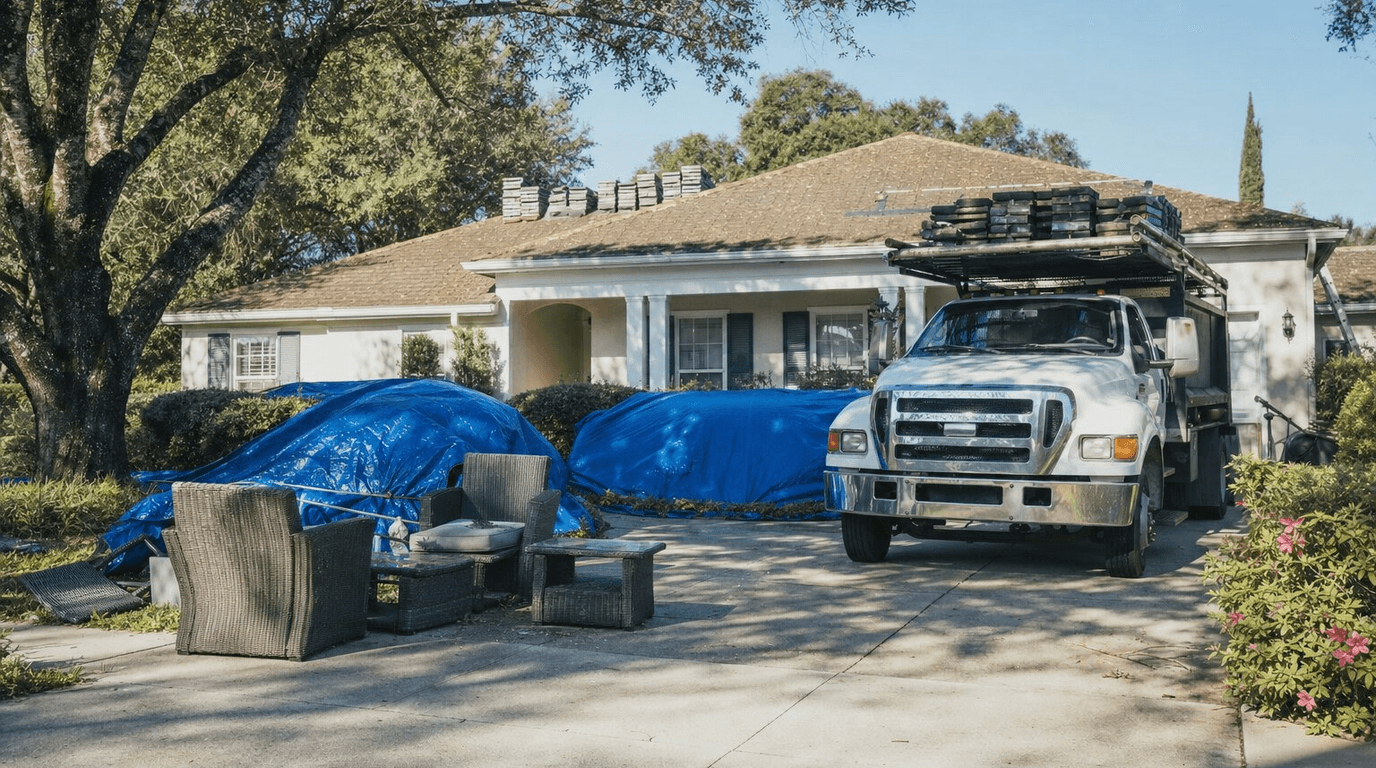
This one makes a bigger difference than people expect. The roofing crew needs access to the entire perimeter of your house — not just the front. They'll be walking the edges, setting up ladders on all four sides, and running a dump trailer or dumpster for the old shingles. If vehicles, lawn furniture, or storage items are blocking those paths, work slows down.
Move your cars off the driveway entirely if you can, or at least to one side. If you have a truck or a trailer normally parked along the house, get it out of the way the night before. It sounds minor but it adds up fast when the crew is trying to set up.
If your roof replacement involves a dumpster drop, your contractor should tell you where it will be placed. Make sure that spot is clear.
Move or Protect Items in the Garage and on the Porch
Vibration from demolition and nailing travels through the structure of your home. Anything hanging on garage walls — tools on pegboards, shelving, decorative items — can shift or fall. Same goes for items on covered porches or patios directly below the roofline.
You don't need to empty your garage. But go in there and look at what's hanging or sitting on shelving above head height, and take down anything that's already borderline precarious. Takes five minutes and saves you from a broken tool or a knocked-over shelf.
Take Down Art and Mirrors on Interior Walls
This one surprises a lot of homeowners. The nail guns used in roofing are powerful, and the impact travels. Anything hanging on picture hooks on your interior walls — especially in upper-floor rooms or rooms directly under sections of the roof being worked on — is at some risk of rattling loose.
Heavy mirrors and framed artwork are the main concerns. Wall-mounted TVs anchored properly to studs are generally fine. Take down anything you'd be upset to see on the floor.
Protect Items in the Attic
When old shingles are torn off and new ones are nailed in, debris falls. Small pieces of old roofing, bits of granule, and dust work their way through gaps around eaves, vents, and old penetrations. If you have boxes of stored items directly under the roof deck in your attic, cover them with a tarp or old sheet the morning of the job.
You can also expect some light dust on attic items. It's not avoidable. A quick cover-up takes two minutes.
Plan for Your Pets
This one matters more than most homeowners anticipate. The crew will be on the roof for most of the day, but they'll also be moving around the yard — walking near fence lines, along the side of the house, in and out of the gate. Dogs that run the yard or cats that go outdoors should be kept inside on installation day.
Beyond the access issue, the noise is genuinely startling for animals. Tear-off and nailing are loud, and if your dog is in a panic all day, that's stressful for everyone including the dog. Keep pets in an interior room with something familiar — a bed, a toy, background noise from a TV or radio — and they'll do fine.
Let the crew know before they start if you have a dog so they're mindful of the gate.
Tell the Kids
If you have young children at home, talk to them the day before about what's going to happen. The noise from a roofing crew is genuinely loud — comparable to sustained construction — and if kids aren't expecting it, it can be upsetting. Nap time during installation is probably not going to happen unless the child is a very heavy sleeper.
Plan accordingly. If there's an opportunity for the kids to be somewhere else that day, it's worth arranging.
The Morning of Installation Day
Be Home for the Start (or Have a Point of Contact)
You don't have to hover. But someone should be reachable when the crew arrives to confirm the scope, point out any specific concerns, and answer questions that come up at the start of the job — like where the hose is if they need water access, or whether there's anything specific about your property the foreman should know.
If you'll be at work, make sure your contractor has your cell number and knows they can reach you. The foreman may have questions early in the day that are easier to handle with a quick call than a guessing game.
At Pierce Roofing, we walk through the installation process with every homeowner before work begins, so there are usually few surprises on the day itself. But being reachable matters regardless of who's doing the work.
Unlock the Backyard Gate
Simple but easy to forget. If the crew needs access through a locked gate, someone has to track down the homeowner to unlock it. Avoid the delay by leaving it open the morning of the job, or by giving the foreman a code or key ahead of time.
Mark Anything Fragile or Important Near the House
If you have in-ground irrigation heads near the foundation, a young tree you don't want a ladder leaned against, or a specific garden bed you'd like to protect, point those out to the foreman at the start of the day. A quick walkthrough takes five minutes and means the crew knows where to be careful.
Plan to Be Away or Stay Inside
You can absolutely be home during the installation. But if you work from home or have calls scheduled, be aware that a roofing crew at full production is loud enough to interfere with phone and video calls from anywhere in the house. Plan around it. Either find a quiet location outside the home for your calls or block that part of your calendar.
Some homeowners choose to run errands or be out of the house for the bulk of the day. That works too. You don't have to watch — the crew is there to work, not to be supervised.
What to Expect During the Installation
If you've never been home during a roof replacement, knowing what's coming reduces the stress.
The crew typically starts with tear-off — removing the old shingles, underlayment, and any damaged decking. This is the loudest and most dramatic-looking phase. Old materials come off in sections and go directly into the dump trailer. Depending on the size of your roof and the number of layers being removed, tear-off can take a few hours.
Once the deck is clean, the crew inspects it for soft spots, rot, or damaged boards. Any bad decking gets replaced before the new system goes on. If you're getting a free roof inspection as part of a pre-project estimate, some of this will already be documented.
Then comes underlayment, ice and water shield at vulnerable areas like valleys and eaves, drip edge, and finally the shingles themselves. The pace picks up during installation — a well-organized crew on a typical residential roof can often complete the shingle installation in one day.
Cleanup typically happens in stages throughout the day and again at the end. The crew should be running a magnet along the perimeter of your home to pick up nails. Expect some minor nail scatter in the grass — it's nearly impossible to eliminate entirely — and plan to do your own walkthrough with a magnet after they leave if you have barefoot kids or dogs.
After the Crew Leaves
Walk the Perimeter With a Magnet
Your contractor should do this. Good ones will. But doing a second pass yourself is worth the ten minutes, especially in areas with heavy foot traffic or near the driveway. Hardware stores sell rolling magnetic sweepers specifically for this purpose — they're inexpensive and genuinely useful.
Check the Attic Within a Few Days
Walk through your attic a few days after the installation to look for any daylight coming through, unusual debris, or signs of moisture intrusion. It's not common, but it's the fastest way to catch anything that needs attention while the contractor's warranty is freshest in everyone's mind.
Document the Work
Take photos of the finished roof from the ground, and file your warranty documentation somewhere you'll actually find it. The manufacturer's warranty and the contractor's workmanship warranty are separate documents. Keep both.
Pierce Roofing backs every job with a 10-year workmanship warranty. That document matters, so treat it like one.
A Note on What Your Contractor Should Handle (So You Don't Have To)
Prepping your home is your job. Coordinating the actual work is theirs.
A competent roofing contractor handles material delivery scheduling, dumpster placement, permit coordination, and crew logistics without burdening the homeowner with any of it. If your contractor is asking you to arrange things that should be their responsibility — or if you're unclear on what's happening and when — those are signals worth paying attention to.
The goal of the pre-job prep list above is to give the crew a clear path to do their work efficiently. It's not to compensate for poor contractor organization. Those are different problems.
If you're getting bids and you want to understand how an installation actually runs from start to finish, our Our Process page lays it out step by step. No surprises. That's the point.
Serving Green Bay and Northeast Wisconsin
Most of our customers are homeowners in Green Bay and the surrounding communities across Brown, Kewaunee, Oconto, Outagamie, Winnebago, and Manitowoc counties. We've been doing this work in Northeast Wisconsin for over 30 years, and we've seen how much smoother a job goes when both sides are prepared.
If your roof replacement is coming up and you want to walk through the prep with someone who's done this a few hundred times, call Michael Pierce directly at (920) 609-8304 (call now). Or if you're still in the planning stage and want an honest look at what your roof actually needs, request a free estimate. We'll give you a straight answer and a clear timeline — no pressure, no same-day signature required.