The Question Every Homeowner Asks Before a Roof Replacement
When it's time to re-roof, you'll probably hear a contractor mention something called a roof overlay — sometimes called a re-roof or lay-over. The pitch sounds reasonable enough: skip the tear-off, lay new shingles directly over the old ones, and save a few thousand dollars. Faster, cheaper, done.
But cheaper upfront doesn't always mean cheaper over time. And for a lot of Wisconsin homes, an overlay isn't just a trade-off — it's a bad fit from the start.
This guide covers what both options actually involve, where overlays can work, where they cause problems, and what factors should drive the decision for your home. No sales pitch, just a straight breakdown.
What Is a Roof Overlay?
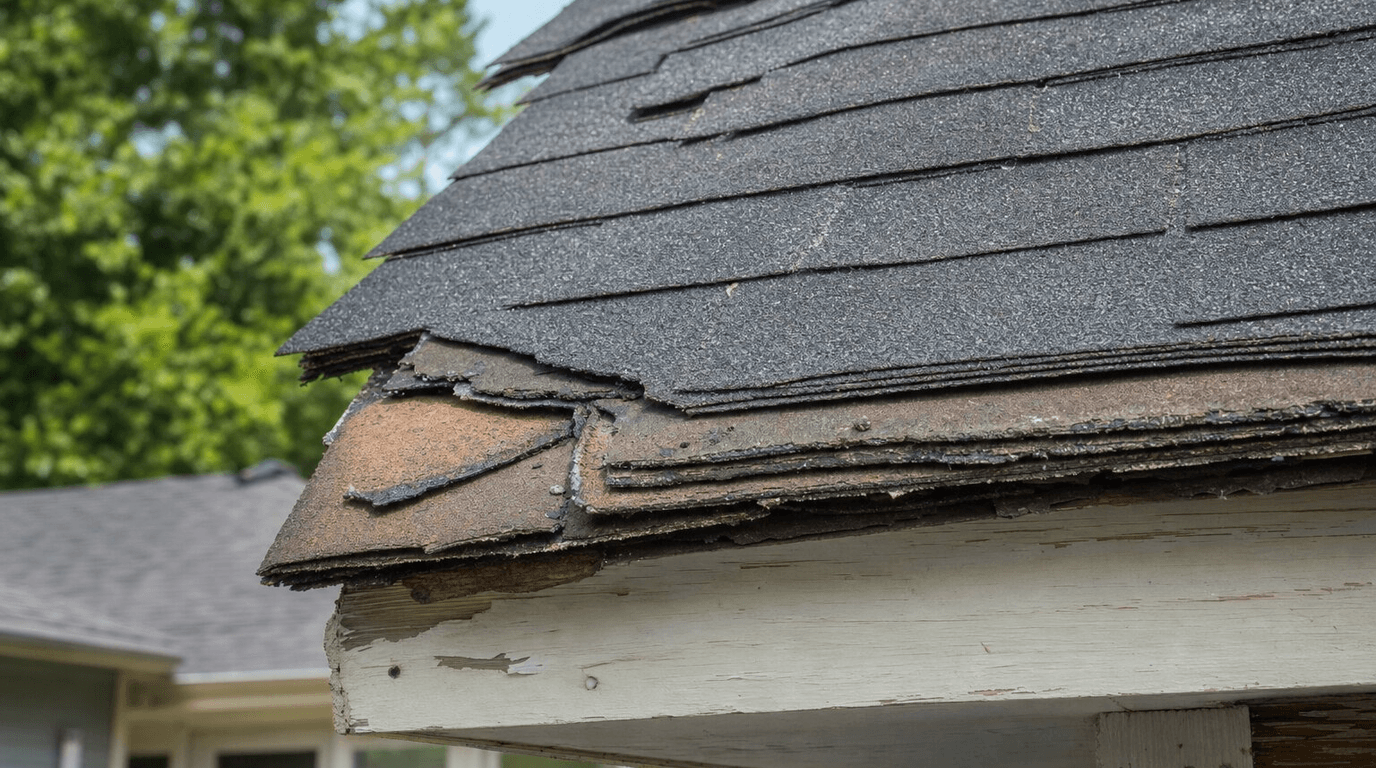
A roof overlay is exactly what it sounds like: new shingles are installed on top of the existing shingles without removing them first. The old layer stays in place. The new layer goes over it.
From a code standpoint, most jurisdictions — including Wisconsin — allow up to two layers of asphalt shingles on a residential roof. If your home already has two layers, an overlay isn't an option regardless of anything else.
For homeowners with a single existing layer, it's technically on the table. Whether it makes sense is a different question.
What Is a Full Roof Replacement (Tear-Off)?
A full roof replacement means everything comes off first. The old shingles, the underlayment, and the flashing all get stripped down to the bare deck. From there, the crew inspects the decking, repairs or replaces any damaged sections, and installs a fresh system from the ground up.
This is how most professional roofers prefer to work — and for good reason. Starting with a clean deck gives you a complete picture of what's underneath. Nothing gets buried. You know exactly what you're getting.
Where a Roof Overlay Can Work
An overlay isn't automatically a bad decision. There are situations where it's a legitimate option:
When the existing deck and shingles are in solid shape. If your old layer is mostly flat, not cupped or curled, and the deck underneath shows no signs of soft spots or rot, the foundation for a second layer is sound. Curled or buckled shingles create an uneven surface that the new layer will telegraph through — and that causes problems with adhesion and appearance down the road.
When the project is genuinely time-sensitive. Selling a house, finishing a rental unit, getting ahead of a leak before winter — there are situations where a faster installation timeline matters. Tear-off adds time. If an overlay is code-compliant and the existing roof is structurally acceptable, it can close that window.
When budget is a hard constraint. The labor savings from skipping tear-off are real. If an overlay adds five to seven more years to a functional roof and buying time is what you need, that's a decision a homeowner can make with full information.
The key word there: full information. An overlay done well, with the right expectations, on a suitable candidate, is not a scam. The problem is when it's sold as an equivalent alternative to a full replacement — because it isn't.
Where Overlays Fall Short
Here's where the honest accounting happens.
The Deck Stays Hidden
This is the biggest concern, and it's one most homeowners don't think about until too late. When shingles go on over shingles, nobody's looking at the deck. If there's delaminating OSB, early rot from ice dam infiltration, or soft spots from a slow leak that never showed up as an obvious drip indoors — all of that gets covered up.
Wisconsin winters are not forgiving on roof decking. Ice dams, freeze-thaw cycling, and the chronic moisture conditions we see across Brown, Kewaunee, and Outagamie counties mean deck damage is more common here than in milder climates. An inspection before a tear-off catches it. An overlay doesn't.
Ice and Water Shield Can't Be Replaced
In a full roof installation, fresh ice and water shield goes down along every eave, in every valley, and around every penetration before any shingles touch the deck. That self-sealing membrane is your most important line of defense against ice dam damage and winter moisture intrusion.
With an overlay, whatever ice and water shield is already there — or isn't there — stays. If the existing membrane is 20 years old and brittle, or was undersized to begin with, you're starting a new roof with a compromised moisture barrier underneath it. That's a real problem in a climate like ours.
Flashing Usually Doesn't Get Properly Addressed
Flashing around chimneys, pipe boots, skylights, and wall transitions is where most roof leaks start. During a full tear-off, all the old flashing comes off and new material goes in. During an overlay, most contractors work around the existing flashing, maybe adding caulk at the edges.
If the old flashing was already failing — and after 15 to 20 years on a Wisconsin roof, it usually has some issues — layering new shingles around it doesn't fix anything. You're putting new roofing on top of the same vulnerable joints.
The Weight Adds Up
Two layers of asphalt shingles is significantly more weight than one. Most residential roof structures are built to handle it, but if your home is older, has any framing concerns, or you're in an area that sees heavy snow accumulation — and Northeast Wisconsin certainly qualifies — it's worth having someone look at the load before deciding.
Warranty Implications
Many shingle manufacturers reduce or void their product warranty when shingles are installed over an existing layer. The reason is straightforward: they can't control what's underneath. If you're counting on a 30- or 50-year warranty from an Atlas or equivalent product, read the fine print carefully before going the overlay route. You may end up with a significantly shorter coverage period.
It Delays the Inevitable (and Adds Cost)
When an overlay eventually needs replacing — and it will — the next contractor has to tear off two layers instead of one. That's more labor, more disposal cost, more weight coming off the roof. The savings you captured upfront often get eaten by higher removal costs down the line, plus the cost of any deck repairs that would have been caught years earlier if the deck had been exposed.
What Wisconsin Weather Does to This Decision
The climate argument for a full tear-off is particularly strong in Northeast Wisconsin. Here's why.
Ice dams are a near-annual event in Green Bay and the surrounding counties. They form when heat escapes through the attic, melts snow on the upper roof, and the meltwater refreezes at the cold eave overhang. That ice backs water up under the shingles. With a fresh ice and water shield and a clean deck, that water typically stops at the membrane. With an aged overlay, it has more layers to infiltrate and potentially more gaps to find.
Freeze-thaw cycles also do a number on the seal strips on asphalt shingles. New shingles on a flat, fresh deck seal properly. New shingles on a wavy, granule-stripped old layer have more trouble seating consistently, which means more entry points for wind-driven rain and ice.
If your roof regularly sees ice dams or you've had any moisture issues in the attic, that alone usually settles the overlay vs. tear-off question. A full free roof inspection can tell you what you're actually dealing with before you decide anything.
A Side-by-Side Look
Full Tear-Off Replacement
- Deck fully inspected and repaired before anything is installed
- Fresh ice and water shield, underlayment, and flashing throughout
- Full manufacturer warranty on shingles
- Clean baseline for the next 25 to 50 years
- Higher upfront cost, longer installation time
- Only one layer of shingles to remove at end of life
Roof Overlay
- Lower upfront cost, faster installation
- No visibility into deck condition
- Existing ice shield and flashing remain in place
- Manufacturer warranty may be reduced
- Extra removal cost when the overlay eventually needs replacing
- Only possible if you have a single existing layer
The Code Question in Wisconsin
Wisconsin follows the International Residential Code, which permits a maximum of two layers of asphalt shingles on a sloped residential roof. Many municipalities have adopted this without modification, but some local jurisdictions have stricter rules. If you're in Green Bay proper, a township in Oconto County, or anywhere else in the six-county area, your contractor should verify local code compliance before planning an overlay.
This is one reason to work with a contractor who knows the area. Rules differ, and a permit pulled on a non-compliant overlay creates headaches when you try to sell the property.
Questions to Ask Your Contractor
Before agreeing to either option, push your contractor on a few things:
Can we see the deck before committing? A reputable contractor should be able to give you a read on deck condition from what's visible at the edges, soffits, and attic interior — and should be honest if there's a risk of finding problems once shingles come off.
What happens to the existing flashing? If a contractor proposing an overlay says they'll "work around" existing flashing with caulk, that's a red flag. Flashing replacement may add cost, but it's not optional on a roof that's supposed to last another two decades.
What warranty does the manufacturer provide for this installation method? Get the answer in writing, not just verbally.
Are there any signs of attic moisture or deck damage from inside? A quick look in the attic before any roofing work is standard practice. If someone is discouraging that step, pay attention.
What Pierce Roofing Recommends
Honestly, we rarely recommend overlays — not because we're trying to upsell every job, but because the homes we work on in Green Bay and across Northeast Wisconsin have typically been through enough winters that the deck and underlayment system deserve a hard look.
In 30-plus years of roofing here, Michael Pierce has pulled up overlays that were hiding significant deck damage, failed ice shields, and flashing that had been leaking slowly for years without showing up as an obvious interior drip. Every one of those situations was more expensive to fix than if the problem had been addressed earlier.
That said, every roof is different. If a home is a genuine candidate for an overlay — single layer, sound deck, limited budget, time-sensitive situation — we'll say so. We're not in the business of selling tear-offs when they aren't warranted.
What we are in the business of is telling you exactly what's going on with your roof. If you're weighing your options, a free roof inspection is where to start. We'll get up there, look at what's actually on your home, check the attic if access allows, and give you a straight answer on what we find.
Pierce Roofing is Atlas PRO+ Platinum certified, carries $2 million in liability coverage, and backs every installation with a 10-year workmanship warranty. We serve homeowners across Brown, Kewaunee, Oconto, Outagamie, Winnebago, and Manitowoc counties.
For asphalt shingle roofing specifically, we'll walk you through product options, warranty tiers, and what goes into a proper installation from the deck up — so you know exactly what you're paying for.
Call us at (920) 609-8304 or request a free estimate online. We'll give you the information you need to make the right call for your home — no pressure.