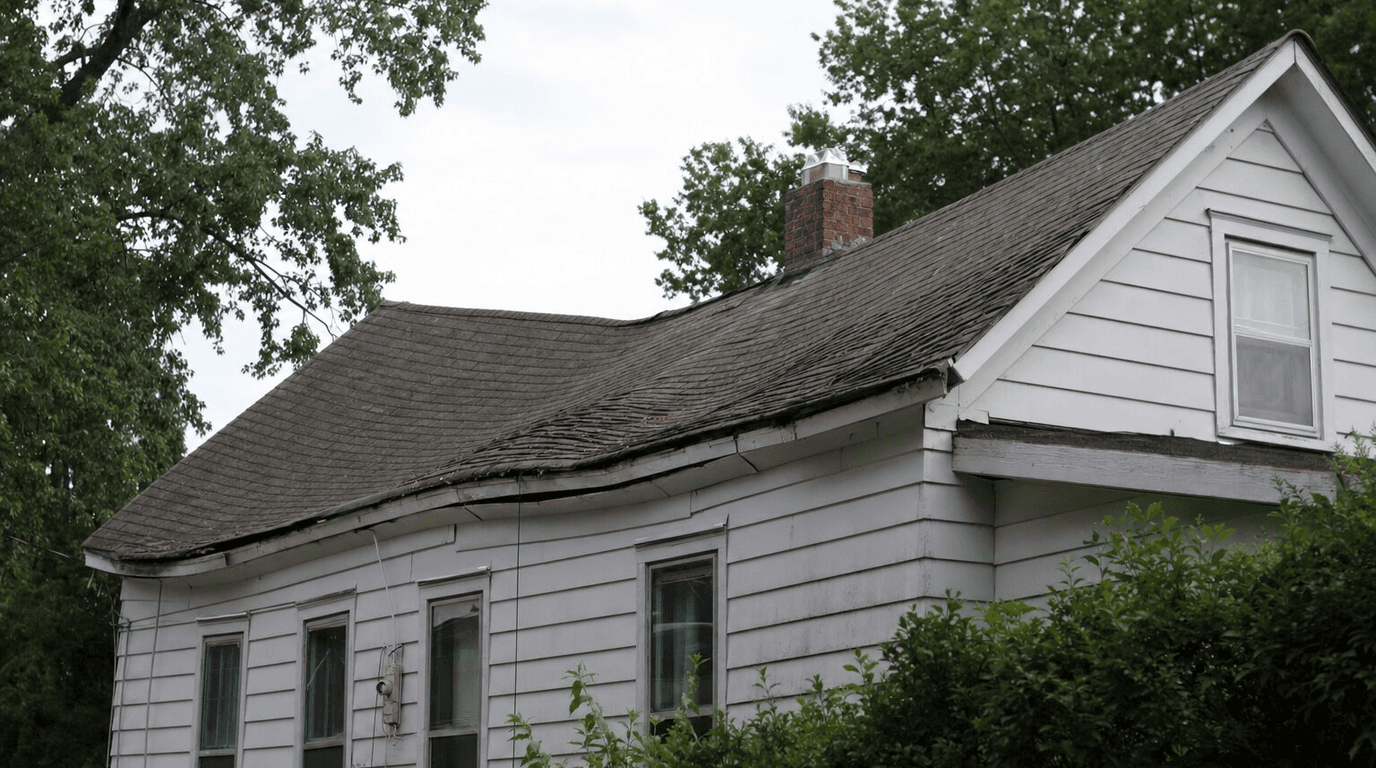
That Dip in Your Roofline Is Not Something to Watch and Wait On
Most homeowners notice it from the driveway. A slight curve in the ridge. A section of roof that seems to bow inward between the rafters. Maybe the roofline doesn't look quite straight anymore. If that description sounds familiar, you're looking at a sagging roof — and it's one of the most serious structural warning signs a home can show.
Roof sagging causes vary, but they all point to the same thing: something underneath is failing. The shingles on top are just the surface. What matters is what's going on below them. In Northeast Wisconsin, where heavy snow loads, freeze-thaw cycles, and decades of moisture take a toll on homes, roof sag is more common than most people realize — and more dangerous than most people expect.
Here's what's actually happening when a roof starts to sag, why it matters, and when you need to stop watching and start calling.
What Causes a Roof to Sag?
There's rarely a single culprit. Roof sagging is almost always the result of one or more problems working together over time. Understanding the cause isn't just academic — it determines what kind of repair is needed and how urgent the situation is.
A Compromised Roof Deck
The roof deck is the layer of plywood or OSB panels nailed directly to your rafters. Everything else — underlayment, ice and water shield, shingles — sits on top of it. When that deck gets wet and stays wet, it rots. OSB in particular degrades quickly when it's repeatedly exposed to moisture, and once it softens, it loses the structural rigidity that holds your roof flat.
Sagging roof deck causes in Wisconsin often trace back to ice dams, failing flashing, or inadequate attic ventilation that allows condensation to build up against the underside of the sheathing all winter. By the time you see a visible dip from the street, the rot may have been progressing for two or three years.
Damaged or Undersized Rafters and Trusses
Rafters are the angled structural members that give your roof its shape and carry its weight. If a rafter cracks, breaks, or was never properly sized for the span and load it's carrying, the roof above it will start to deflect — meaning it bends under load rather than holding its shape.
In older Green Bay homes, it's not uncommon to find rafters that were originally adequate for a standard asphalt shingle but were never reinforced when a heavier material was added later. Add thirty years of Wisconsin winters and you have a recipe for structural movement.
Snow Load Damage
Wisconsin winters are not gentle. A single wet snowstorm can deposit eight to ten inches of dense, heavy snow on your roof — and if that snow sits for days before melting, the cumulative weight adds up fast. Wet snow weighs roughly 20 pounds per cubic foot. A typical roof section carrying just a foot of that snow is holding loads it was never designed to sustain indefinitely.
When that weight exceeds what the structure can handle, rafters crack, ridge boards deflect, and the roofline begins to drop. If you've ever noticed your roof looking different after a particularly hard winter, snow load damage is often why. We wrote a full breakdown of Wisconsin snow load limits and what they mean for your roof if you want to understand the numbers.
Long-Term Water Infiltration
Water is patient. A small leak that goes unfixed for a few years doesn't stay small — it spreads. Every time it rains, water follows the same path into your roof system, soaking insulation, saturating decking, and slowly degrading the wood framing underneath. By the time you notice a drip inside the house, the structural damage may already be significant.
A sagging roof is sometimes the first visible clue that a slow, chronic leak has been doing its work in places you couldn't see. If you've noticed any of the common warning signs of a roof leak, don't wait for the sag to appear before taking it seriously.
Inadequate Original Construction
Sometimes the problem started before you owned the home. Rafters spaced too far apart, decking that was undersized for the span, or a ridge board that was never properly supported — these are construction shortcuts that can go unnoticed for decades before the roof finally shows the strain. In Wisconsin's climate, an already-marginal structure doesn't get the benefit of the doubt for long.
What Are the Real Risks of a Sagging Roof?
This is where homeowners sometimes make a costly mistake. A sagging roof doesn't always look dramatic. It might be subtle enough that it's easy to convince yourself it's cosmetic or that it's been there forever. It hasn't. Rooflines don't sag without a reason, and the reason is always structural.
Left alone, roof structural damage in Wisconsin compounds. A rotted deck section spreads as adjacent panels absorb moisture. A cracked rafter puts more load on the ones next to it. What might have been a targeted repair job becomes a much larger project the longer it sits.
The more serious risk is partial or full roof collapse. That sounds extreme, but it happens — especially after a heavy snow event when an already-weakened structure is hit with additional load. And beyond the structural threat, any area of sag is collecting water. Every rain event is pushing water against whatever is failing, accelerating the damage.
If your roof is sagging, you're not dealing with a cosmetic problem. You're dealing with a structural one.
How to Tell If Your Roof Is Actually Sagging
From the ground, look at your roofline straight on. The ridge — the horizontal peak — should be perfectly straight from end to end. Any visible curve or dip is worth investigating. The same applies to the slope on each side: it should look flat and even, not wavy or bowed between the rafter lines.
From inside your attic (if you can safely access it), look for:
- Rafters that appear bowed, cracked, or separated from the ridge board
- Decking that looks warped, discolored, or has soft spots when pressed
- Light coming through anywhere it shouldn't
- Water staining or mold on the framing or insulation
- A musty smell that persists even in dry weather
Any of those signs warrants a professional inspection. Don't try to assess structural integrity from a ladder — the picture you get from the outside is limited, and a proper evaluation requires getting into the attic and understanding what's holding the roof up.
What Roof Sag Repair in Wisconsin Actually Involves
The scope of repair depends entirely on what's causing the sag. There's no universal answer, and anyone who gives you a firm quote without inspecting the structure first should give you pause.
At minimum, the damaged component needs to be replaced or reinforced. For a rotted deck section, that means cutting out the compromised plywood, addressing the moisture source, and installing new sheathing before any surface materials go back on. For a cracked or deflected rafter, the repair typically involves sistering — installing a new full-length rafter alongside the damaged one and fastening them together to restore structural strength.
If the ridge board has failed or multiple rafters are involved, the scope gets larger. These repairs require proper shoring of the roof while work is done and a careful sequence of structural corrections before any surface material is touched. This is not DIY territory. Not even close.
A free roof inspection is the right starting point. A trained eye can assess from the attic and exterior what's driving the sag and what it will take to correct it — before you commit to anything.
When Is Repair Enough Versus Replacement?
This question comes up every time a homeowner discovers structural damage. The honest answer: it depends on the age of the roof, the extent of the damage, and whether the surface materials are worth preserving.
If your shingles have five or more years of life left and the structural issue is isolated — one rafter, one section of deck — targeted roof repair usually makes sense. You fix the structure, replace the affected surface area, and you're done.
But if your roof is already pushing 20 years, if the decking damage is widespread, or if you've been patching the same areas repeatedly, that math changes. Doing structural work only to put it under an aging roof that will need replacement in three years is spending money twice. In those cases, full roof replacement that addresses the structure and surface together is the more economical path.
That's a conversation worth having with a roofer you trust, not one you're pressured into. At Pierce Roofing, we'll give you a straight answer about what makes sense for your home and your budget — not just what generates the bigger job.
Green Bay Homes Face Specific Structural Stressors
It's worth being direct about this: homes in Green Bay and the surrounding Northeast Wisconsin region deal with conditions that accelerate every one of the problems described above. Average annual snowfall of over 45 inches, freeze-thaw cycles that can repeat dozens of times in a single winter, and temperature swings of 80-plus degrees between seasons put more stress on roofing systems here than in most of the country.
Older homes in the area — many built in the 1960s through 1980s — were built to standards that didn't anticipate the combination of modern insulation levels and Wisconsin's climate reality. Better-sealed homes trap more heat in attics, which worsens ice damming, which accelerates deck rot. It's a cycle that makes regular inspections and early intervention more important here than almost anywhere.
If your roof has made it through a few Wisconsin winters without a professional set of eyes on it, now is the time. Our residential roofing team has worked on hundreds of homes across Brown, Outagamie, Winnebago, and the surrounding counties. We know what Wisconsin winters do to rooftops, and we know how to find structural problems before they become emergencies.
Don't Wait Until It Gets Worse
A sagging roof is not a "watch and see" situation. It's a call-today situation. The longer structural damage sits, the more it spreads, and the more expensive the repair becomes. What costs a few thousand dollars to fix now can become a full replacement job if the damage has time to compound.
Pierce Roofing offers free, no-pressure roof inspections for homeowners across Northeast Wisconsin. Owner Michael Pierce has over 30 years of experience, and the company is Atlas PRO+ Platinum certified and carries $2M in liability coverage. If something is wrong, we'll tell you exactly what it is and what it will take to fix it.
Call us at (920) 609-8304 or schedule your free inspection online. If your roof is showing signs of structural stress, the best time to deal with it was last year. The second best time is today.