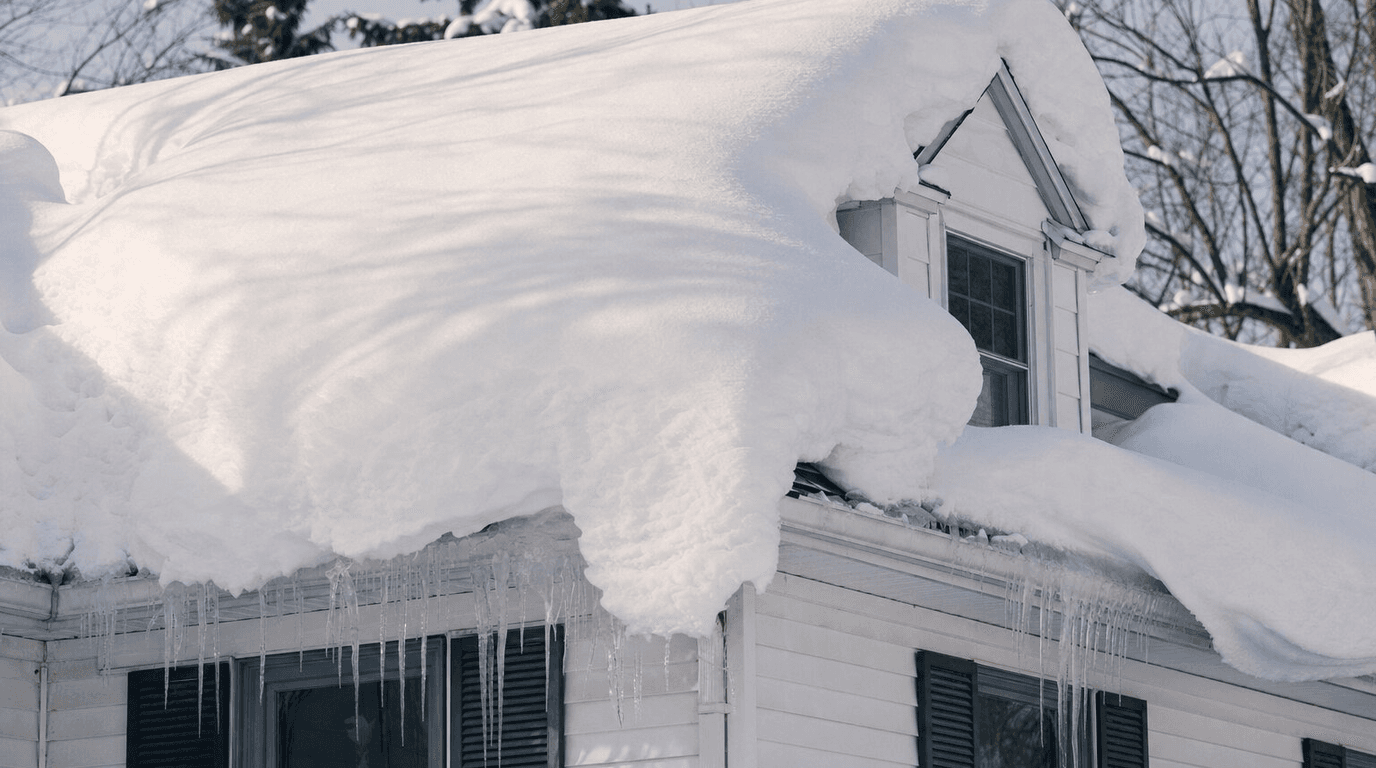
Every winter in Northeast Wisconsin, the same question comes up after a serious storm: is my roof okay? It's a reasonable thing to wonder. Green Bay averages around 45 inches of snow per season, and some years we blow well past that. Most roofs handle it fine. But some don't — and the ones that fail rarely give you much warning before they do.
So let's answer the question directly: how much snow can a roof actually hold, what makes one roof more vulnerable than another, and what should you do if you're not sure yours is safe?
What "Snow Load" Actually Means
Snow load is the weight of accumulated snow on a roof, measured in pounds per square foot (psf). It's not just about depth — it's about density. Fresh, fluffy snow weighs roughly 3 pounds per cubic foot. Wet, packed snow can hit 20 pounds per cubic foot or more. Ice is even heavier.
That difference matters enormously. A foot of light powder is very different from a foot of heavy, wet March snow. And if you've got a layer of ice underneath from a previous melt cycle — which is extremely common in Green Bay winters — your actual load could be two or three times what the snow depth alone suggests.
Wisconsin's building code requires residential roofs in most of the state to handle a ground snow load of 30–40 psf, depending on location. But that's a minimum design standard, not a comfort zone. Older homes built before modern codes may fall short of even that. And roofs that have been poorly maintained, previously damaged, or improperly repaired can fail well below their rated capacity.
How Much Snow Can a Roof Hold?
As a rough rule of thumb: most residential roofs in Wisconsin are designed to carry somewhere between 20 and 40 psf of snow load. Here's a quick way to estimate what's on your roof right now:
- Fresh, fluffy snow: about 3 lbs per square foot per foot of depth
- Packed or settled snow: 10–12 lbs per square foot per foot of depth
- Wet, heavy snow: 15–20 lbs per square foot per foot of depth
- Ice: approximately 57 lbs per cubic foot — even a one-inch layer adds up fast
So if you've got 18 inches of dense, settled snow on your roof, you could easily be looking at 15–20 psf just from the snow — before factoring in any ice beneath it. Add a fresh layer of wet snow on top of that, and you're pushing the limits of what many roofs are built to handle.
The structure underneath the shingles matters too. Roof framing, span, age, and the condition of load-bearing walls all factor into how much your specific roof can safely carry. There's no single number that applies to every house.
Why Green Bay Roofs Face Specific Challenges
Brown County and the surrounding six-county area see some of Wisconsin's most demanding winter conditions — not just because of snowfall totals, but because of freeze-thaw cycles. A warm day in January can melt the bottom layer of your snowpack, which then refreezes overnight into a dense ice layer. The snow above it adds weight; the ice below it adds even more. Repeat that cycle a few times across a single winter and you've stacked up a surprisingly heavy load.
Flat and low-slope roofs have it worse. Steeper roofs shed snow naturally as it slides off. A 3:12 pitch holds snow; a 9:12 pitch sheds it. If you have a flat roof, an addition with a low slope, or any area where snow tends to drift and pile, those spots are your highest-risk zones.
Drifting is another factor people underestimate. When wind moves snow from an open area and deposits it against a wall, dormer, or valley, it can stack dramatically in one spot — sometimes three or four times deeper than the surrounding roof. That localized weight concentration is exactly where structural problems start.
Warning Signs Your Roof Is Under Too Much Stress
Your roof will often tell you something is wrong before it fails — if you know what to look for. Take these seriously.
From outside:
- Visible sagging or bowing in the roofline
- Gutters pulling away from the fascia under snow weight
- Visible cracks or gaps where the roof meets walls
- Snow sliding off in sudden, large sheets (can indicate ice dam failure)
From inside:
- Popping, creaking, or cracking sounds during or after a heavy storm
- Doors or windows that suddenly stick or won't close properly (sign of structural movement)
- Visible bowing in the ceiling
- New cracks in drywall near corners or along the ceiling line
Any of those interior signs, especially the sounds, are a reason to call a professional immediately. Don't wait to see if it gets better. Our post on roof sagging causes and what to do goes deeper on this — including when sagging indicates an active structural emergency.
When to Remove Snow From Your Roof
Generally speaking, you should consider roof snow removal if you have more than 12–18 inches of heavy, wet snow, or if you're seeing any of the warning signs above. But the process itself carries real risks — both to you and to your roof.
Improperly removing snow can tear off shingles, damage gutters, create ice dams by leaving uneven layers, or simply result in a fall. If you're going to do it yourself, a roof rake with a telescoping handle, used from the ground, is the only safe approach for most homeowners. Never go up on a snow-covered roof.
For anything beyond what a roof rake can reach, or for any roof showing signs of stress, professional snow removal is the right call. We cover safe removal methods in detail in our guide on safe snow removal for Wisconsin roofs.
The Role of Ice Dams in Snow Load Problems
Ice dams and snow load go hand in hand. When heat escapes from your living space through the roof deck, it melts the bottom layer of snow. That water runs down to the cold eaves and refreezes, building up a wall of ice that traps more meltwater behind it. That pooled water can back up under shingles and cause leaks — and the ice dam itself adds significant weight to the edge of your roof, right where it's least reinforced.
If you're dealing with recurring ice dams, it's almost always an insulation and ventilation issue at the root. Our ice dam prevention guide walks through the real causes and fixes — not just the temporary solutions that don't address the underlying problem.
From a roof maintenance perspective, ice dams and snow load stress are two of the most preventable sources of serious winter damage. A well-ventilated attic, properly installed insulation, and clean gutters going into winter make a significant difference in how your roof handles a heavy Wisconsin season.
What to Do If You're Concerned About Your Roof Right Now
If you've had a major snowfall and you're not sure whether your roof is handling the weight safely, here's what to do:
- Walk around the outside of your home and look at the roofline from different angles. Any visible sag or bowing is a red flag.
- Go into your attic if it's safe to access and look for signs of structural movement — cracked rafters, bent trusses, or visible daylight.
- Check interior doors and windows for sticking.
- Listen. Unfamiliar creaking or popping under snow load deserves professional attention.
If anything looks or sounds off, don't try to diagnose it yourself. Roof repair after a partial failure is significantly more expensive than a preventive inspection. And if you're genuinely worried about an active situation, our team provides emergency roof leak repair for urgent cases.
How Older Roofs Handle Snow Differently
Age matters a lot here. A roof that's 20-plus years old has seen hundreds of freeze-thaw cycles, years of UV exposure, and gradual degradation of the underlying decking and framing. Even if the shingles still look okay from the street, the structure underneath may not be what it once was.
Sheathing that has absorbed moisture over the years weakens. Fasteners corrode and lose holding power. Rafters that were undersized to begin with (common in older Wisconsin homes) have less margin. All of that means an older roof may reach its practical load limit well below what it was originally rated for.
If your roof is approaching or past its expected lifespan and you've been dealing with heavy winters, a professional assessment before next season isn't a bad idea. It's much easier to plan for residential roofing work on your timeline than to scramble after a failure.
Get a Free Roof Inspection Before Next Winter Hits
Michael Pierce and the team at Pierce Roofing have been working on Northeast Wisconsin roofs for over 30 years. We know what Green Bay winters do to a roof, and we know what to look for that most homeowners miss. If you're unsure about your roof's condition — whether that's after a heavy storm this season or heading into next winter — a professional set of eyes is worth a lot more than guessing.
We offer free roof inspections to homeowners across Brown, Kewaunee, Oconto, Outagamie, Winnebago, and Manitowoc counties. No pressure, no obligation — just an honest assessment of where you stand.
Call us at (920) 609-8304 or schedule your inspection online. We're Atlas PRO+ Platinum certified, fully insured to $2M, and we back our work with a 10-year workmanship warranty. Your roof takes care of your family — make sure someone's taking care of it.