Why Snow on Your Roof Is a Bigger Deal Than Most Homeowners Think
A fresh snowfall looks beautiful. It also weighs a lot more than you'd expect.
Wet, heavy snow can weigh anywhere from 20 to 60 pounds per cubic foot. A modest 12 inches sitting on a 2,000-square-foot roof can add tens of thousands of pounds of force your structure wasn't designed to handle indefinitely. In Northeast Wisconsin, that's not a hypothetical. Storms in Brown, Winnebago, and Oconto counties regularly pile on 18 to 24 inches in a single event, and temperatures that hover just below freezing make the snow pack dense and wet.
The good news: removing snow from your roof is something most homeowners can do safely with the right tool and the right approach. The bad news: doing it wrong — wrong tool, wrong angle, wrong timing — causes the exact damage you were trying to avoid.
This guide covers how to remove snow from your roof safely, how to use a roof rake correctly, and when to step back and call a professional.
The Tool That Actually Works: The Roof Rake
Forget the shovel. If you're working from the ground or a ladder, a roof rake is the only tool designed for this job.
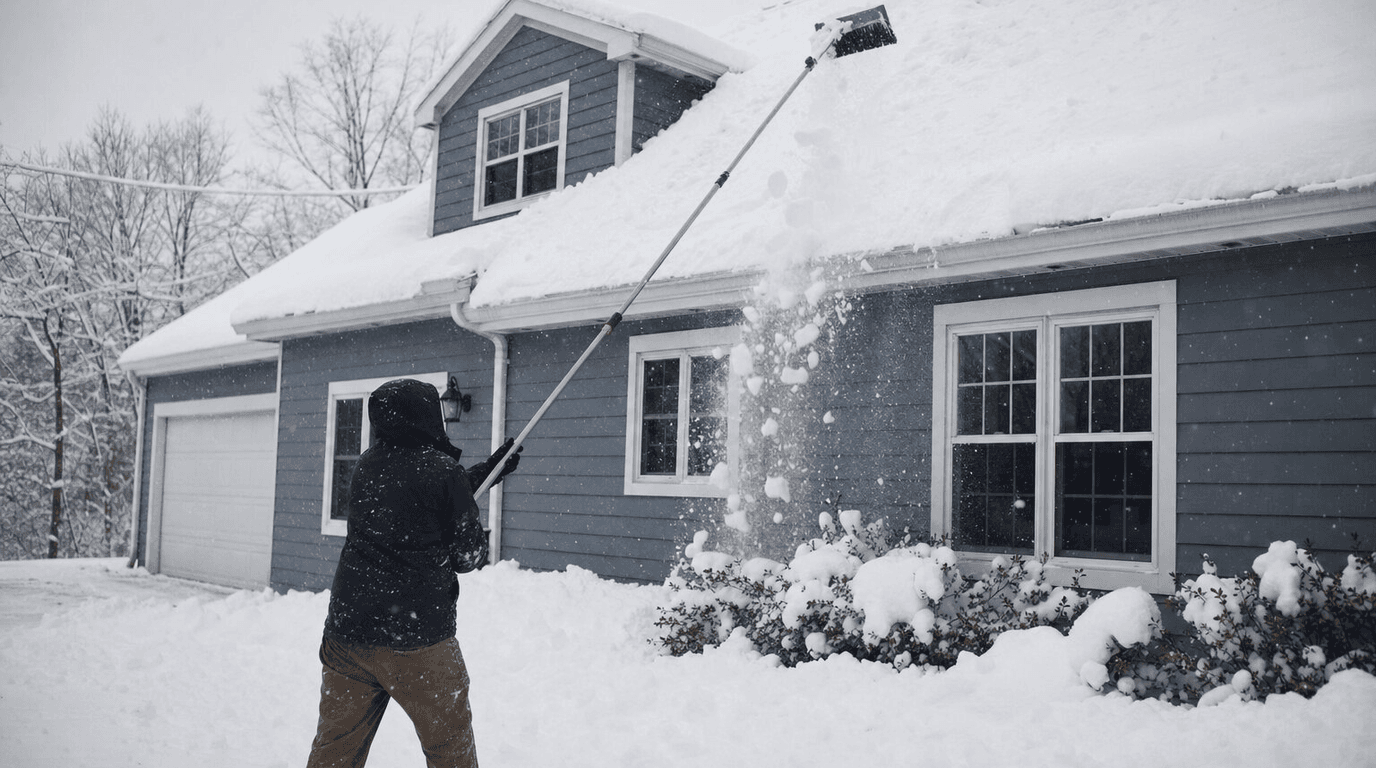
A roof rake is a long-handled aluminum or plastic tool with a wide, flat head. The handle extends 16 to 21 feet, which lets most homeowners reach the lower third of a sloped roof without ever leaving the ground. That last part matters. A significant number of winter roofing injuries happen when homeowners climb onto a snow-covered roof — a surface that's cold, slick, and uneven under the snow.
When shopping for one, look for a model with a slide-on head made of lightweight aluminum or polycarbonate plastic. Avoid metal-toothed rakes designed for leaves. Those will tear shingles apart.
How to use a roof rake correctly:
Start at the edge of the roof, not the peak. Pull snow downward in the direction of the slope — always with gravity, never against it. Work in sections about three feet wide, taking off 12 to 18 inches of depth at a time rather than trying to pull the whole load in one pass. Keep the rake head flat against the roof surface at a shallow angle; digging in or twisting the head can catch and peel shingles. And stay out of the fall zone directly below where snow is dropping — it slides in chunks and can knock you off your feet.
That's really the whole technique. It's not complicated. What trips people up is rushing it.
What to Leave On (Yes, Really)
Here's something most guides skip: you don't need a bare roof. You need a safe roof.
Leaving one to two inches of snow on the surface actually protects your shingles from abrasion as you rake. Trying to scrape down to the shingle surface puts unnecessary wear on the granule layer — the part of asphalt shingles that shields the underlying mat from UV and moisture. Every unnecessary scuff takes a little life off your shingles.
The goal is load reduction, not a clean roofline. Focus on getting major accumulation down. Once you've taken off the bulk, you're done.
The Times You Should Not DIY This
Self-removal works well for single-story homes with accessible eaves and moderate pitches. It's not the right call in every situation.
Skip the DIY approach if your roof pitch is steeper than a 6:12 (meaning it rises 6 inches for every 12 inches of horizontal run). On steep pitches, raking becomes difficult from the ground, and the temptation to climb grows — which is where things go wrong fast.
Also hold off if you're already seeing signs of ice dams. A thick ridge of ice along your eaves means water is already backing up under your shingles, and raking the snow off at that point may cause a sheet of ice to release suddenly and take shingles with it. Ice dams need a different approach entirely. We covered that in detail in our guide on safe ice dam removal methods for Green Bay homeowners.
And if your roof has existing damage — missing shingles, soft spots, visible sagging — the safest move is a free roof inspection before you put any additional stress on the structure. A rake won't know it's pulling on a compromised section.
Signs Your Roof Is Under Too Much Stress
You don't always need a measuring tape to know your roof is struggling. Pay attention to these warning signs:
Creaking or popping sounds from inside the house during or after a storm. That's the structure flexing under load. A little noise is normal; persistent cracking is not.
Doors and windows that suddenly stick or won't close smoothly. When framing shifts under weight, door frames go slightly out of square first.
Visible sagging in the roofline or ceiling. If you can see it from the ground, it's serious.
Any of these signs means you should stop raking and call someone. The structure may need professional assessment before you add more movement to it. Our team handles emergency situations year-round — including structural concerns after heavy snow events.
Preventing the Damage Before the Snow Hits
The best snow removal strategy starts in October, not February.
A pre-winter roof maintenance inspection lets a professional catch the small problems that turn into big ones under snow load: cracked flashing, aging sealant, deteriorating shingles, and — critically — attic insulation and ventilation issues. Poor attic ventilation is the #1 contributor to ice dam formation in Wisconsin homes. When warm air escapes through the roof deck unevenly, it melts snow in patches, and that meltwater refreezes at the cold eaves into the ice ridges that cause water intrusion.
Fixing ventilation in the fall costs a fraction of what an ice dam-related ceiling repair runs in spring. We've seen Brown County homeowners spend $8,000 repairing water damage from ice dams that a $400 attic baffling fix would have prevented entirely.
If you've been putting off that inspection, now is a good time. Spring thaw brings its own set of problems — and they're easier to address when you catch them before the freeze-thaw cycles of late winter do their damage.
A Note on Roof Rakes and Gutters
If your home has gutters, keep the rake head above them during removal. Dragging snow through a gutter puts lateral stress on the hangers and can pull the gutter away from the fascia. Once that joint separates, water runs straight down behind the fascia board instead of through the downspout — and behind-fascia moisture damage is one of the more expensive repairs we see.
Also clear the area around your downspouts after a snow event. Packed snow at the downspout base can block drainage when things start melting, and standing water at your foundation is its own problem.
When to Call Pierce Roofing Instead
There's no shame in handing this off. Some roofs just aren't safe to work around as a homeowner, and some snow events drop enough volume that even a manageable roof becomes a full afternoon of physical work in bitter cold.
Pierce Roofing serves homeowners throughout Brown County and all of Northeast Wisconsin — including Kewaunee, Oconto, Outagamie, Winnebago, and Manitowoc counties. Owner Michael Pierce has spent 30+ years working on roofs in this specific climate. He knows how Wisconsin snow loads behave, how regional roofing materials perform in freeze-thaw cycles, and what signs indicate a roof that needs attention before spring.
If you're dealing with heavy accumulation, visible damage, ice dams, or just want a professional set of eyes on your roof before or after a big storm, give us a call at (920) 609-8304. We offer free roof inspections — no pressure, no obligation, just an honest assessment of what your roof needs.
You can also learn more about the problems snow and ice create in our related post on snow load and roof capacity in Wisconsin.
Don't wait until you see a water stain on the ceiling. By then, the damage is done. The best time to deal with winter roof stress is before it becomes a winter roof problem.