What's Actually Happening When an Ice Dam Forms
Most homeowners see the ice buildup and think the problem is outside, but ice dams in Green Bay form because of what's happening inside your attic.
Here's the short version: warm air escapes through your ceiling into the attic, heats the roof deck, and melts the snow on top. That meltwater runs down toward the cold eaves, hits a freezing surface, and refreezes into a ridge of ice. The ice blocks subsequent meltwater from draining. That water backs up under your shingles, and that's when the damage happens inside your walls and ceilings.
So when you're dealing with a visible ice dam, water is likely already working its way in. The question is how to remove the ice without making the damage worse. And that's where a lot of Green Bay homeowners get into trouble.
The Dangerous Methods You Need to Stop Immediately
Every winter, we get calls after someone tried to fix the problem themselves and made it significantly worse. Some of these mistakes cause thousands in additional damage. A few land people in the hospital.
Ice picks, chisels, and axes. Chipping ice off your roof sounds intuitive. It's a disaster. Shingles are brittle in freezing temperatures: one bad swing and you've cracked the surface, compromised the granule layer, or punched straight through to the underlayment. We've seen roofs where a homeowner's DIY ice removal did more damage than the dam itself.
Pressure washers with hot water. The steam and thermal shock can lift shingle tabs, blast away sealant, and force water under the membrane. Hot water also refreezes faster in sub-zero temperatures than you'd expect, sometimes creating worse ice conditions within hours.
Random salt dumping. Pouring rock salt directly onto shingles will strip the granules and accelerate oxidation. The run-off also kills landscaping. If you've seen the advice to toss a handful of salt on your roof, ignore it.
Getting on a snow-covered roof yourself. This one is serious. A pitched roof with any snow or ice is one of the most hazardous surfaces a person can stand on. We don't recommend it even for professionals without the right equipment, and we say that as people who do this for a living.
Safe Ice Dam Removal Methods That Actually Work
The good news: there are methods that effectively address ice dams without destroying your roof or putting you in danger.
Calcium Chloride Ice Melt (Applied Correctly)
Calcium chloride (not rock salt, not table salt) is safe for asphalt shingles when used properly. Fill a tube sock or pantyhose leg with calcium chloride pellets, tie off the end, and lay it perpendicular across the dam so it extends over the roof edge. The calcium chloride melts a channel through the ice, giving trapped water a path to drain.
This approach is slow. It can take 12 to 24 hours depending on temperatures. But it works without mechanical damage to your shingles. The key is using calcium chloride specifically: sodium chloride (rock salt) and magnesium chloride both cause surface degradation over time.
Roof Raking from the Ground
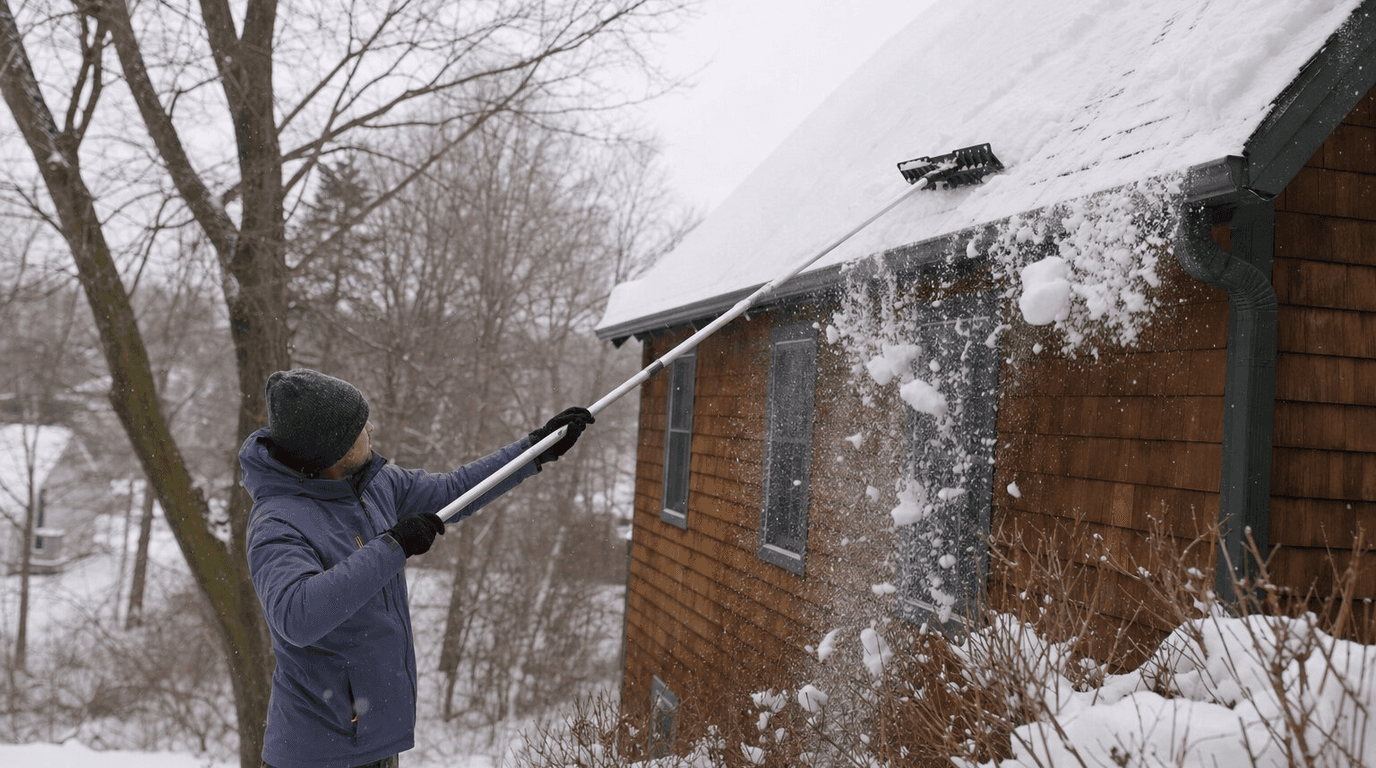
Removing the snow load before an ice dam can fully form is the most underrated prevention step. A good roof rake with an extendable handle lets you pull snow off your lower roof sections from the ground, without ladders, without climbing, and without contact with the shingles themselves.
Ideal timing is right after a snowfall, before freeze-thaw cycles create hard pack. You're not going to rake a full two-story roof, but clearing the lower 3 to 4 feet of your slope removes the fuel supply. That means less snowmelt, less water, and smaller ice formations.
For more detail on this approach, our guide on safe snow removal for Wisconsin roofs covers the technique and the right equipment to use.
Calling a Professional Ice Dam Removal Service
For large dams, active leaks, or roofs with steep pitches, professional removal is the right call. Experienced crews use low-pressure steam equipment that melts ice without the thermal shock of pressure washers and without any mechanical contact with the shingles. It's faster than calcium chloride and safer than any DIY mechanical method.
If you're already seeing water stains on your ceiling or wet insulation in your attic, that moves the situation from maintenance into emergency roof repair territory. The longer water sits behind a dam, the more damage accumulates.
How to Know If Your Roof Has Already Been Damaged
Ice dam removal is only half the problem. The other half is understanding whether the dam already let water in and how far it got.
Signs to look for after a dam clears:
- Water stains or discoloration on interior ceilings, especially near exterior walls
- Peeling paint near the tops of walls or along window frames
- Sagging ceiling drywall (water is pooling above it)
- Wet or compressed attic insulation visible from a hatch or pull-down stair
- Shingles that look lifted, cracked, or missing granules near the eaves
None of these are a reason to panic, but all of them are a reason to act quickly. Water damage compounds. What starts as a damp patch in your insulation can become mold growth within 48 to 72 hours in the right conditions.
A free roof inspection is the fastest way to know exactly what you're dealing with. We'll document the condition of your roof surface, check attic ventilation, and tell you honestly if you're looking at a simple repair or something more involved.
The Real Fix: Addressing the Cause, Not Just the Symptom
Here's something most ice dam articles skip over: removing the ice dam doesn't solve the ice dam problem. If your attic is losing heat, you'll have another dam next significant snowfall.
The long-term fix involves two things working together:
Attic insulation. Inadequate or improperly installed insulation allows heat to escape the living space into the attic. Many Green Bay homes, especially those built before 1980, are under-insulated by current standards. Bringing attic insulation up to R-49 or higher (the current Wisconsin recommendation) dramatically reduces heat loss at the roof deck. We've written specifically about the connection between roof insulation and ice dams if you want the full breakdown.
Attic ventilation. Even with good insulation, you need air movement to keep the roof deck temperature consistent from ridge to eave. Proper soffit and ridge venting creates a continuous airflow that flushes warm air out before it can warm the deck unevenly.
If you've had recurring ice dams for multiple winters, the problem almost certainly has a structural cause. Our roof maintenance service includes a ventilation and insulation assessment specifically because we see this pattern constantly in Northeast Wisconsin homes.
What to Expect From a Professional Inspection After Ice Dam Damage
When Pierce Roofing responds to an ice dam situation, here's how it goes. We start with a visual inspection of the exterior, checking the dam's size and location, looking for lifted or missing shingles, and inspecting the flashing around chimneys, vents, and valleys where water tends to concentrate.
Then we look at the attic from inside if accessible. That's where we find the real story: wet insulation, water tracks on the rafters, or frost buildup that tells us exactly where the air leaks are.
From there, we give you a straight answer. Sometimes it's a minor repair. Sometimes it requires more significant work. But we don't upsell and we don't guess: 29 years in Green Bay roofing means we've seen this situation in every variation, and we know the difference between cosmetic damage and structural damage.
If your roof needs actual repair work, we'll outline exactly what's needed, what it will cost, and why. No pressure.
Green Bay Winters Are Hard on Roofs. Here's How to Get Ahead of It.
Northeast Wisconsin gets around 45 inches of snow in a typical year. Some winters are significantly more. Far from being a fluke, ice dams are a predictable result of cold temperatures, freeze-thaw cycles, and roofs that weren't designed (or maintained) to handle the conditions.
The homeowners who avoid the worst outcomes aren't lucky. They roof-rake after major snowfalls, they get a professional inspection after severe winters, and they address insulation and ventilation issues before they compound into something expensive.
If you had ice dams this winter, don't wait until next fall to think about it. Spring is the best time to assess ice dam damage: we can see exactly what the winter did to your shingles, flashing, and underlayment before summer heat masks the signs.
For more on what to look for once temperatures rise, read our post on spring thaw roof damage in Green Bay.
If you're ready to find out where your roof stands, Pierce Roofing LLC offers free inspections for Green Bay homeowners throughout Brown County and the surrounding area. Michael Pierce and his crew have been doing this for 29 years, and we'll tell you what you need, not what generates the biggest invoice.
Call us at (920) 609-8304 or schedule your free inspection online. We serve Green Bay and all of Northeast Wisconsin.