Why Your Attic Is the Real Source of the Problem
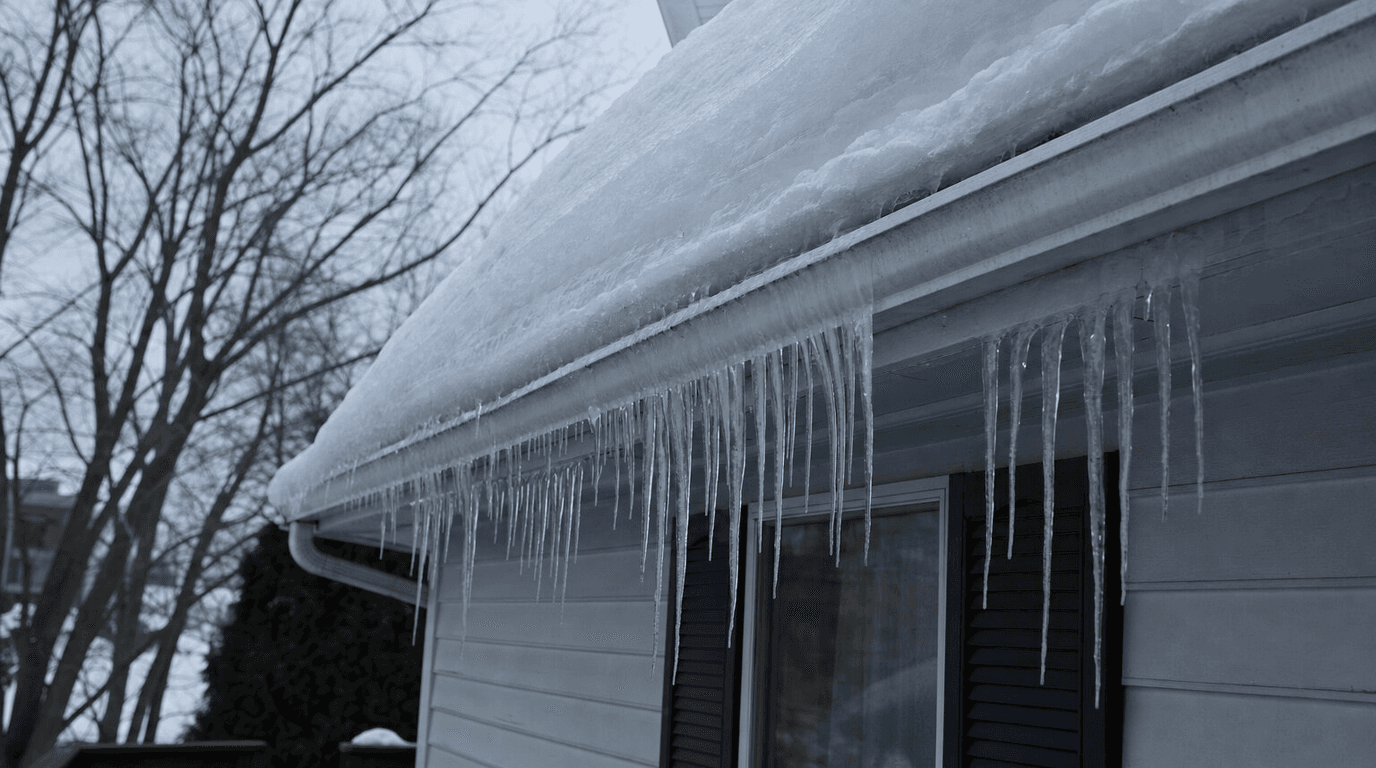
Ice dams are one of the most destructive and misunderstood problems in Northeast Wisconsin roofing. Every winter, homeowners in Green Bay watch those thick ridges of ice build up along their eaves and wonder what went wrong. Most assume it's a gutter problem, or maybe just bad luck with the weather. It's almost never the gutters, and it's not bad luck.
The root cause of nearly every ice dam is heat escaping from your living space into the attic. That heat warms the roof deck, melts the snow above it, and sends water running down toward the eaves, where it hits the cold overhang and refreezes. Ice dams are a symptom of a heat transfer problem. And the fix starts with understanding the relationship between roof insulation ice dams and attic temperature.
If your home has been getting ice dams year after year, the insulation in your attic is almost certainly part of the story.
How Ice Dams Actually Form (The Physics Matter)
Here's the sequence that plays out on thousands of Wisconsin roofs every winter.
First, heat from your home escapes upward through the ceiling into the attic. If the attic isn't properly insulated, that heat raises the temperature of the roof deck above it. The snow sitting on the warm part of the roof melts and flows downward as liquid water.
Then it hits the eaves, the overhanging part of your roof that extends beyond the exterior walls. The eaves don't benefit from the heat rising from your living space. They stay at or below the outdoor temperature. So the meltwater refreezes when it gets there. Ice builds and the dam grows.
Water backs up behind the dam, sitting pooled against shingles that were never designed to hold standing water. Eventually it seeps under them, into the underlayment, into the roof deck, and sometimes straight through your ceiling.
The outside temperature doesn't control whether you get ice dams. The inside temperature does. That's why roof insulation green bay homeowners install makes such a dramatic difference.
What "Enough" Insulation Actually Means in Wisconsin
Not all insulation is equal, and the standards in Wisconsin are stricter than in warmer climates, for good reason. The U.S. Department of Energy recommends attic insulation levels of R-49 to R-60 for climate zone 6, which covers the entire Green Bay area and most of Northeast Wisconsin.
Many older homes in the region have attic insulation levels well below that. R-19 or R-25 was considered adequate decades ago. It isn't anymore, and it's one reason ice dams are so common in established neighborhoods.
R-value measures thermal resistance: the higher the number, the harder it is for heat to move through the insulation. When your attic insulation is undersized, you're in effect heating the outdoors, and your roof deck temperature creeps up as a result.
The type of insulation also matters. Blown-in fiberglass or cellulose tends to fill irregular spaces in attic floors more completely than batt insulation, which can leave gaps around framing, wiring, and other penetrations. Gaps in coverage, even small ones, create warm spots on the roof deck that accelerate snow melt in isolated areas.
For proper roof maintenance in Wisconsin, getting your attic insulation assessed is often the single highest-leverage thing you can do.
Air Sealing: The Step Everyone Skips
Here's something that surprises most homeowners: you can add insulation and still get ice dams if you skip air sealing first.
Insulation slows conductive heat transfer. But air leaks allow warm, humid air to bypass the insulation entirely, moving directly from your living space into the attic through gaps around light fixtures, attic hatches, plumbing penetrations, and the tops of interior walls. Even a small air leak can carry significant heat into an unintended space.
Think of it like wearing a thick coat with a zipper left open. The insulation (the coat) is doing its job, but the air leak (the open zipper) makes the whole system ineffective.
Before adding more insulation, an experienced contractor will seal those air pathways from the attic side. Common spots include recessed light cans (which are notorious heat chimneys), bathroom exhaust fans vented into the attic instead of outside, and the gap between the top plate of interior walls and the roof framing.
Air sealing and attic insulation ice dam prevention go together. One without the other delivers disappointing results.
Ventilation: Insulation's Partner
Proper attic ventilation works alongside insulation, not against it. The goal is to keep the attic temperature close to the outside temperature (uniformly cold in winter) so there's no warm zone on the roof to melt snow.
A well-ventilated attic has a continuous flow of cold outside air moving in through soffit vents at the eaves and out through ridge vents at the peak. This flushes any heat that does escape from the living space before it can warm the roof deck.
Poor ventilation means that even a reasonably insulated attic can still develop enough heat buildup to trigger ice dams. It's worth reading our post on roof ventilation signs and problems in Wisconsin if you're not sure your ventilation is keeping up.
The three-part system of air sealing, insulation, and ventilation works as a whole. Skipping or shortchanging any piece of it leaves you vulnerable.
Signs Your Attic Insulation Is Contributing to Ice Dams
You don't need to hire anyone to get a general sense of whether insulation is part of your problem. A few observations can tell you a lot.
If your home gets ice dams while a neighbor's house (similar age, similar size) doesn't, that's a meaningful signal. The difference is often inside the attic, not on the roof surface. Similarly, if you can see the outline of roof rafters through the snow on your roof (where the deck is warmer over the framing), heat is escaping unevenly.
Inside, check your attic access hatch. If it's uninsulated, you're losing heat through it every time warm air rises to the ceiling. If stepping into your attic on a cold day feels noticeably warmer than outside, the ventilation is not doing its job.
Icicles by themselves are not a reliable indicator. They form from normal snowmelt. But when you see a ridge of thick ice at the roof edge, combined with icicles, that's when you're likely looking at a genuine dam and the water damage risk that comes with it.
If you've already noticed active water intrusion, that's an emergency situation. Emergency roof leak repair can stop the interior damage while you address the root cause.
The Energy Efficiency Angle
Fix your ice dam problem and you'll very likely cut your heating bill in the process. The heat loss that drives ice dam formation is the same heat loss that runs your furnace overtime every Wisconsin winter.
A home with R-49 to R-60 attic insulation properly air-sealed retains significantly more heat than one with aging, settled, or undersized insulation. For a typical older home in the Green Bay area, upgrading attic insulation often pays back in energy savings within a few years, on top of eliminating the ice dam risk.
This is part of why energy-efficient roofing is about more than the shingles. The roofing system includes everything from the attic floor up to the ridge vent. All of it influences how your home performs in a Wisconsin winter.
What Pierce Roofing Looks For During an Inspection
When we inspect a roof that's been experiencing recurring ice dams, the attic is always part of what we look at. Surface repairs without addressing the heat loss underneath are a short-term patch on a long-term problem.
We check insulation depth and type across the attic floor, look for obvious air leakage points, assess the ventilation pathway from soffits to ridge, and look for signs of moisture damage that may have already accumulated in the framing or sheathing.
Often what we find is a combination of insufficient insulation depth, compressed or settled insulation in areas, and one or two significant air leaks that are driving most of the heat into the attic. Addressing those specifics, in the right order, is what stops ice dams from coming back.
A free roof inspection gives you a full picture of what's contributing to your ice dam situation, without any guesswork.
Stopping Ice Dams for Good: What It Takes
If you've been dealing with ice dams year after year, the answer isn't to install heated cables along the eaves. That's an expensive workaround that treats the symptom while leaving the cause completely intact. Remove the heated cables and the dams come back.
The actual fix involves:
- Air sealing every significant penetration in the attic floor (lights, fans, plumbing, wall tops)
- Bringing attic insulation up to the R-49 to R-60 range appropriate for Northeast Wisconsin
- Confirming ventilation channels from soffit to ridge are clear and functional
- Repairing any roof or flashing damage that developed while the ice dams were active
Done properly, this sequence eliminates ice dam formation rather than just managing it. And for homeowners who have been dealing with this for years, that's a real change.
If you want a professional assessment of your roof and attic before next winter arrives, we're here. Call Pierce Roofing at (920) 609-8304 to schedule your free inspection. We serve Green Bay and all of Northeast Wisconsin, and we'll give you a straight answer about what's driving your ice dam problem and what it will take to fix it.