The Season Most Homeowners Forget to Worry About
When people think about roof damage in Wisconsin, they picture ice dams and February blizzards. Understandable. Winter is dramatic. But summer heat and UV ray damage to asphalt shingles is quieter, slower, and in many cases, more destructive over the long run.
Your roof is taking a beating right now. On a sunny July day in Green Bay, a dark asphalt shingle roof can reach surface temperatures of 150°F to 170°F — even when the air temperature is only 85°F. That's not a metaphor. That's what a thermometer pressed against your shingles would read. And that kind of heat, repeated day after day for three or four months, does real and measurable damage to roofing materials.
Here's what's actually happening, how to spot the warning signs, and what it means for the lifespan of your roof.
What Heat Actually Does to Asphalt Shingles
Asphalt shingles aren't a single material — they're a layered system. A fiberglass mat sits at the core, coated in asphalt on both sides, with ceramic granules embedded in the surface layer. Each of those components responds to heat differently, and none of them respond well to repeated extreme temperature swings.
The Asphalt Binder Breaks Down
The asphalt coating is what gives shingles their flexibility and waterproofing. Heat accelerates the oxidation of that binder, causing it to dry out and become brittle over time. A shingle that was supple and flexible when installed eventually loses that quality — and brittle shingles crack under wind pressure, foot traffic, or even the contraction that happens on cool nights after a hot day.
You can think of it like a rubber band left in a hot car for a few summers. It still looks like a rubber band. But stretch it, and it snaps.
Granule Loss Speeds Up
The ceramic granules on the surface of your shingles do two important jobs: they protect the asphalt layer from direct UV exposure, and they give shingles their color and texture. When heat softens the asphalt binder, granule adhesion weakens. Wind, rain, and routine thermal expansion loosen more granules over time.
You'll notice this in your gutters — a significant accumulation of grit that looks like coarse sand after summer rainstorms. That grit is your roof's UV protection literally washing away. Once enough granules are gone, the bare asphalt underneath oxidizes and cracks at an accelerated rate. It's a one-way process.
Thermal Cycling Causes Structural Fatigue
Every day in summer, your roof goes through a full thermal cycle. Temperatures climb to 150°F or higher during the afternoon sun, then drop 60 or 70 degrees overnight. Shingles expand in the heat and contract in the cool. The nails holding them in place don't move at exactly the same rate as the shingle material does.
Repeat that cycle hundreds of times over a few years, and you get what roofers call thermal fatigue — nail holes that have slightly widened, seams that have loosened, and edges that have started to lift. None of it looks alarming from the ground. But every lifted edge is an entry point for wind-driven rain, and every widened nail hole is a potential leak path.
UV Radiation: The Damage You Can't See Coming
Heat damage is visible over time. UV damage is sneakier.
Ultraviolet radiation from the sun breaks down the polymer chains in asphalt at a molecular level. This degradation doesn't produce an obvious visual signal at first. The shingle still looks intact. The color might fade slightly, but nothing that screams "replace me." Meanwhile, the material is losing flexibility and waterproofing capacity at a rate that compounds year over year.
Wisconsin actually has higher UV index readings in summer than many people assume. Green Bay sits far enough north that the long summer days (we're talking 15+ hours of daylight near the solstice) mean more cumulative UV exposure per day than locations further south with higher peak intensity but shorter days. South-facing roof planes take the worst of it, but all orientations take a hit.
A new asphalt shingle has meaningful UV resistance built in from the factory. After years of solar exposure, that resistance degrades. At a certain point, which varies by shingle quality and installation, the material is no longer performing its rated function regardless of how intact it looks.
This is one reason why regular roof maintenance matters — not just to fix what's visibly broken, but to catch what's quietly failing before it becomes an interior water problem.
Warning Signs of Summer Heat and UV Damage
You don't need to get on the roof to look for these. Binoculars from the ground, combined with a look in your gutters and attic, will tell you a lot.
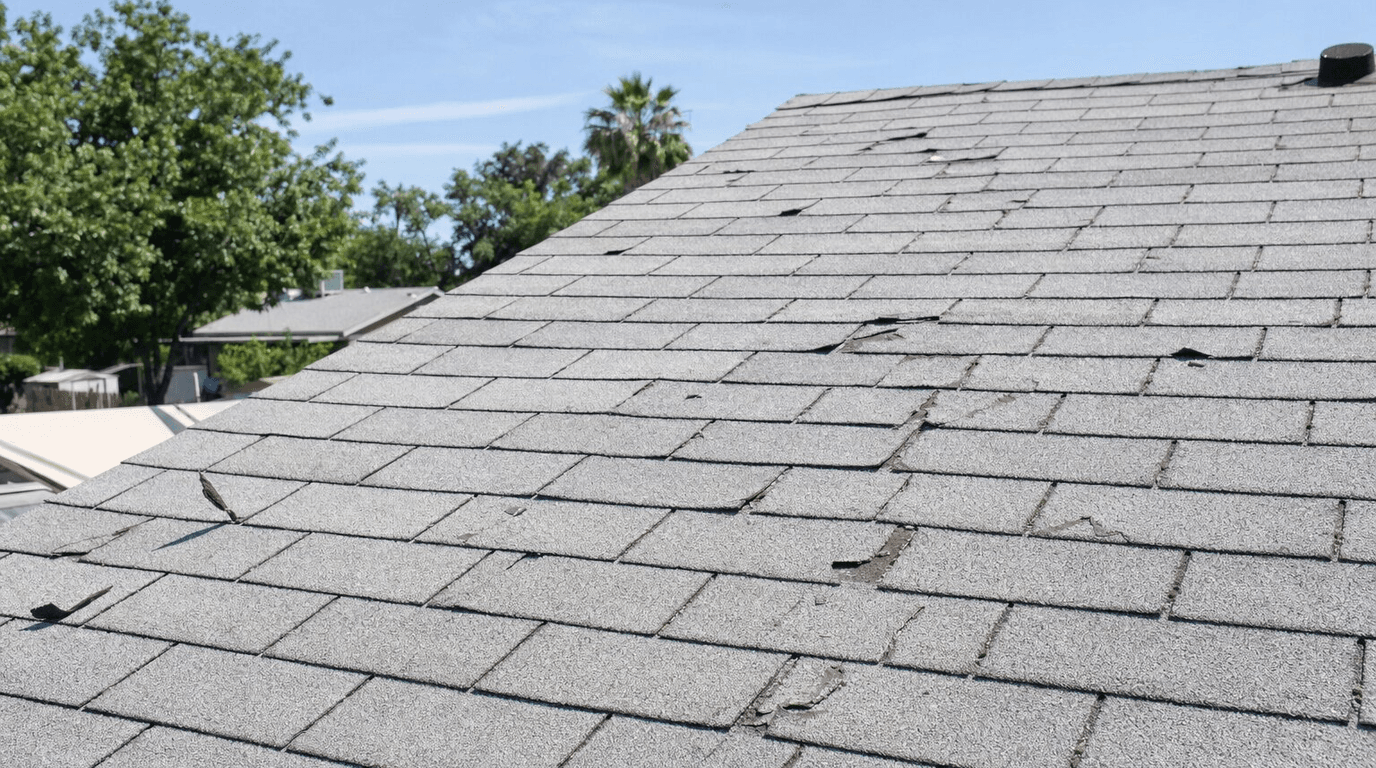
Cupping and curling at shingle edges. When the bottom surface of a shingle dries faster than the top — or when the top layer loses granules and overheats — the shingle warps. Cupping (edges turning upward) and clawing (edges turning downward while the middle rises) are both signs of heat-accelerated aging.
Cracking along shingle surfaces. Hairline cracks across the face of a shingle indicate the asphalt binder has dried out. These cracks aren't always visible from the ground on older, weathered shingles — they blend into the texture. A close inspection will find them.
Significant granule accumulation in gutters. A few granules after a big storm is normal. A thick layer of grit in the gutter every time it rains is not. If you're cleaning your gutters and pulling out what looks like a pile of coarse sand each time, your shingles have a UV protection problem.
Color fading. Shingle color is tied to the granule layer. Uneven fading or bleached-looking sections of your roof indicate areas where granule loss has exposed the underlying asphalt directly to UV radiation.
Higher attic temperatures than expected. If your attic feels like an oven even with adequate ventilation, deteriorating shingles with reduced reflectivity could be part of why. Newer shingles — especially lighter-colored ones — reflect more solar energy. Aged, granule-depleted shingles absorb more of it.
If you're seeing two or more of these signs, it's worth getting a professional set of eyes on the roof before the fall. A free roof inspection can tell you whether you're dealing with normal aging or something that needs attention before the next winter.
How Wisconsin's Climate Compounds the Problem
North-central Wisconsin doesn't have the most intense summers in the country — Phoenix homeowners deal with far more extreme heat. But what makes Northeast Wisconsin particularly hard on roofs is the combination of seasonal extremes.
A shingle that spends July and August regularly hitting 160°F on the surface, then spends January through March going through freeze-thaw cycles, is being asked to perform across a temperature range of nearly 200 degrees. Few materials handle that gracefully forever.
The winter damage that gets all the attention — ice dam infiltration, freeze-thaw cracking — happens faster and does more damage when the underlying shingle material is already compromised by summer heat and UV exposure. The seasons compound each other. A roof that went into fall with significant summer UV damage is more vulnerable when the snow hits than a roof in good condition would be.
For homeowners in Green Bay and across Northeast Wisconsin, this means the late summer and early fall window is genuinely important for roof assessment. You've just come through the season that did the most quiet damage. And you're about to enter the season that stress-tests everything.
Shingle Quality Makes a Real Difference
Not all asphalt shingles age at the same rate, and that's worth saying plainly because the difference between a builder-grade shingle and a quality architectural shingle is significant.
Higher-quality shingles use more asphalt in the coating, better UV inhibitors in the granule layer, and more durable fiberglass mats. Atlas shingles, which Pierce Roofing installs as an Atlas PRO+ Platinum certified contractor, are built to handle extended UV exposure and thermal cycling better than commodity products. They carry a 30- to 50-year material warranty and are rated for higher wind resistance.
When we do asphalt shingle roofing installations across Brown, Outagamie, Kewaunee, Oconto, Winnebago, and Manitowoc counties, this quality difference is one of the first things we talk through with homeowners. The upfront cost difference between a builder-grade and a quality architectural shingle often pays for itself in the extended service life — especially in a climate like ours where roofs get pushed hard in both directions.
When Summer Damage Means It's Time to Replace
Maintenance and repairs extend a roof's life. But there's a point where the underlying material has degraded past the threshold where repairs make financial sense.
General indicators that summer heat and UV damage has progressed to replacement territory:
- Shingles are 20 or more years old and showing multiple signs of surface degradation
- Granule loss is widespread, not isolated to one area
- Cracking and cupping are visible from the ground on most roof sections
- A professional inspection finds compromised decking beneath the shingles due to repeated moisture infiltration
- Your energy bills have been climbing without another obvious cause (a compromised roof's reduced reflectivity increases cooling loads)
If you're in this territory, roof replacement with quality materials is a better investment than another round of patch repairs on a system that's past its performance window. We're straightforward about this with every homeowner we work with — we'll tell you when repairs make sense and when they don't.
What You Can Actually Do Right Now
Summer is winding down, which makes this a good time to take stock.
Do a walk around your home with binoculars and spend five minutes looking at each side of the roof. Check your gutters the next time you clean them. Take a look in your attic for any water staining or signs of UV damage making it through the decking.
If anything looks off, the fall is a good time to address it. Roofing contractors in Northeast Wisconsin are accessible in September and October, before the late-fall rush that happens as homeowners try to squeeze in work before winter. The weather is cooperative, and any identified issues can be resolved before they meet their first freeze-thaw cycle.
And if you're not sure what you're looking at, that's what a professional inspection is for.
Get a Professional Assessment Before Fall Sets In
Pierce Roofing has been inspecting and replacing roofs across Northeast Wisconsin for over 30 years. We're Atlas PRO+ Platinum certified, carry $2 million in insurance coverage, and back every installation with a 10-year workmanship warranty.
If you've noticed any of the warning signs in this post — or if your roof is getting up in age and hasn't been looked at recently — call us at (920) 609-8304 or request a free estimate. We serve homeowners throughout Brown, Kewaunee, Oconto, Outagamie, Winnebago, and Manitowoc counties, and we're straightforward about what we find.