What Ice Dams Actually Are (and Why Green Bay Gets Hit Hard)
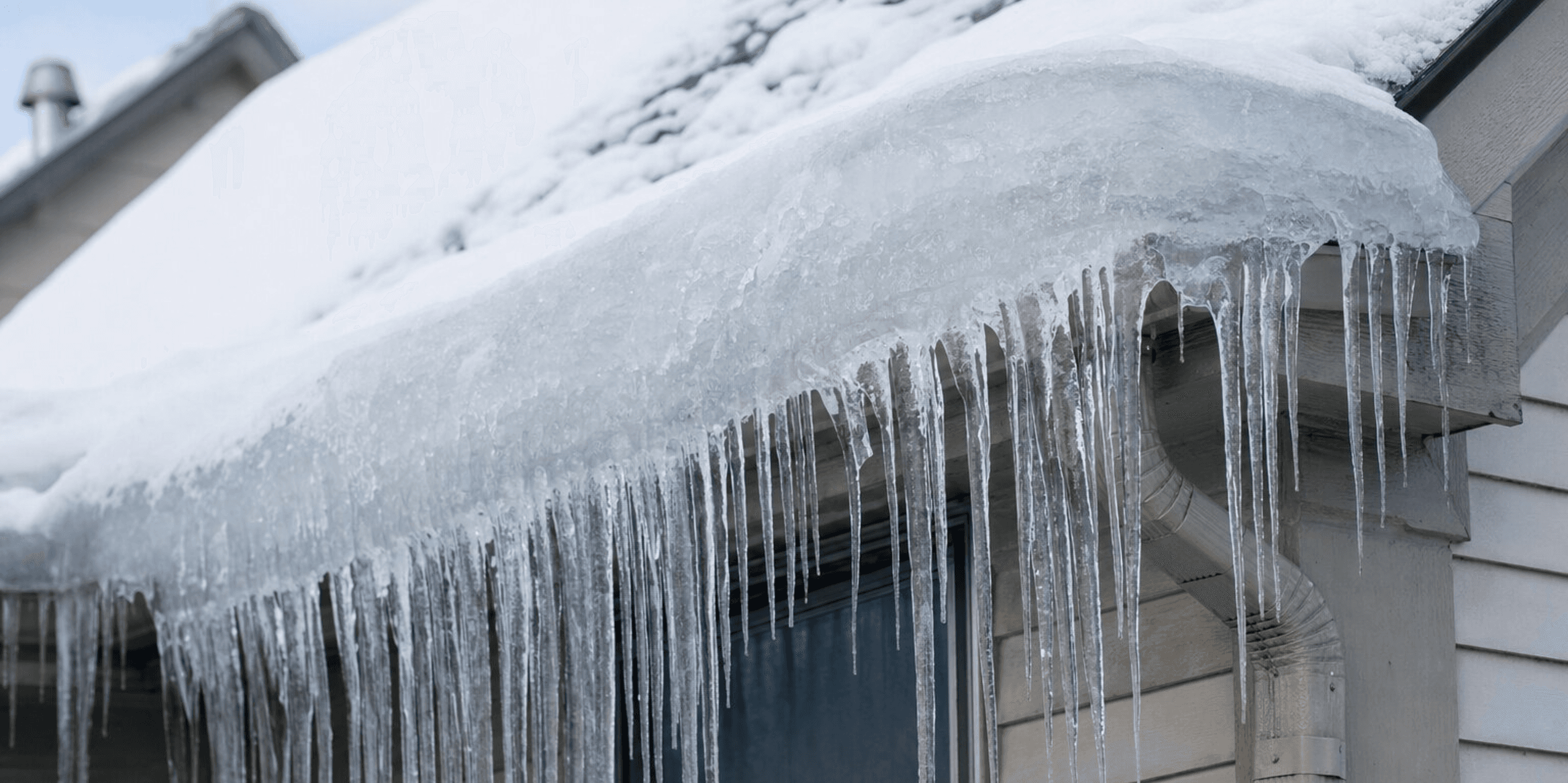
If you've lived in Green Bay for more than a winter or two, you've seen them: thick ridges of ice clinging to the eaves of a house, sometimes with icicles hanging two or three feet down. They look almost decorative. They're anything but.
Ice dams are one of the leading causes of interior water damage in Northeast Wisconsin homes. And the reason Green Bay gets hit harder than most cities comes down to our weather pattern: we get significant snowfall, then a few days above freezing, then back below zero. That cycle is basically perfect conditions for ice dams to form, grow, and start pushing water into places it should never go.
Understanding how they work is the first step toward stopping them.
How Ice Dams Form: The Heat Escaping Your Home Is the Problem
Most people assume ice dams are just a weather problem. They're not. They're a heat problem.
Here's what happens. When your home is heated, some of that heat rises into the attic. In a well-insulated, well-ventilated attic, that heat escapes to the outside and your roof stays uniformly cold. But in a home where attic insulation is thin, air sealing is poor, or ventilation is inadequate, heat builds up in the attic space and warms the roof deck from underneath.
That warmth melts the snow sitting on the middle and upper portions of your roof. The meltwater runs down the slope toward the eaves — but the eaves hang out past the exterior wall of your house. They don't get that heat from below. So they stay cold, often at or below freezing. When the meltwater hits those cold eaves, it refreezes and starts to build up.
Day after day, this cycle repeats. The ice ridge at the eave grows thicker. Water backs up behind it with nowhere to drain. And eventually, that backed-up water finds its way under your shingles, through your roof deck, and into your attic, insulation, or living space.
That's an ice dam. And by the time you see water stains on your ceiling, the damage is already done.
What Ice Dam Damage Looks Like (and Where to Find It)
Ice dam roof damage doesn't always announce itself with a drip into a bucket. A lot of it is quiet and slow, which makes it worse in the long run.
Things to watch for:
- Water stains on ceilings or walls near exterior walls — especially in the top floor or along dormers
- Peeling paint or bubbling drywall near the ceiling line on upper floors
- Lifted or buckled shingles along the lower edge of the roof
- Damaged gutters — ice dams put enormous weight on gutters and frequently pull them away from the fascia
- Wet or compressed attic insulation — often discovered months later when energy bills spike
- Mold or mildew in the attic that shows up in spring
In the Green Bay area, we see a lot of homes where ice dam damage has been silently worsening for two or three winters before the homeowner realizes anything is wrong. If you've had significant ice buildup on your eaves this season, it's worth having someone take a look at what's happening underneath — even if you don't see obvious water damage yet. A free roof inspection can catch problems before they turn into expensive repairs.
The Two Root Causes You Need to Fix
You can remove ice dams every winter. People do it. But if you don't address why they're forming, they'll be back next year without fail.
The two factors that matter most are insulation and ventilation. Not one or the other. Both.
Attic Insulation
The goal is to keep heat inside your living space, not let it leak into the attic. Most older Green Bay homes are underinsulated by current standards. Building codes and energy efficiency guidance have changed significantly in the last 20 years, and a lot of houses built in the 1970s, 80s, and 90s have insulation levels that made sense then but fall short now.
If your attic has less than R-49 of insulation — which is the current recommendation for Climate Zone 6, where Northeast Wisconsin sits — you're probably losing enough heat to feed ice dam formation during a cold snap. Adding blown-in insulation is one of the highest-ROI improvements a Green Bay homeowner can make, both for winter ice dam prevention and for year-round energy efficiency.
Attic Ventilation
Proper ventilation works alongside insulation to keep your roof deck temperature uniform. The system needs a clear intake at the soffits and exhaust at or near the ridge, allowing cold outside air to flush through the attic and prevent heat from accumulating under the roof deck.
Bocked soffit vents are one of the most common problems we find during inspections. Insulation installed without baffles can cover the soffits entirely, killing airflow and creating the exact conditions for ice dams to form. It's a fixable problem, but it requires someone to actually get up in the attic and look.
Practical Prevention: What Actually Works
Let's be direct about something: there's a lot of advice online about ice dam prevention that ranges from marginally helpful to actively wasteful. Here's what genuinely works for Green Bay homeowners.
Address the root causes first. Insulation and ventilation, as described above. Everything else is a band-aid if the underlying heat loss isn't fixed.
Make sure your roof has ice and water shield. This is a self-adhering membrane installed under shingles along the eaves and in other vulnerable areas. It's not a substitute for proper attic conditions, but it's a critical layer of protection against the water intrusion that ice dams cause. In Wisconsin, code requires it to extend at least 24 inches inside the exterior wall line. If your roof was installed more than 15 years ago or by a contractor cutting corners, it may not have adequate coverage. Any quality roof repair or replacement job in Green Bay should include proper ice and water shield installation.
Keep gutters clear going into winter. Clogged gutters don't cause ice dams, but they make water backup much worse when a dam does form. Clean gutters in late fall, after the last significant leaf drop.
Use a roof rake after heavy snowfalls. Removing the bottom three to four feet of snow from your eaves after a major storm reduces the water available to refreeze at the eave line. This is a short-term management strategy, not a solution, but it helps during severe winters. For safe technique, check out our guide on safe snow removal for Wisconsin roofs.
Don't use rock salt or calcium chloride directly on your roof. This is advice that gets passed around and it causes real damage. Salt can corrode flashing, stain your roof, kill plantings below, and degrade shingles. There are specifically formulated ice melt products for roofs, but even those should be used carefully and sparingly.
When an Ice Dam Has Already Caused Damage
If you're dealing with an active leak or visible water intrusion this winter, the priority is stopping the damage from spreading. Removing the ice dam safely is the first step, and it's a job best left to professionals with the right equipment — a steam system is the gold standard for removal because it melts ice without the roof damage that a pressure washer or ice pick causes.
Once the dam is removed and the leak is stopped, a thorough assessment of the underlying damage is the next step. Depending on what's found, you may need anything from minor roof maintenance work to shingle replacement to addressing rotted decking. The longer water has been getting in, the more extensive that assessment is likely to be.
If you're in the middle of an active leak situation right now, our emergency roof leak repair service is available for Green Bay area homeowners.
How Ice Dams Connect to Your Roof's Long-Term Health
One ice dam season, properly managed, doesn't have to shorten the life of your roof. But repeated ice dam damage, year after year, absolutely does. Water intrusion into the roof deck causes rot. Rot compromises the structure that holds your shingles. Lifted shingles allow more water in. The cycle accelerates.
This is why we always emphasize getting to the root cause rather than just managing symptoms. We've done roof inspections for Green Bay homeowners who've had ice dams for five or six winters and were shocked at the condition of their decking and insulation once we got up there. The damage accumulates quietly.
If you want to understand how ice dams and insulation are connected in more depth, our post on the roof insulation and ice dam connection goes into the building science in more detail.
What Northeast Wisconsin Winters Actually Demand from a Roof
Wisconsin's climate is genuinely hard on roofs. We're not the coldest state in the country, but our freeze-thaw cycle, wind-driven snow, and rapid temperature swings create a set of conditions that demand good materials and a properly installed system underneath them.
A roof that holds up here needs more than adequate shingles. It needs proper underlayment, correct ice and water shield coverage, functional ventilation, and a contractor who understands what Wisconsin winters actually do to a rooftop over time. That's not something you get from the lowest bidder.
Michael Pierce has been roofing in this area for over 30 years. Pierce Roofing holds Atlas PRO+ Platinum certification, carries $2M in insurance, and backs every installation with a 10-year workmanship warranty. We've seen what happens when ice dams go unaddressed, and we know what it takes to build a roof that handles a Green Bay winter without giving you problems.
Ready to Stop Fighting Ice Dams Every Winter?
If ice dams have become a recurring problem on your home, the answer isn't another season of roof raking and hoping for the best. It's finding out why they're forming and fixing it properly.
Call Pierce Roofing at (920) 609-8304 or schedule your free roof inspection online. We'll take a look at your attic, your ventilation, your current roof condition, and give you a straight answer about what's causing the problem and what it'll take to fix it. No pressure, no upsell — just honest information from a contractor who's been doing this in Green Bay for three decades.