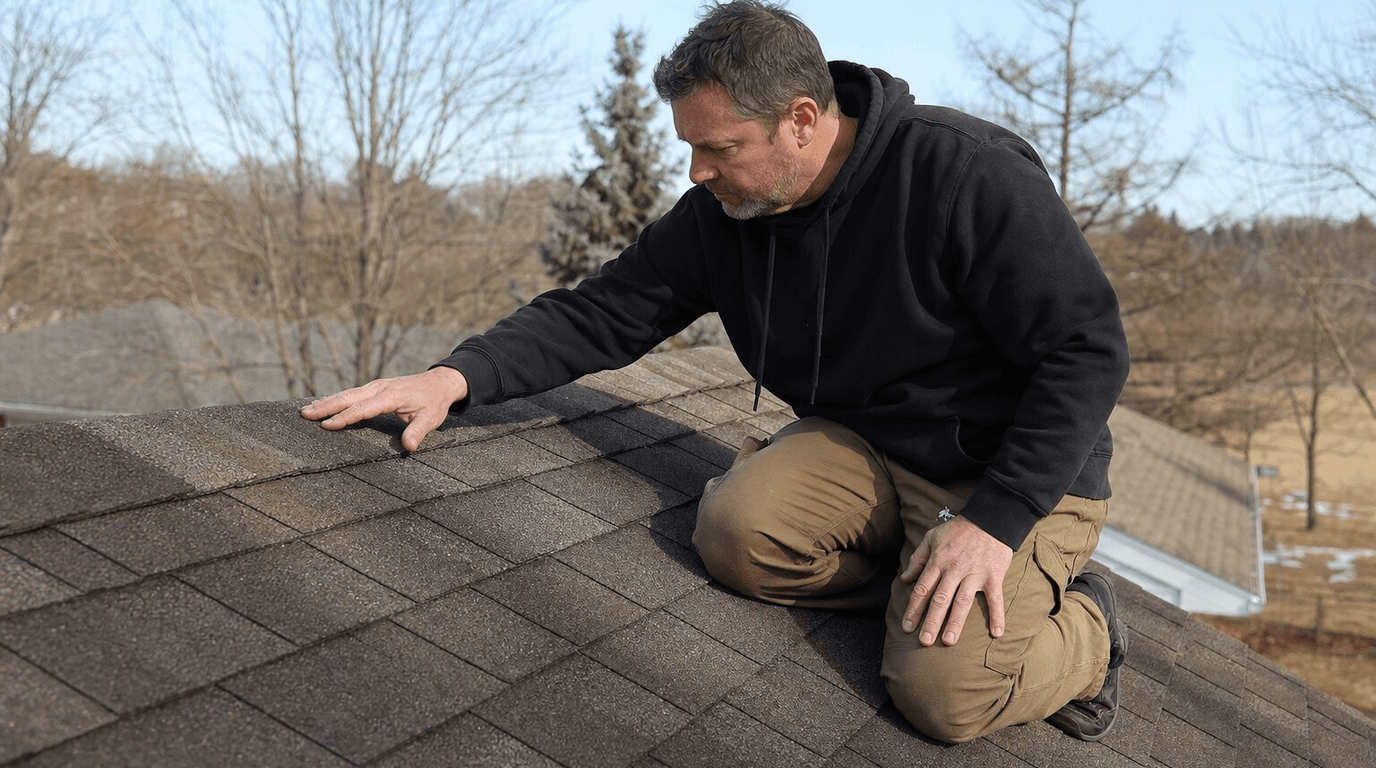
Why Spring Is the Most Important Time to Inspect Your Roof in Wisconsin
Most homeowners don't think about their roof until water shows up on the ceiling. By then, what started as a minor issue — a cracked flashing seal, a few lifted shingles — has already turned into a repair bill that could have been avoided.
Wisconsin winters are particularly punishing. Green Bay averages over 45 inches of snow per year, and the real damage doesn't usually happen during the cold months. It happens during the thaw. Repeated freeze-thaw cycles force water into tiny cracks, expand them, and then leave behind gaps wide enough for the next rainstorm to find its way inside.
A spring roof inspection catches that damage early. Before the summer storm season, before the heat warps anything further, before the problem gets worse. That's the window you want to work in.
If you're not sure what you're looking at, schedule a free roof inspection with Pierce Roofing — no pressure, just a clear picture of where things stand.
What Wisconsin Winters Actually Do to a Roof
Before running through the checklist, it helps to understand the specific failure modes our climate creates. This isn't theoretical — it's what we see every spring after 30 years of inspecting roofs across Northeast Wisconsin.
Ice dam damage is the big one. When heat escapes through an under-insulated attic, it warms the roof deck and melts snow from underneath. That water runs down to the cold eaves, refreezes, and builds up into an ice dam. The backed-up water then works its way under the shingles and into the structure. Even one bad winter can cause ice dam damage that isn't visible until the roof is actively wet.
Thermal splitting happens when roofing materials contract in the cold and expand in the warmth repeatedly. Asphalt shingles, flashing, and sealants all have different expansion rates. Over time, those differences create gaps at seams and edges.
Wind uplift during January and February storms can loosen nails, crack shingles along their edges, and lift flashing at valleys and ridges. You won't always see missing shingles from the ground — but you'll notice granule loss and exposed substrate if you know where to look.
Gutter damage is often overlooked. Heavy ice loads bend gutters, pull them away from fascia boards, and break the hangers that hold them in place. A sagging gutter that doesn't drain properly is going to cause water to pool against your foundation next time it rains.
The Post-Winter Roof Inspection Checklist
This checklist is organized the same way a professional inspection works — exterior first, then interior, then drainage. Work through it systematically and document what you find with photos.
1. Start From the Ground With Binoculars
Before getting on a ladder, do a full walk around your home with binoculars. You're looking for:
- Missing, cracked, or visibly curled shingles
- Dark patches or discoloration that suggest wet or rotting decking below
- Shingles where the surface granules are heavily worn (looks like bare asphalt)
- Any area where the roof plane looks uneven or sunken
- Flashing around chimneys, skylights, and vents that appears lifted or separated
Take photos from each side of the house. They're useful for comparison next spring and helpful if you're talking to a contractor about what you found.
2. Check the Gutters and Downspouts
Gutters take more winter abuse than most people realize. After the snow melts, check:
- Whether gutters are still firmly attached to the fascia boards — look for pulled-away sections or visible gaps
- If gutters are sagging in the middle (a sign of broken or missing hangers)
- Whether downspouts are still connected at the bottom and directing water at least 6 feet from the foundation
- Granule accumulation in the gutters — a significant amount of grit means shingle wear is accelerating
If your gutters are pulling away from the house, that's a problem that's going to get worse every time it rains. Our gutter repair and replacement services can address that before summer arrives.
3. Inspect the Flashing Points Carefully
Flashing is the metal that seals roof transitions — around chimneys, along walls where the roof meets a vertical surface, at valleys where two roof planes meet, and around skylights or pipe penetrations. It's also where the majority of leaks actually start.
After a Wisconsin winter, look closely at each flashing location for:
- Visible gaps between the flashing and the adjacent surface
- Rust or corrosion that has broken through the protective coating
- Sealant that has cracked, shrunk, or pulled away from the surface
- Areas where the flashing itself has bent or lifted
Roof flashing repair is one of the most underrated maintenance items a homeowner can do. A $300 flashing fix done in spring can prevent a $4,000 interior repair after a summer storm.
4. Look at the Shingles Up Close
If it's safe to get on the roof, or if you can get a closer look with a ladder at the eaves, check the shingle condition more carefully:
- Curling at the edges or corners (called cupping or clawing depending on the direction) signals aging or moisture issues in the decking below
- Cracked shingles, especially along the ridge and at the eaves where temperature swings are most extreme
- Any shingles that are visibly loose, not lying flat, or have exposed nail heads
- Missing shingles — even one or two create an immediate vulnerability
For homes in the Green Bay area, asphalt shingles that are 15 or more years old will often show significant post-winter wear. That doesn't always mean replacement is needed right away, but it does mean you want a professional to put eyes on it before deciding.
5. Check the Attic From the Inside
The attic tells you things the exterior can't. On a bright day, go into the attic and look for:
- Daylight visible through the roof deck (a clear sign of gaps or holes that need immediate attention)
- Water stains on the rafters, sheathing, or insulation — even old stains indicate past leaks
- Active moisture, mold, or mildew on wood surfaces
- Frost or condensation on the underside of the roof deck (a sign of ventilation problems that contributed to ice dams)
If you see active mold growth or significant staining, that's a conversation for a roofing professional, not a DIY patch job.
6. Examine Skylights, Vents, and Chimney Caps
These penetrations are all potential leak points. After any Wisconsin winter:
- Skylight seals and frames should be free of cracks and gaps
- Chimney caps should still be sitting securely and not cracked or shifted
- Roof vents should be intact, with screens still in place to keep pests out
- Pipe boots (the rubber collars around plumbing vents) should not be cracked or split — rubber deteriorates faster in cold climates
When to Call a Professional Instead of Doing It Yourself
Some of this you can see from the ground or from a ladder at the eaves. But a real inspection means getting on the roof, and not every homeowner should do that.
Call a professional if:
- Your roof pitch is steep (most two-story homes fall into this category)
- You saw anything during your ground inspection that looked serious
- The roof is older than 15 years and hasn't been professionally inspected recently
- You had visible ice dams this winter
- You noticed any water stains on your interior ceilings during the winter months
We wrote a more detailed breakdown of what a professional inspection actually covers in our post on professional roof inspection — what's included. Worth reading before you decide whether to go it alone.
For Brown County homeowners, getting on the inspection calendar in April or early May is smart. Once the late spring storm season picks up, roofing crews in the Green Bay area stay busy and availability tightens up fast.
What Happens If You Skip the Spring Inspection
Nothing, usually. At first.
That's the thing about roof damage — it's patient. A compromised section of flashing doesn't announce itself. It just sits there, letting a little water in every time it rains, and then a little more. The moisture works its way into the decking, then the sheathing, then the insulation. By the time you see a stain on your living room ceiling, you're not looking at a simple repair anymore.
Wisconsin homeowners who skip spring inspections for a few years in a row often end up facing roof replacement years earlier than necessary. The good news is that consistent roof maintenance — including annual inspections after winter — extends the life of an asphalt shingle roof significantly. Atlas shingles, which Pierce Roofing installs as a PRO+ Platinum certified contractor, are rated for 30 to 50 years when properly maintained.
Skipping the inspection doesn't save time. It borrows it.
Schedule Your Spring Roof Inspection in Green Bay
Pierce Roofing has been doing post-winter roof inspections in Northeast Wisconsin for over 30 years. We're Atlas PRO+ Platinum certified, fully insured to $2 million, and we back every job with a 10-year workmanship warranty.
If you found something on this checklist that concerns you — or if you just want a professional set of eyes on your roof before the summer storm season — call us at (920) 609-8304 or request your free roof inspection online.
We serve Green Bay, Appleton, and communities across Brown, Outagamie, Kewaunee, Oconto, Winnebago, and Manitowoc counties. Spring books fast — don't wait until after the first big storm of the season.