What Most Homeowners Think a Roof Inspection Is (and What It Actually Is)
If you've never had a professional roof inspection done, you might picture someone climbing up, walking around for five minutes, and telling you everything looks fine. That happens. But it's not what a real inspection looks like — and the difference matters a lot when you're trying to catch a problem before it becomes a $15,000 repair bill.
A professional roof inspection is a systematic, component-by-component evaluation of your entire roofing system. Not just the shingles you can see from the street. The flashing, the underlayment condition, the ventilation, the gutters, the penetrations, the attic — all of it gets looked at, because all of it contributes to whether your roof does its job for the next ten to fifteen years.
For Green Bay homeowners, this kind of thorough evaluation carries extra weight. Northeast Wisconsin puts roofs through a genuinely punishing cycle: heavy snow loads, freeze-thaw expansion, ice dam pressure, and wind-driven rain off Lake Michigan. A small defect that might take years to become a problem in a milder climate can deteriorate fast here.
The Exterior Inspection: What's Visible from the Roof
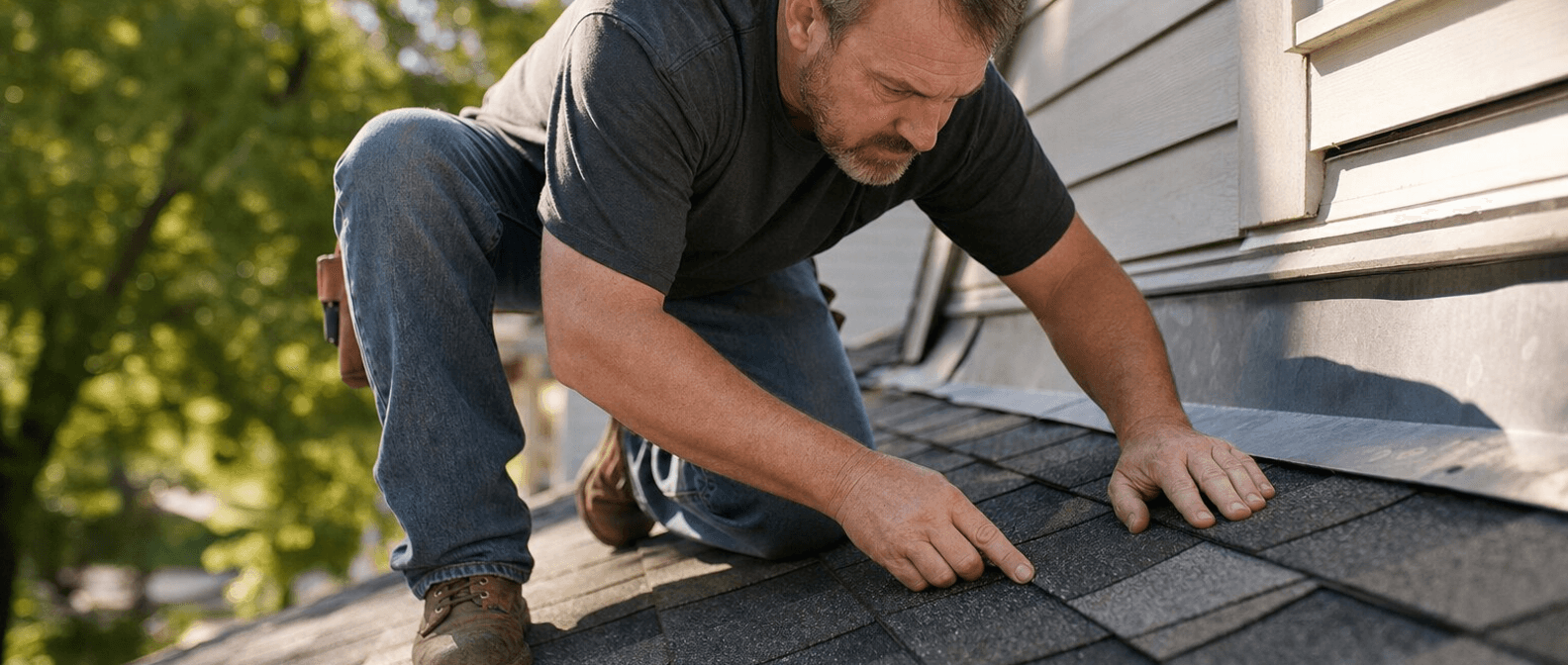
The exterior portion is what most people think of when they imagine a roof inspection, and it's where a qualified roofer spends a significant portion of their time. But "looking at shingles" doesn't begin to cover it.
Shingle Condition
Shingles get evaluated for more than obvious missing pieces. A thorough inspector looks for granule loss — the mineral coating that protects asphalt shingles from UV degradation — because heavy granule loss signals that shingles are nearing the end of their useful life. You'll often see this in your gutters first, as dark gritty buildup after rain. Cupping, curling, cracking, and blistering are also documented, each indicating different stages of wear or installation problems.
Flashing — The Most Overlooked Part of Any Roof
This one matters more than most homeowners realize. Flashing is the metal material that seals transitions and penetrations: where the chimney meets the roof, where a dormer wall intersects the slope, around skylights, along valleys where two roof planes meet, and at the roof's edges. When flashing fails — through corrosion, improper installation, or storm damage — water finds its way in fast.
A lot of roofs that appear to be in decent shape from a distance have flashing problems that are actively letting water in. This is exactly the kind of thing a drive-by opinion from a neighbor or a quick phone estimate cannot catch.
Gutters and Drainage
Your gutter system is part of your roofing system. A proper inspection checks that gutters are securely attached, properly pitched to drain, free of significant damage, and that downspouts are directing water far enough away from the foundation. In Wisconsin, gutters pulling away from the fascia after ice dam pressure is common — and a detail that matters both for roof performance and for avoiding water intrusion at the foundation.
Ridge, Hips, and Valleys
Ridge caps take more weathering than any other part of the roof, sitting at the highest point and exposed on both sides. Inspectors check for cracking and seal failure at the ridge, and pay attention to valleys — the V-shaped channels where two roof planes meet — because improper valley installation or worn valley metal is a frequent source of leaks.
Soffits and Fascia
Soft, rotted, or damaged fascia boards indicate long-term moisture exposure, often connected to gutter issues or ventilation problems. These get checked too, because replacing damaged fascia is part of the work required before new shingles can be installed correctly.
The Interior Inspection: What's Happening in Your Attic
Skipping the attic is one of the most significant shortcuts a low-effort inspection takes. And it's the wrong place to cut corners.
The attic reveals things the exterior simply can't. A proper interior inspection covers:
Ventilation. Your attic needs airflow — intake at the soffits, exhaust at or near the ridge — to keep the roof deck at a uniform temperature year-round. Poor ventilation causes heat buildup in summer that cooks shingles from the inside, and in winter it creates the conditions for ice dams. Blocked soffit vents, inadequate ridge venting, or improper baffles are all issues that get identified in the attic, not from the roof surface.
Insulation. Thin or improperly installed insulation lets heat escape into the attic, which feeds ice dam formation and drives up your heating bills. Current recommendations for Northeast Wisconsin (Climate Zone 6) call for at least R-49. A lot of older Green Bay homes fall well short of that.
Signs of moisture intrusion. Water stains on the sheathing, dark streaking, mold growth, or wet insulation all indicate active or past leaks. Finding these in the attic helps pinpoint exactly where a leak is entering, which makes repair work far more precise and effective.
Structural integrity. Rafters and roof decking get checked for signs of rot, sagging, or structural compromise. This is especially relevant for older homes or properties that have experienced significant ice dam damage over multiple winters.
This interior component is part of what sets a real professional roof inspection apart from an estimate dressed up as an inspection. You can't understand the health of a roofing system without looking at both sides of the roof deck.
What Gets Documented and What You Receive
At the end of a professional inspection, you should walk away with more than a verbal summary. A proper inspection produces documentation: photographs of problem areas, a written assessment of current condition, and a clear explanation of what needs attention now, what can be monitored, and what is in good shape.
That documentation matters for a few reasons. It gives you a baseline — a record of your roof's condition at a specific point in time — that's useful for tracking changes. It also matters if you're buying or selling a home, filing an insurance claim after a storm, or simply deciding whether a repair or a replacement makes more financial sense right now.
For anyone unsure where to start, our post on how often you should schedule a roof inspection breaks down the timing by roof age and condition.
Why Professional Inspection Beats the DIY Version
There's a place for the DIY visual check — walking around the perimeter, checking for obvious damage after a storm, cleaning gutters. We've written about what homeowners can do themselves in our DIY roof inspection checklist.
But a homeowner standing in the driveway, or even on a ladder at the eave, sees a fraction of what a trained roofer evaluates. Safe access to the full roof surface, knowledge of what early-stage problems look like before they're obvious, and the ability to get into the attic and interpret what's there — these are not things a weekend inspection replaces.
The gap matters most for problems that don't announce themselves until they're expensive. Minor flashing failure. Early-stage shingle delamination. Attic moisture building up slowly over a winter. A professional finds these things. A drive-by doesn't.
Why Our Inspection Is Free — and What That Means for You
The straightforward answer: we believe homeowners should have access to honest, professional information about their roof without worrying about paying for a sales call. When you call Pierce Roofing for a free roof inspection in Green Bay, a qualified inspector comes out, does the full evaluation described above, and gives you a real assessment — not a pitch dressed up in technical language.
If your roof is in good shape, we'll tell you. If it needs attention, we'll show you exactly what we found and explain your options honestly. That's it.
We've built our reputation in Northeast Wisconsin on straightforward work and straight talk. Michael Pierce has been roofing in this area for over 30 years. He started this company knowing that trust is built one honest conversation at a time — not by selling people work they don't need.
The inspection is also how we do our job well. Before we recommend a repair or a replacement, we need to know what we're working with. The process we follow for every job starts with this kind of thorough evaluation, because guessing about a roof's condition is how mistakes get made.
If you're wondering whether your roof needs attention going into the warmer months, or if you want to know what condition it's in after a hard Wisconsin winter, this is the right starting point. Spring is one of the best times to get eyes on a roof, while damage from ice and cold temperatures is still fresh and before summer storms add to the picture. Our spring roof inspection guide for Wisconsin homeowners covers why timing matters and what to watch for this time of year.
What the Inspection Covers vs. What It Doesn't
One clarification worth making: a roof inspection is not the same as a home inspection. A home inspector covers dozens of systems throughout a house and spends a limited amount of time on the roof. A roofing contractor's inspection is focused entirely on the roofing system, which means more depth, more attention to the details that matter for roof performance, and documentation that's specific to what a roofer needs to know.
What a roof inspection does not include is access to concealed wall cavities, assessment of plumbing or electrical systems, or any evaluation of what's happening structurally below the attic. If you have a specific concern about a wall leak or interior water damage that seems unrelated to the roof, that may require additional investigation.
For most Green Bay homeowners getting a routine inspection or following up after a winter with significant ice and snow, the roof-specific inspection covers exactly what needs to be covered.
What Pierce Roofing Brings to Every Inspection
Atlas PRO+ Platinum certification means our installation practices are regularly audited against manufacturer standards — not something every contractor in the area can say. Combined with $2M in liability insurance and a 10-year workmanship warranty on every installation, it means that when we tell you what condition your roof is in and what we'd recommend, that recommendation comes with real accountability behind it.
We cover all six counties in Northeast Wisconsin: Brown, Kewaunee, Oconto, Outagamie, Winnebago, and Manitowoc. Whether you're in Green Bay proper or further out in the region, the same inspection, the same standards, and the same straight conversation applies.
Ongoing roof maintenance after an inspection — clearing debris, resealing minor penetrations, addressing small problems before they grow — is also something we help with. An inspection that finds a fixable issue is a good outcome. Catching it early is almost always significantly cheaper than waiting.
Schedule Your Free Inspection Today
If you want to know what a professional roof inspection actually reveals about your home, the easiest thing to do is schedule one. No cost, no obligation, no sales pressure.
Call Pierce Roofing at (920) 609-8304 or request your free inspection online. We'll come out, do a thorough top-to-bottom evaluation, and give you an honest report on what we find. That's the whole offer.