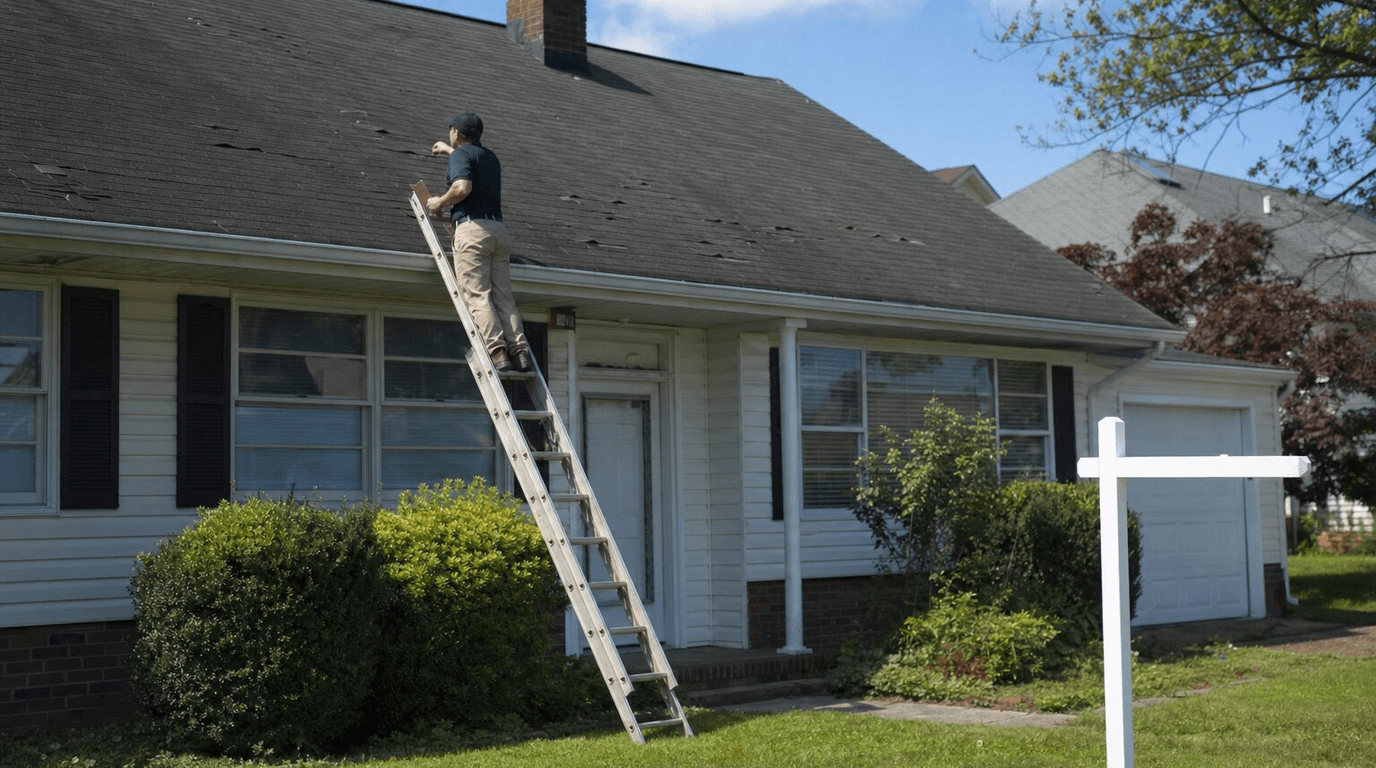
Why the Roof Should Be Your First Concern, Not Your Last
Buying a home is one of the biggest financial decisions most people make. And yet, most buyers spend more time thinking about the kitchen countertops than they do about the roof.
That's backwards.
A kitchen renovation might cost $30,000. A full roof replacement in Green Bay runs $10,000 to $20,000 or more depending on the size and materials — and unlike a dated backsplash, a failing roof isn't optional. When it goes, it goes. And Northeast Wisconsin winters give a failing roof very little time to recover.
The good news: you don't need to be a roofer to spot the warning signs. You need to know what to look at, what to ask, and when to call someone who knows the difference between normal wear and something that should knock $15,000 off the asking price.
Here's what to look for when buying a home in Green Bay or anywhere in Northeast Wisconsin.
Start From the Ground Before You Start From the Attic
Before you set foot inside, look at the roof from the street. Step back as far as you can and look at the ridge line — the horizontal peak that runs along the top of the roof. It should be straight. A ridge that sags, dips, or has a noticeable curve is a structural problem, not a cosmetic one. That's not a fix-it-yourself situation.
Then look at the planes of the roof. Do they appear flat and even, or do you see areas that bow in or push out? Uneven planes can indicate decking failure, rafter issues, or long-standing moisture damage underneath the shingles.
None of this requires a ladder. Just stop and look before you get excited about the living room.
Shingle Condition: The Biggest Tell
If the roof is asphalt shingles — which covers probably 90 percent of the homes you'll see in Green Bay — the shingles themselves will tell you a lot.
Granule loss. Asphalt shingles are coated with granules that protect the underlying mat from UV degradation. As a shingle ages, it loses those granules. On the ground, check the gutters and the downspout splash area for a sandy, gritty accumulation. Heavy granule loss means the shingles are past their prime and replacement is coming whether the current owner tells you or not.
Curling and cupping. Shingles that curl upward at the edges (cupping) or curl backward at the tips (clawing) are telling you they've reached the end of their useful life. Both conditions are caused by moisture imbalance and age. They leave the roof vulnerable to wind uplift and water infiltration.
Missing shingles. An obvious one, but worth flagging: even one or two missing shingles can let water in fast, especially with Wisconsin's freeze-thaw cycles. Don't assume it's a minor repair without finding out how long they've been missing and whether any water got under the decking during that time.
Dark streaks and staining. Black or dark green streaks running down the roof slope are usually algae or moss. Moss in particular holds moisture against the shingles and accelerates breakdown. It's treatable, but it tells you the roof has had moisture issues and the treatment cost should factor into your offer.
For a deeper look at how these issues develop and what they actually cost, our guide on asphalt shingle roofing covers the full lifespan and common failure points of the most common roofing material in Wisconsin.
Age Matters — But It's Not the Whole Story
Ask the seller or their agent when the roof was last replaced. If they don't know, ask for any permit records or roofing receipts. A reputable contractor pulls permits on a replacement, and those permits are public record.
Standard three-tab asphalt shingles have a lifespan of 15 to 20 years in a climate like ours. Architectural (dimensional) shingles generally run 25 to 30. Premium shingles — Atlas StormMaster Slate or Pinnacle Pristine, for example — can go longer with proper maintenance.
But age alone doesn't tell you everything. A 12-year-old roof that was improperly installed can be in worse shape than a 20-year-old roof that was put on right. And a roof that's been through several major hail events without an insurance claim or professional inspection might be silently damaged in ways that aren't visible to the untrained eye.
This is why age is a starting point, not a conclusion.
Don't Skip the Flashing
Flashing is the sheet metal installed where the roof meets a vertical surface — around chimneys, dormers, skylights, plumbing vents, and along the valleys where two roof planes meet. It's also one of the most commonly overlooked parts of the roof and one of the most common sources of leaks.
Look for:
- Rust or corrosion on metal flashing
- Visible gaps or separation where flashing meets the chimney or wall
- Flashing that's been patched with roofing cement or caulk — this is a temporary fix, not a permanent repair
- Missing valley flashing
Chimney flashing in particular takes a beating in Wisconsin's climate. The freeze-thaw cycle expands and contracts the joint between the masonry and the metal repeatedly over decades. If the flashing around the chimney looks like it's been patched multiple times, that's worth a closer look from a professional before you close.
Go Into the Attic
Most buyers look at the attic ceiling from a hatch opening and call it done. Go all the way in.
What you're looking for:
Daylight. Any visible daylight coming through the decking means there are gaps in the roof system. That's an immediate problem.
Water staining. Dark stains on the underside of the decking or on the rafters indicate past or current leaks. Even if the staining looks old and dry, it tells you water has been in there. The question is whether the leak was fixed or just stopped being wet for the season.
Mold or mildew. Fuzzy black or white growth on the decking or rafters points to a moisture problem, which could be from a leak, from inadequate ventilation, or both. Mold remediation adds cost and complexity.
Proper ventilation. Roof ventilation in Wisconsin is not a luxury. Without balanced intake and exhaust airflow, heat and moisture build up in the attic — which accelerates shingle aging from below, contributes to ice dam formation in winter, and can cause decking to rot. Look for soffit vents along the eaves and ridge vents or gable vents at the top. If you can't tell whether the ventilation is adequate, a professional can assess it quickly.
What a Home Inspector Will and Won't Tell You
Here's something worth knowing: a general home inspector is not a roofer.
Most home inspectors do a visual scan of the roof from the ground or from a ladder at the eave. They're not getting on the roof, they're not pulling up shingles to look at the decking, and they're not necessarily qualified to assess the nuances of storm damage, installation quality, or remaining shingle life.
A general inspection report might say "shingles show normal wear, recommend monitoring" on a roof that a qualified roofer would look at and say needs replacement within two years. Those are very different conclusions with very different cost implications for you as the buyer.
If the roof is more than 10 years old, has any visible issues, or if the seller can't produce records of a recent inspection or replacement, get a pre-purchase roof inspection from a qualified roofing contractor before you close. It costs you nothing with Pierce Roofing, and the information it gives you is worth real money at the negotiating table.
What Happens If the Roof Has Problems?
Finding issues during the due diligence period isn't a reason to walk away from a home you love. It's information. Here's how to use it.
Get a written estimate. Before you renegotiate, know what the actual repair or replacement cost is. A roofing contractor can give you a written estimate that you can present to the seller as documentation.
Ask for a price reduction or seller concession. If the roof needs replacement in the next year or two, you have a reasonable basis to ask for a reduction in the purchase price equal to the replacement cost, or a seller concession at closing that you can apply toward the work. Many sellers will accept this rather than doing the replacement themselves before the sale.
Ask the seller to replace it. Sometimes sellers agree to have the roof replaced as a condition of the sale. If they do, make sure the contract specifies the materials, the contractor, and that the work will be permitted and inspected. Don't accept a verbal agreement here.
Walk away if the scope is bigger than what you're willing to take on. If the inspection reveals structural issues — sagging rafters, widespread decking rot, or damage that goes beyond the roofing system — that changes the calculus. Know your limit before you go in.
For homeowners who've bought a home and are now wondering what their options are, our roof replacement page walks through the process, what it involves, and what to expect cost-wise in this market.
Wisconsin-Specific Issues Worth Knowing
Buying a home in Green Bay or the surrounding counties means inheriting whatever relationship the roof has had with Wisconsin weather. A few things are worth flagging that you won't necessarily see in a generic home-buying guide:
Ice dam history. Ice dams form when heat escapes through the roof deck, melts the snow above, and the melt water refreezes at the colder eaves. This is common in Northeast Wisconsin and it causes real damage — to shingles, to the decking at the eaves, and sometimes to interior walls and ceilings. Look for water stains on exterior soffit and fascia, and ask about any history of ice dam problems.
Hail damage. Green Bay sits in a corridor that gets meaningful hail activity most summers. Hail damage to asphalt shingles isn't always obvious from the ground — it shows up as circular bruising or granule loss concentrated in impact points. If the home was in the path of a significant hail event in the last few years and there's no record of an insurance claim or professional inspection, you could be buying a roof that qualifies for an insurance claim but won't once it's in your name and more time passes.
Snow load on flat or low-slope sections. Some Green Bay homes have flat or very low-slope roofing over additions or attached garages. These sections handle snow load differently than a steep-slope asphalt roof, and they fail differently too. Make sure any flat sections are covered under a proper roofing system, not just patched tar.
Get Eyes on the Roof Before You Sign
The roof inspection buying home Green Bay buyers need doesn't have to be complicated. You need someone with experience in this climate, a good eye for what's real damage versus normal aging, and the honesty to tell you what they actually see.
Michael Pierce has been roofing in Northeast Wisconsin for over 30 years. Pierce Roofing is Atlas PRO+ Platinum certified, carries $2 million in liability coverage, and backs every installation with a 10-year workmanship warranty. We serve Brown, Kewaunee, Oconto, Outagamie, Winnebago, and Manitowoc counties.
If you're buying a home in the area and want a professional set of eyes on the roof before you close, we offer free roof inspections with a written assessment you can take into negotiation. No sales pressure. Just a straight read on what the roof is actually doing.
Call us at (920) 609-8304 or request a free estimate online. We'll get you the information you need to make a confident decision.