Those Black Streaks Aren't Dirt — and the Green Stuff Is Worse
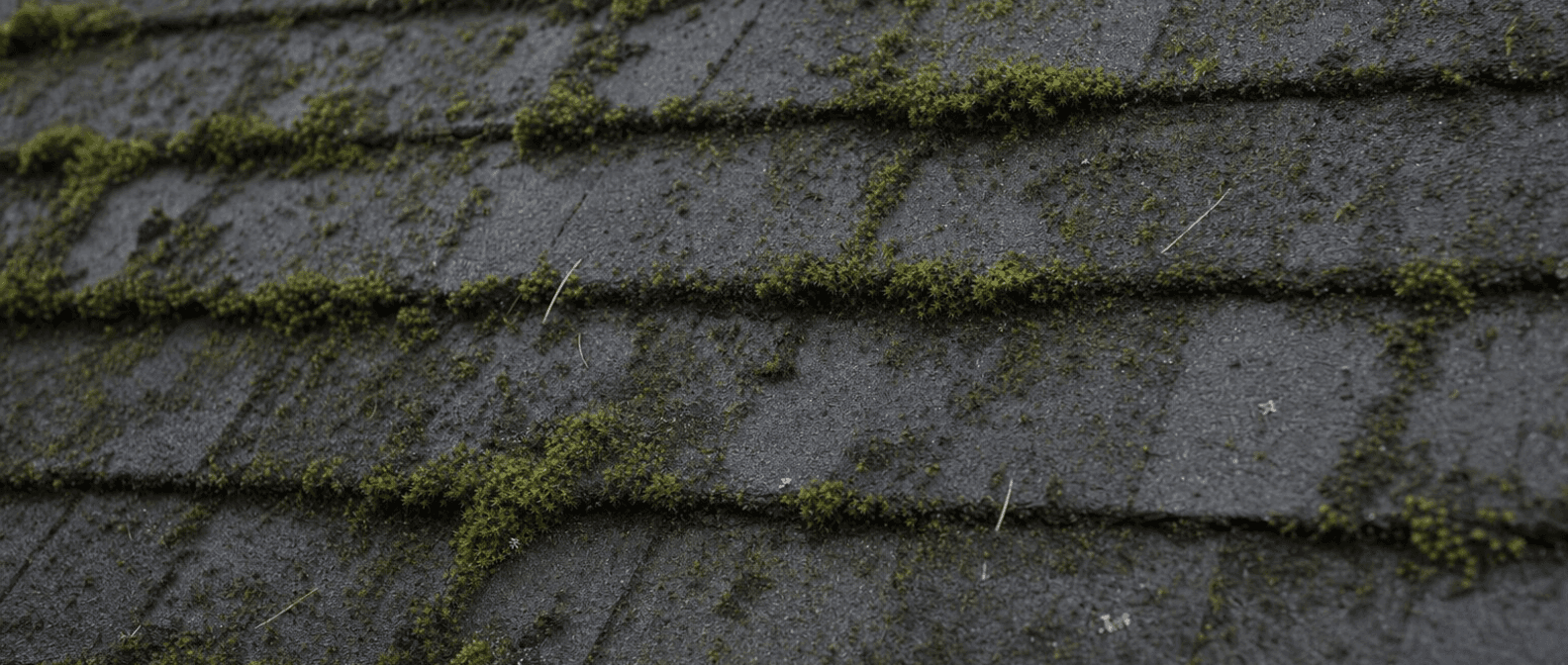
If you've noticed dark streaking running down your roof in long, irregular lines, or patches of green or brown fuzz gathering near the eaves and in shaded corners, you're not alone. It's one of the most common things we see on roofs across Green Bay, and it's almost never just a cosmetic issue.
The black streaks are algae. Specifically, a cyanobacteria called Gloeocapsa magma that feeds on the limestone filler in asphalt shingles and spreads through airborne spores. The green or mossy growth is exactly what it looks like — moss and sometimes lichen, taking root in the granules on your shingles and slowly setting up a problem that gets worse every season.
Wisconsin's climate accelerates both. Our wet springs, humid summers, and heavy tree canopy over many neighborhoods create near-ideal conditions for algae and moss to thrive. By the time most homeowners notice the problem, it's been developing for a year or two already.
What Algae Actually Does to Your Shingles
Algae damage on a Green Bay roof works slowly, which is part of what makes it so damaging in the long run.
Gloeocapsa magma produces a dark pigment as a self-protection mechanism — that's the black staining you see. But beyond the appearance, the algae feeds on the limestone aggregate in your shingles. Manufacturers use that aggregate as a filler and to add weight, and it makes up a meaningful part of the shingle's composition. As algae metabolizes it, the shingle loses material. That loss weakens the structural integrity of the shingle over time and makes it more vulnerable to UV degradation.
There's also a secondary effect worth knowing: the dark staining causes shingles to absorb more heat from the sun. More heat means more thermal expansion and contraction, which accelerates the breakdown of the asphalt binder that holds everything together. It's a compounding problem — the algae weakens the shingle, and the heat the algae causes accelerates the aging process from a different direction.
For a deeper look at how shingle degradation shows up in other ways, our post on granule loss and what it means for your asphalt shingles covers the signs that your shingles are breaking down faster than they should.
Moss Damage Is More Aggressive Than Most People Realize
Moss is a step beyond algae in terms of the damage it can cause. A lot faster too.
When moss establishes itself on your shingles, it doesn't just sit there. It grows. The root-like structures — called rhizoids — penetrate between shingles and into the granule layer, physically lifting the edges of shingles as the moss expands. This creates gaps where water can intrude, especially during rain or snowmelt. In Northeast Wisconsin winters, any gap where water can get underneath a shingle is a gap where ice can form, expand, and pry that shingle further up.
Moss also acts like a sponge. It holds moisture against the surface of your shingles for extended periods after rain, dramatically extending the time your roof is wet. Wet shingles degrade faster. And any wood components near the moss — think fascia board, the roof deck at the eaves — are exposed to that extended moisture too.
We've inspected roofs in the Green Bay area where moss growth along the north-facing slope was so established that the shingles underneath were visibly degraded and brittle compared to the south-facing side of the same roof. Same age, same materials, very different condition.
Why Wisconsin Roofs Are Especially Vulnerable
This isn't a problem that affects Wisconsin homes more than average just because of chance. There are specific conditions here that drive it.
Shade is the biggest factor. Green Bay and surrounding communities have a lot of mature tree canopy. Shaded roof sections dry out far more slowly after rain and dew, and they receive less UV radiation — UV actually inhibits algae growth somewhat, which is why you almost always see it on north-facing slopes or under tree cover first. If your roof stays wet for hours after your neighbor's dries out, you're at higher risk.
Our spring weather pattern makes things worse. April and May in Northeast Wisconsin bring repeated cycles of rain, mild temperatures, and high humidity. That's prime growing season for both algae and moss, and it follows right on the heels of winter — a season that already stresses shingles through freeze-thaw cycling. Your roof is going into spring in a weakened state and then getting months of conditions that encourage biological growth.
If you haven't had a professional look at your roof after this past winter, it's worth doing before summer. A free roof inspection can identify moss and algae growth early, before the damage compounds through another wet season.
How to Safely Remove Moss from a Wisconsin Roof
Here's where a lot of well-intentioned DIY advice goes wrong: pressure washing.
Pressure washing a shingle roof to remove moss will remove the moss. It will also blast away granules, damage the asphalt layer, and cut years off the life of your shingles. We've inspected roofs where a homeowner pressure washed the moss off and created more damage in an afternoon than the moss had done in two years.
The right approach is chemical treatment. A diluted solution of sodium hypochlorite (household bleach) and water, applied with a garden sprayer and left to work without scrubbing, will kill algae and moss without damaging shingles. The dead growth then washes away gradually with rain over the following weeks. Some contractors use commercial roof cleaning products designed specifically for this — they're effective and a bit gentler than bleach solutions.
A few practical notes:
- Apply on a cloudy day so the solution doesn't evaporate before it can work
- Protect plants and grass below the drip line — the runoff is not kind to landscaping
- Don't scrub or brush aggressively; let the chemistry do the work
- Repeat treatments may be needed for heavy growth
For moss that's become established and is physically lifting shingles, removal alone may not be enough. If the shingles underneath have been compromised, you're looking at roof repair work before the next Wisconsin winter. Ignoring lifted or curled shingles through summer means going into the freeze-thaw season with gaps that ice can exploit.
Prevention: Zinc and Copper Strips Actually Work
If moss and algae are a recurring problem on your roof, there's a passive prevention method worth knowing about: zinc or copper strips installed along the ridge.
When it rains, water flows over the metal strips and picks up zinc or copper ions. Those ions are toxic to algae, moss, and lichen — and the diluted runoff flowing down the roof surface inhibits growth. It's not instant, and it doesn't cover every square inch of the roof, but over time it meaningfully reduces biological growth on treated surfaces.
Some roofing manufacturers have responded to this problem by embedding copper granules into shingles themselves. Atlas Shingles, which Pierce Roofing installs, offers options with algae-resistant granules that provide long-term built-in protection. If your current roof is approaching the end of its life and you're in a high-shade, high-moisture environment, algae-resistant materials are worth specifying in a new asphalt shingle roof.
This is one of those decisions where talking to a contractor who knows the local environment matters. The right shingle choice for a shaded lot in Green Bay isn't necessarily the same as the right choice for an open suburban lot in a drier climate.
When Moss and Algae Are a Symptom of a Bigger Problem
Sometimes the growth itself isn't the primary issue. Sometimes it's a signal.
Roofs that stay wet longer than they should — and therefore grow more algae and moss than you'd expect — are often roofs with drainage problems. Gutters that don't pitch correctly, downspouts that are undersized or blocked, low-slope sections where water pools instead of draining quickly: all of these create the extended wet conditions that biological growth needs to thrive.
If you're seeing heavy growth concentrated in specific areas that seem to stay damp even when the rest of the roof dries, the answer might not just be treating the moss. It might mean looking at why water is sitting there in the first place. That could be a gutter issue, a flashing issue, or a slope problem that requires more involved attention.
Regular roof maintenance that includes keeping gutters clear and properly pitched is one of the best preventive steps a Wisconsin homeowner can take, not just for moss and algae control but for the overall longevity of the roofing system.
Our spring roof inspection guide for Wisconsin homeowners covers the full checklist — including drainage assessment — that's worth going through every April before the wet season kicks in fully.
The Long-Term Cost of Ignoring Moss and Algae
Let's put a number on what inaction actually costs.
A roof that develops moderate algae coverage and isn't treated can lose several years of service life through the accelerated degradation described above. An asphalt shingle roof in Northeast Wisconsin that should last 25 to 30 years — installed with good materials and proper technique — might need replacement at 18 or 20 years if algae and moisture damage go unaddressed. At current replacement costs in the Green Bay area, that difference represents thousands of dollars in pulled-forward expense.
Moss that goes untreated for multiple seasons can do structural damage to the shingles underneath that moves the problem from a maintenance issue into a repair or replacement conversation much faster. We've been on roofs where a homeowner thought they were dealing with a minor cosmetic issue and found that the north slope of the roof needed full replacement while the south slope was fine.
The math is pretty clear: treatment is cheap. Replacement is not.
Call Pierce Roofing Before This Season's Growth Gets Established
Spring is the window to catch moss and algae before another full growing season makes the problem worse. If you've noticed black streaks, green patches, or fuzzy growth on your roof, don't wait until fall to deal with it.
Pierce Roofing LLC has been serving the Green Bay area and Northeast Wisconsin for over 30 years. Michael Pierce and his crew are Atlas PRO+ Platinum certified, carry $2M in insurance, and back every project with a 10-year workmanship warranty. We know what Wisconsin roofs deal with, and we'll give you a straight answer about what your roof actually needs.
Call us at (920) 609-8304 or schedule your free roof inspection online. We'll take a look at your moss and algae situation, assess any underlying damage, and tell you exactly what it'll take to protect your roof through the next Wisconsin winter.