Your Siding Is Doing More Than You Think
Most homeowners don't think about their siding until something obvious goes wrong. A board falls off. A panel cracks. Paint starts peeling in sheets. But by then, the siding has usually been failing quietly for a while — letting moisture in, giving insects a foothold, and driving up your energy bills without you realizing why.
Siding is your home's primary weather barrier. It keeps Northeast Wisconsin winters from attacking your wall assembly directly. When it starts to break down, the damage doesn't stay on the surface — it works inward into sheathing, framing, and insulation. And that's where things get expensive.
This guide covers the signs that tell you it's time to replace your siding, realistic cost expectations for Wisconsin homeowners, and what a siding replacement project actually looks like from the first call to the final cleanup.
The Signs You Need to Replace Your Siding (Not Just Repair It)
Repair vs. replacement is the first question you have to answer. Not every damaged panel means you need to redo the whole house. But there are specific signs that tell you replacement is the right call.
Widespread Warping, Buckling, or Pulling Away
A single warped board isn't necessarily a crisis. But if warping is showing up in multiple spots across different walls, the siding has lost structural integrity. It's no longer doing its job as a weather barrier, and patching individual sections won't address the underlying problem.
Vinyl siding that's buckling can also be a sign of improper installation — it wasn't left room to expand and contract with temperature swings. Wisconsin temperature ranges between January and July are extreme, and siding that wasn't installed correctly for that reality will fail faster than it should.
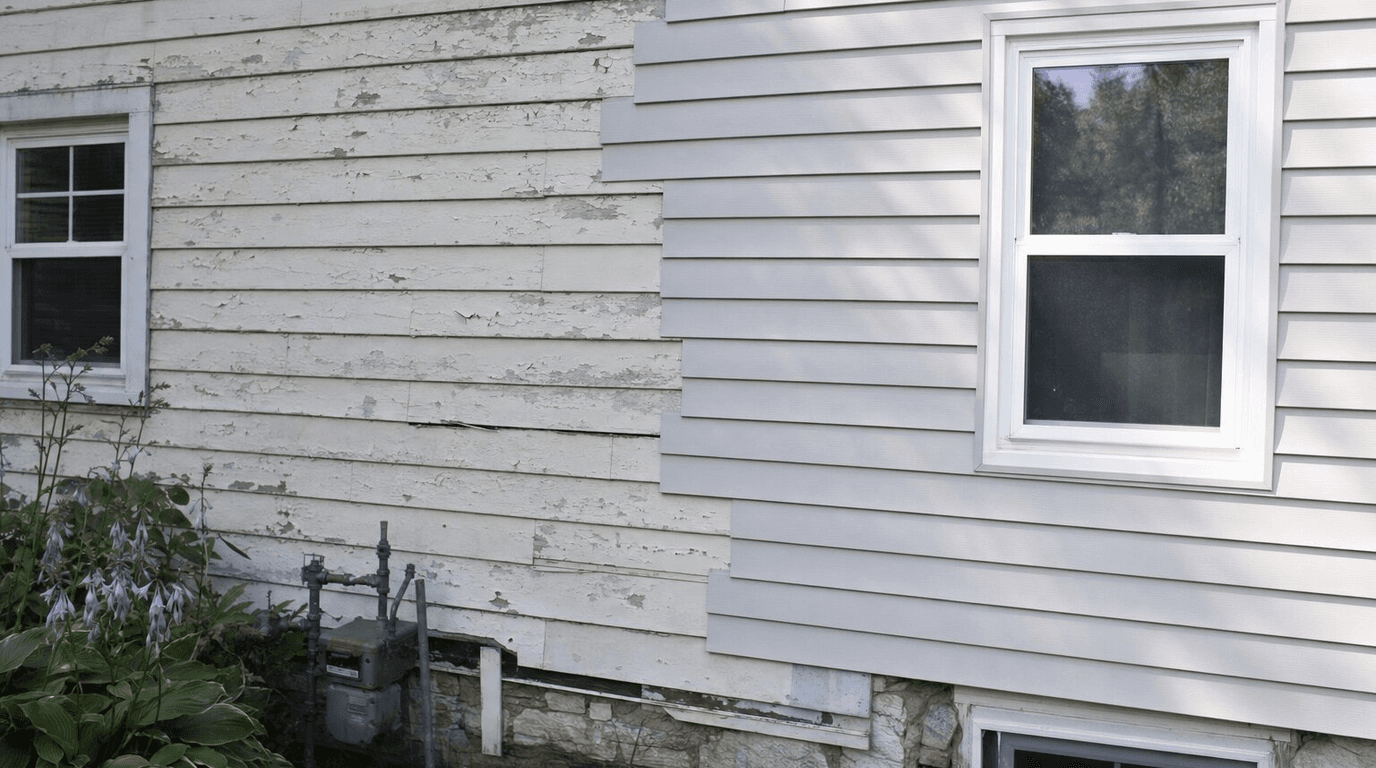
Rot in Wood or Fiber Cement Siding
If you can push a screwdriver into a section of your siding without much resistance, that section is rotted. Rot in wood siding spreads. It moves into adjacent boards, into the sheathing behind, and eventually into the structural framing. When you find rot in one spot, check the surrounding area carefully — chances are there's more nearby.
Fiber cement is more rot-resistant than wood, but it's not immune. Water that gets behind improperly sealed joints can still cause moisture damage over time, especially on north-facing walls that don't dry out between rain events.
Peeling Paint That Keeps Coming Back
If you've repainted your siding in the last few years and the paint is already peeling again, that's not a painting problem. It's a moisture problem. Water vapor pushing from inside the wall outward — or liquid water getting in from outside — is what causes paint to fail repeatedly. The surface isn't the issue. The siding underneath is.
Significantly Higher Energy Bills
This one is trickier to attribute directly, but it's worth paying attention to. Siding that's cracked, gaps that have opened at seams and corners, or sections where insulation behind has been compromised — all of it creates pathways for conditioned air to escape and outside air to enter. If your heating and cooling costs have been creeping up without an obvious explanation, the building envelope is worth examining.
Interior Moisture or Mold
Mold or moisture stains on interior walls near the exterior is a serious sign. It means water has made it past the siding, past the house wrap or vapor barrier, and into your living space. At that point you're not just looking at a siding replacement — you may also be dealing with sheathing repair and insulation replacement.
Siding That's Simply Old
Vinyl siding has a realistic lifespan of 20 to 40 years, depending on quality and maintenance. Wood siding can last longer with consistent upkeep, but most Wisconsin homes with original wood siding from the 80s or earlier are past the point where repairs make financial sense. If your siding is approaching or past 30 years, replacement is usually more cost-effective than continued patching.
When Repair Still Makes Sense
Not every siding problem requires a full replacement. If the damage is limited — a few cracked panels, one section with failed caulk, localized rot in an isolated area — siding repair can extend the life of your existing exterior for years at a fraction of the cost.
The honest answer is that a contractor who knows what they're looking at can tell you which way to go after a quick inspection. We'd rather help you make the right call than push a full replacement when it isn't warranted. If you're not sure which situation you're in, a free inspection is the fastest way to get a clear answer.
What Siding Replacement Costs in Wisconsin
This is the question most homeowners want answered, and the honest answer is: it depends on more variables than a single number can cover. But here's what realistic cost ranges look like for Northeast Wisconsin.
Vinyl siding is the most common choice for residential replacement in this region. Installed cost typically runs $6 to $12 per square foot depending on product grade, profile style, and how much prep work is needed. A 2,000-square-foot ranch home might run $12,000 to $22,000 fully installed. Larger two-story homes with more complex rooflines will be higher.
Fiber cement siding (James Hardie and similar brands) costs more — typically $10 to $18 per square foot installed. It lasts longer than vinyl, holds paint better, and is more resistant to impact damage. For Wisconsin homes that take significant hail hits, it's worth considering. The upfront cost is higher, but the long-term maintenance picture is better.
Engineered wood falls somewhere between vinyl and fiber cement, both in cost and performance.
Beyond material choice, a few things drive cost up:
- Tear-off and disposal of existing siding adds to the total if the old material has to come off first
- Sheathing repair — if moisture has damaged the wall assembly behind the siding, that has to be addressed before new siding goes on
- Trim work around windows, doors, corners, and soffits adds labor hours
- Home size and profile — a simple rectangular ranch is faster to side than a two-story with lots of gables and angles
Get a few quotes. Be skeptical of numbers that seem dramatically lower than others — that usually means something is being skipped or a cheaper material is being substituted.
Does Replacing Siding Increase Home Value?
Generally, yes. Siding replacement consistently ranks among the higher-return exterior improvement projects. The exact return varies by material and market, but curb appeal matters to buyers, and siding that looks new signals to a potential buyer that the home has been maintained.
More importantly, siding in poor condition actively hurts home value. A buyer's inspector who flags rotted siding or moisture infiltration has just handed the buyer a negotiating tool. Replacing siding before selling removes that vulnerability.
We covered a similar topic in our post on how a new roof affects home resale value — the logic applies to siding as well. Updated exteriors communicate care, and buyers pay for that.
What to Expect During a Siding Replacement Project
For homeowners who haven't been through a siding project before, here's how it typically unfolds.
Initial inspection and estimate. A contractor walks the exterior, identifies the scope of work, checks for hidden damage, and puts together a written estimate. This is also when you'll make material and color choices.
Scheduling and material ordering. Siding projects are weather-dependent. In Northeast Wisconsin, the best windows are May through October. If materials need to be special-ordered, that adds lead time — factor a few weeks between signing and start date.
Tear-off (if applicable). Old siding comes off first. This is when any hidden damage to sheathing or house wrap gets discovered and addressed. A good contractor won't cover problems back up — they'll show you what they found and talk through the repair plan before proceeding.
House wrap and flashing. Before new siding goes on, the house wrap (water-resistive barrier) is inspected and replaced if needed. Flashing around windows and door openings is also addressed at this stage. Skipping these steps is how water problems get sealed inside walls.
Siding installation and trim work. Panels go on, starting at the bottom and working up. Corners, window and door trim, and soffit work follow. A clean installation has consistent reveal, tight seams, and properly caulked trim joints.
Cleanup and final walkthrough. Siding generates a lot of debris. A professional crew leaves the site clean. Walk the perimeter with your contractor before signing off — check that trim is tight, colors are consistent, and all penetrations are sealed.
For a deeper look at how exterior work ties together, our post on combining roof and siding replacement at the same time is worth reading if you're also dealing with an aging roof.
Choosing a Siding Contractor in Green Bay
There's no shortage of contractors in Northeast Wisconsin willing to put siding on your house. The difference between a good job and a bad one usually comes down to preparation — how thoroughly they remove old material, how carefully they address what's behind it, and how well they seal every penetration and joint.
Ask any contractor you're considering:
- Are you licensed and insured? (Get the certificate, not just the answer)
- Do you use subcontractors or your own crew?
- What's your process if you find rot or sheathing damage during tear-off?
- What warranty do you offer on workmanship?
Pierce Roofing carries $2 million in liability insurance and backs every project with a 10-year workmanship warranty. Michael Pierce has been doing exterior work in the Green Bay area for over 30 years — the kind of experience that shows up in the details.
You can learn more about what we offer on our siding services page.
Ready to Find Out Where Your Siding Stands?
If you've noticed any of the signs covered here — warping, rot, peeling paint, or siding that's simply getting old — the right first step is a professional eye on the situation. Not a sales call. Just a clear picture of what you're dealing with.
Pierce Roofing serves Brown, Kewaunee, Oconto, Outagamie, Winnebago, and Manitowoc counties. We're locally owned, Atlas PRO+ Platinum certified, and fully insured.
Call us at (920) 609-8304 or request your free inspection online. We'll tell you straight what we see — and what it's going to take to fix it.